


Serum vitamin D concentrations in hospitalized critically ill dogs
- PMID: 29590167
- PMCID: PMC5874018
- DOI: 10.1371/journal.pone.0194062
Serum vitamin D concentrations in hospitalized critically ill dogs
Abstract
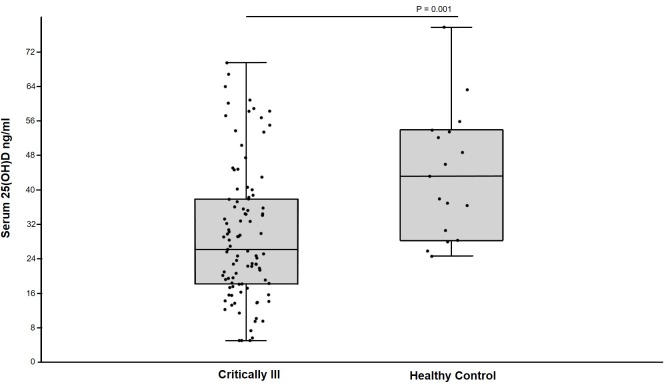
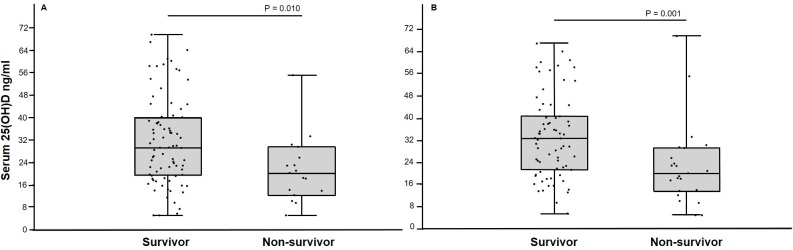
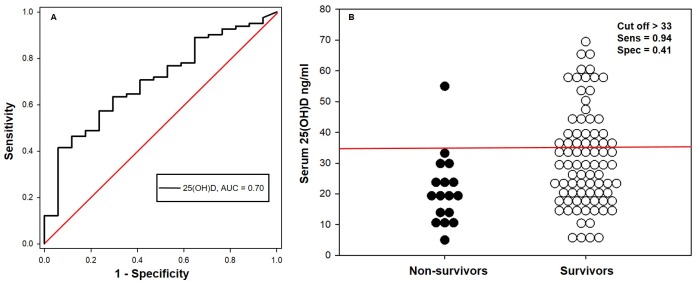
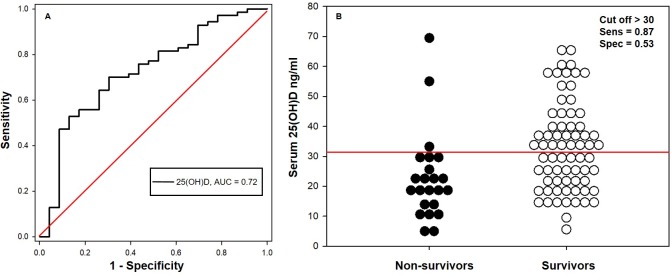
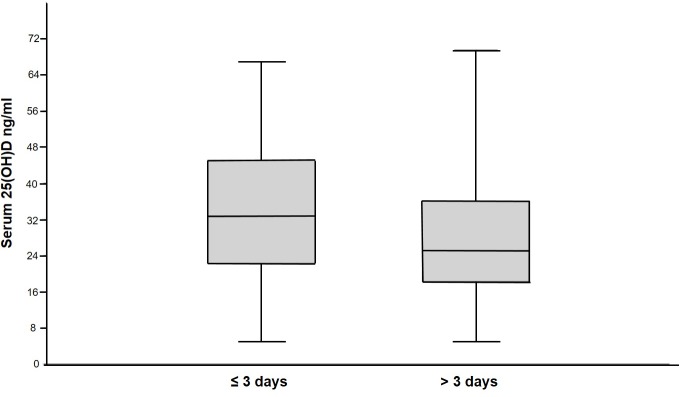
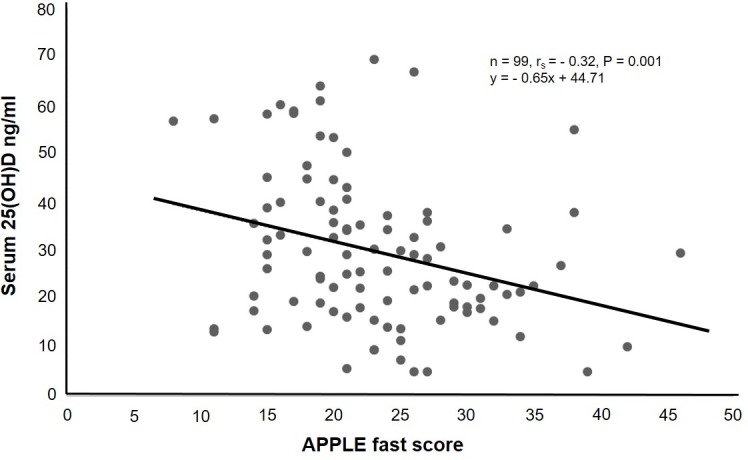
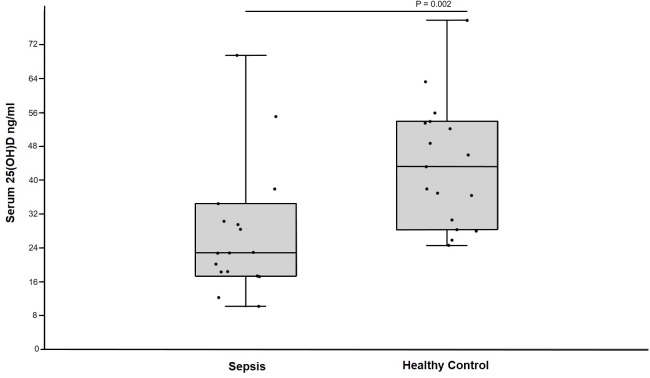
Hypovitaminosis D has been extensively documented in critically ill humans. However, whether or not critically ill dogs have alterations in vitamin D concentrations remains unconfirmed. The primary aims of our study were to compare serum 25-hydroxycholecalciferol [25(OH)D] concentrations in critically ill dogs with healthy control dogs, determine the prognostic utility of serum 25(OH)D concentration as a biomarker in critically ill dogs, and to assess if serum 25(OH)D concentrations in critically ill dogs are associated with length of stay in the intensive care unit or illness severity. Serum concentrations of 25(OH)D together with a range of other clinical, biochemical, and hematological parameters, were measured in 99 dogs within 24 hours of admission to the Intensive Care Unit (ICU). Critically ill dogs (P = 0.001) and dogs with sepsis (P = 0.002) had significantly lower serum 25(OH)D concentrations compared to healthy control dogs. In addition, serum 25(OH)D concentration was an independent predictor of in-hospital and 30 day survival. Using a cut-off of 33 ng/mL, serum 25(OH)D concentrations had excellent sensitivity (0.94; 95% CI, 0.71-1.00), but poor specificity (0.41; 95% CI, 0.31-0.53) for detection of survival. Serum 25(OH)D concentrations were inversely associated with acute patient physiologic and laboratory evaluation (APPLE) fast score but were not associated with ICU length of stay. Hospitalized dogs with critical illness have decreased serum 25(OH)D concentrations compared to healthy dogs and can be used to predict survival in this cohort.
Conflict of interest statement
Figures
References
-
- Higgins DM, Wischmeyer PE, Queensland KM, Sillau SH, Sufit AJ, Heyland DK. Relationship of vitamin d deficiency to clinical outcomes in critically ill patients. J Parenter Enteral Nutr. 2012;36(6):713–720. - PubMed
-
- Dickerson RN, Van Cleve JR, Swanson JM, Maish GO, Minard G, Croce MA, et al. Vitamin D deficiency in critically ill patients with traumatic injuries. Burns Trauma. 2016;4:28 doi: 10.1186/s41038-016-0054-8 - DOI - PMC - PubMed
-
- Quraishi SA, Bittner EA, Blum L, McCarthy CM, Bhan I, Camargo CA Jr. Prospective study of vitamin D status at initiation in critically ill surgical patients and risk of 90 day mortality. Crit Care Med. 2014;42(6):1365–1371. doi: 10.1097/CCM.0000000000000210 - DOI - PMC - PubMed
-
- Braun AB, Gibbons FK, Litonjua AA, Giovannucci E, Christopher KB. Low serum 25-hydroxyvitamin D at critical care initiation is associated with increased mortality. Crit Care Med. 2012;40(1):63–72. doi: 10.1097/CCM.0b013e31822d74f3 - DOI - PMC - PubMed
MeSH terms
Substances
LinkOut - more resources
Full Text Sources
Other Literature Sources
Medical
