The Clinical Efficacy of Silicone Stents for Endoscopic Dacryocystorhinostomy: A Meta-Analysis
- PMID: 29590744
- PMCID: PMC6102340
- DOI: 10.21053/ceo.2017.01781
The Clinical Efficacy of Silicone Stents for Endoscopic Dacryocystorhinostomy: A Meta-Analysis
Abstract
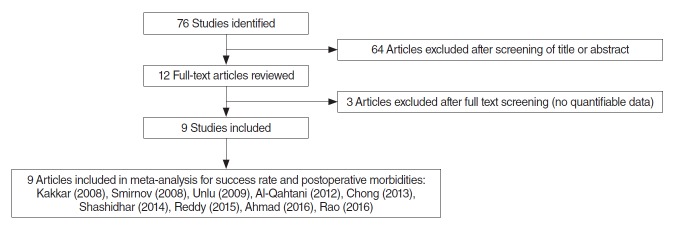
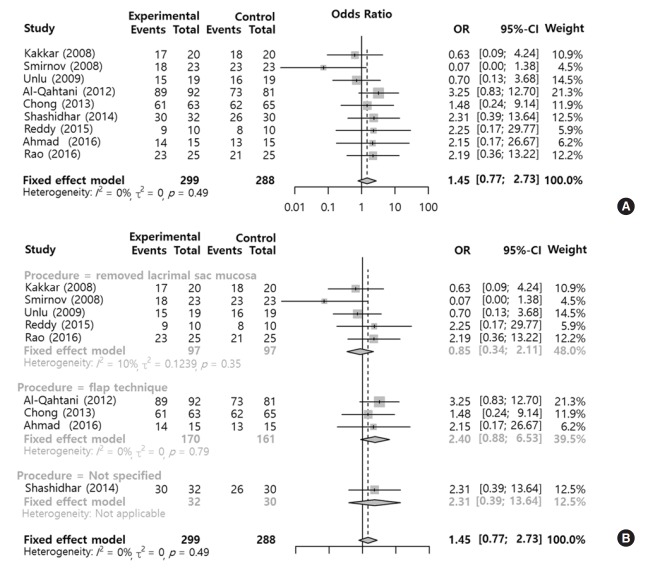
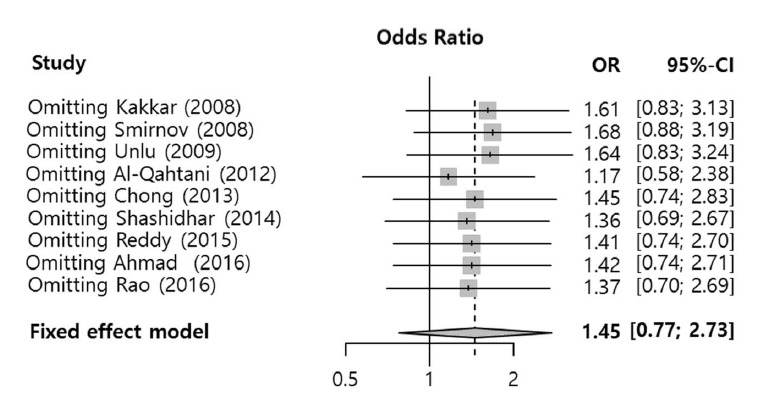
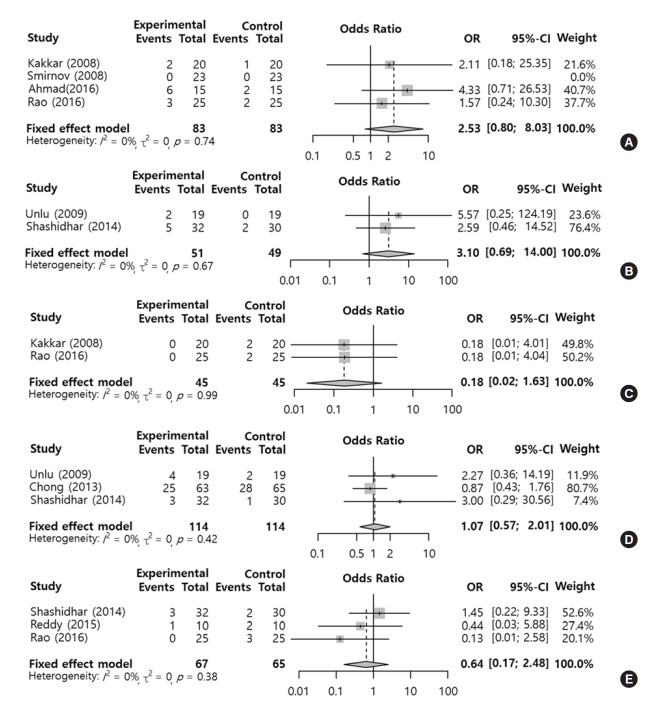
We evaluated the effect of silicone stent use during endoscopic dacryocystorhinostomy on postoperative morbidities in comparison with versus without a silicone stent. Two authors independently searched six databases (PubMed, Embase, Scopus, the Web of Science, the Cochrane library, and Google Scholar) from inception of article collection to July 2017. The analysis included prospective randomized studies that compared intraoperative silicone stent insertion (silicone group) with no application of a silicone stent (control group), in which the outcomes of interest were success rate (lacrimal passage patent check with syringing, symptom relief, or endoscopic confirmation of fluorescein dye from the opening of Hasner's valve) and morbidities (e.g., postoperative bleeding, rhinostomy closure, granulation tissue, synechia, and eyelid problems) after certain follow-up periods (over 10 weeks). Nine studies involving a total of 587 participants were included. Functional success rates tended to be higher in the silicone group than in the control, but there was no statistically significant difference in success rates (odds ratio, 1.45; 95% confidence interval, 0.77 to 2.73). According to the surgical type such as mucosal removal and mucosal flap surgery, the results from types didn't demonstrate any significant effect, but the mucosal flap technique seemed to be more beneficial. Regarding postoperative morbidities, although the outcomes of the groups did not present any statistically significant difference, eyelid problems and postoperative bleeding tended to occur more frequently in the silicone group, but rhinostomy closure tended to occur more frequently in the control group. Success and morbidity rates showed no difference between the silicone stent group and control group in the meta-analysis. However, additional analyses revealed that the success rate of endonasal dacryocystorhinostomy using silicone intubation with mucosal flap has shown an improving trend, and morbidities such as granulation and synechia showed decreasing trends compared with the group without silicone intubation.
Keywords: Dacryocystorhinostomy; Meta-Analysis; Nasolacrimal Duct Obstruction; Silicones; Stents.
Conflict of interest statement
No potential conflict of interest relevant to this article was reported.
Figures
References
-
- Unlu HH, Gunhan K, Baser EF, Songu M. Long-term results in endoscopic dacryocystorhinostomy: is intubation really required? Otolaryngol Head Neck Surg. 2009 Apr;140(4):589–95. - PubMed
-
- Smirnov G, Tuomilehto H, Terasvirta M, Nuutinen J, Seppa J. Silicone tubing is not necessary after primary endoscopic dacryocystorhinostomy: a prospective randomized study. Am J Rhinol. 2008 Mar-Apr;22(2):214–7. - PubMed
-
- Unlu HH, Toprak B, Aslan A, Guler C. Comparison of surgical outcomes in primary endoscopic dacryocystorhinostomy with and without silicone intubation. Ann Otol Rhinol Laryngol. 2002 Aug;111(8):704–9. - PubMed
Publication types
Grants and funding
LinkOut - more resources
Full Text Sources
Other Literature Sources