. 2018 Aug 29;38(4):BSR20180400.
doi: 10.1042/BSR20180400. Print 2018 Aug 31.

The long non-coding RNA SNHG5 regulates gefitinib resistance in lung adenocarcinoma cells by targetting miR-377/CASP1 axis

Affiliations

The long non-coding RNA SNHG5 regulates gefitinib resistance in lung adenocarcinoma cells by targetting miR-377/CASP1 axis

ZheXing Wang et al. Biosci Rep. .

Abstract

Gefitinib resistance is one of the major obstacles for the treatment of lung adenocarcinoma (LAD). The present study aimed to investigate the effects of the long non-coding RNA (lncRNA), small nucleolar RNA host gene 5SNHG5 on gefitinib resistance in LAD and explore the underlying mechanisms. The quantitative real-time PCR (qRT-PCR) results showed that SNHG5 expression was significantly down-regulated in LAD patients with acquired gefitinib resistance and gefitinib resistant LAD cell lines. SNHG5 overexpression sensitized gefitinib resistant LAD cells to gefitinib treatment, while knockdown of SNHG5 rendered gefitinib sensitive LAD cells to gefitinib treatment. Bioinformatics analysis showed that SNHG5 exerted its function through interaction with miR-377, which was further confirmed by luciferase reporter assay in 293T cells. Overexpression of SNHG5 suppressed the expression of miR-377, while the knockdown of SNHG5 increased the miR-377 expression. MiR-377 expression was significantly up-regulated in LAD specimens with acquired gefitinib resistance and was negatively correlated with SNHG5 expression. In addition, CASP1 was predicted as a downstream target of miR-377 Overexpression of miR-377 suppressed the expression of CASP1 in PC9 cells and knockdown of miR-377 increased the CASP1 expression in PC9GR cells. In vitro functional assay showed that knockdown of CASP1 in SNHG5-overexpressed PC9GR cells abolished their gefitinib resistance. Overall, the present study demonstrated, for the first time, that the SNHG5/miR-377/CASP1 axis functions as an important role in LAD cells gefitinib resistance and potentially contributes to the improvement of LAD diagnosis and therapy.

Keywords: SNHG5; gefitinib; human lung adenocarcinoma.


Conflict of interest statement

The authors declare that there are no competing interests associated with the manuscript.

Figures

Figure 1
Figure 1. LncRNA SNHG5 was down-regulated in gefitinib resistant LAD cells
(A) SNHG5 expression levels in LAD cancer tissues assessed by qRT-PCR in patients before gefitinib treatment (n=30) and patients who developed acquired resistance (n=33) to gefitinib. (B) SNHG5 was down-regulated in lung cancer cells with acquired resistance (PC9GR and A549GR cells). (C) The expression of SNHG5 was determined by qRT-PCR in eight pairs of LAD cancer tissues before and after gefitinib treatment. (D) SNHG5 expression levels were assessed in gefitinib before treatment (n=30) and primary resistance (n=17). (E) OS in patients with high (n=18) and low (n=12) SNHG5 expression levels before gefitinib treatment. (F) The ORR in patients with high (n=18) and low (n=12) SNHG5 expression levels before EGFR-TKI treatment. ***P<0.001.
Figure 2
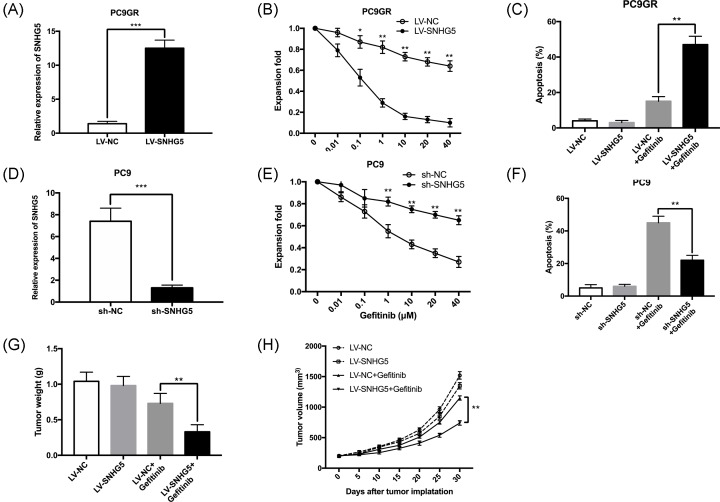
Figure 2. SNHG5 promotes LAD cells gefitinib resistance in vitro and in vivo
(AC) Overexpression of SNHG5 increased gefitinib sensitivity in PC9GR cells. (DF) Knockdown of SNHG5 rendered PC9 cells resistant to gefitinib treatment. (G) Tumor weights and (H) tumor volumes from xenografts with PC9GR-LV-SNHG5 cells and negative control PC9GR cells. **P<0.01; ***P<0.001.
Figure 3
Figure 3. Reciprocal repression of SNHG5 and miR-377
(A) qRT-PCR analysis was performed to determine the effect of SNHG5 on the expression levels of miR-377. (B) qRT-PCR analysis for SNHG5 expression in cells transfected with miR-NC, miR-377 mimics and miR-377 inhibitor for 24 h. (C) Bioinformatics predicted and mutated miR-377 binding sites with SNHG5. (D) The relative luciferase activity revealed that miR-377 inhibited SNHG5-WT luciferase activity, while it had no effect on SNHG5-Mut luciferase activity in HEK293T cells. (E) Relative miR-377 and SNHG5 expression, presented as fold enrichment in Ago2 relative to normal IgG immunoprecipitates. (F) miR-377 expression levels in LAD cancer tissues assessed by qRT-PCR in patients before gefitinib treatment (n=30) and patients who developed acquired resistance (n=33) to gefitinib. (G) The correlation between SNHG5 and miR-377 expression was assessed in 33 NSCLC tissues using a Pearson’s correlation analysis. R = −0.679, P<0.001. **P<0.01; ***P<0.001.
Figure 4
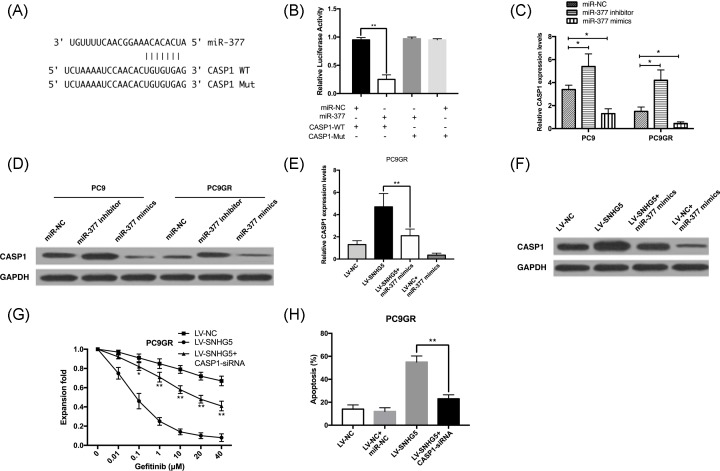
Figure 4. miR-377/CASP1 axis mediated the gefitinib resistance of SNHG5 in LAD cells
(A) Bioinformatics predicted and mutated CASP1 binding sites with miR-377. (B) The relative luciferase activity revealed that miR-377 inhibited CASP1-WT luciferase activity, while it had no effect on CASP1-Mut luciferase activity in HEK293T cells. (C,D) qRT-PCR and Western blot analysis was performed to determine the effect of miR-377 on the expression levels of CASP1. (E,F) qRT-PCR and Western blot analysis was performed to determine the effect of miR-377 mimics on the expression levels of CASP1 in SNHG5-overexpressed PC9GR cells. (G,H) Knockdown of CASP1 rendered PC9GR-LV-SNHG5 cells resistant to gefitinib. *P<0.05, **P<0.01.

References

    1. Sardenberg R.A., Mello E.S. and Younes R.N. (2014) The lung adenocarcinoma guidelines: what to be considered by surgeons. J. Thorac. Dis. 6 (Suppl 5), S561–S567 - PMC - PubMed
    1. Singh M. and Jadhav H.R. (2017) Targeting non-small cell lung cancer with small-molecule EGFR tyrosine kinase inhibitors. Drug Discov. Today 23, 745–753 - PubMed
    1. Rahman A.F., Korashy H.M. and Kassem M.G. (2014) Gefitinib. Profiles Drug Subst. Excip. Relat. Methodol. 39, 239–264 10.1016/B978-0-12-800173-8.00005-2 - DOI - PubMed
    1. Lin Y., Wang X. and Jin H. (2014) EGFR-TKI resistance in NSCLC patients: mechanisms and strategies. Am. J. Cancer Res. 4, 411–435 - PMC - PubMed
    1. Sin T.K., Wang F., Meng F., Wong S.C., Cho W.C., Siu P.M. et al. (2016) Implications of microRNAs in the treatment of gefitinib-resistant non-small cell lung cancer. Int. J. Mol. Sci. 17, 237 10.3390/ijms17020237 - DOI - PMC - PubMed

MeSH terms