. 2018 Mar 29;7(1):45.
doi: 10.1038/s41426-018-0048-7.

Phylogenetic analysis and virulence determinant of the host-adapted Staphylococcus aureus lineage ST188 in China

Affiliations

Phylogenetic analysis and virulence determinant of the host-adapted Staphylococcus aureus lineage ST188 in China

Yanan Wang et al. Emerg Microbes Infect. .

Abstract

Staphylococcus aureus (S. aureus) is an important pathogen of humans and livestock species, but an understanding of the clonal distribution of S. aureus causing different host-species infections in the same geographical environment and within the same period is lacking. By characterizing infections caused by S. aureus in bovine, pediatric, and adult patients in Shanghai, China, between 2012 and 2014, we identified methicillin-sensitive S. aureus (MSSA) ST188 as the major lineage causing infections in multiple host species. Whole-genome sequencing and phenotypic analyses demonstrated that ST188 might evolve from livestock, and there was no significant genomic or virulence difference between ST188 isolated from livestock and humans. The virulence of ST188 is related to its adhesion and nasal colonization ability. This result is in accord with the strong epithelial cell adhesion and biofilm formation properties of ST188. Furthermore, the adhesion- and biofilm-formation-related genes are present in multiple copies and exhibit significantly increased expression in ST188. In conclusion, S. aureus ST188 is the major lineage causing human and livestock infections in Shanghai, China. Due to its high expression of the factors associated with bacterial adhesion and biofilm formation, ST188 has the ability to colonize and infect different host species.


Conflict of interest statement

The authors declare that they have no conflict of interest.

Figures
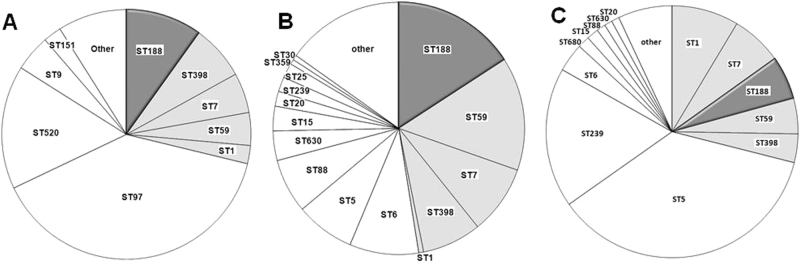
Fig. 1
Fig. 1. Clonal distribution of S. aureus causing infections of different host species in Shanghai, China, between 2012 and 2014.
a Clonal distribution of S. aureus causing bovine mastitis. b Clonal distribution of S. aureus causing infections in pediatric patients. c Clonal distribution of S. aureus causing infections in adult patients. Clones marked in gray: sequence types causing infections in both humans and livestock
Fig. 2
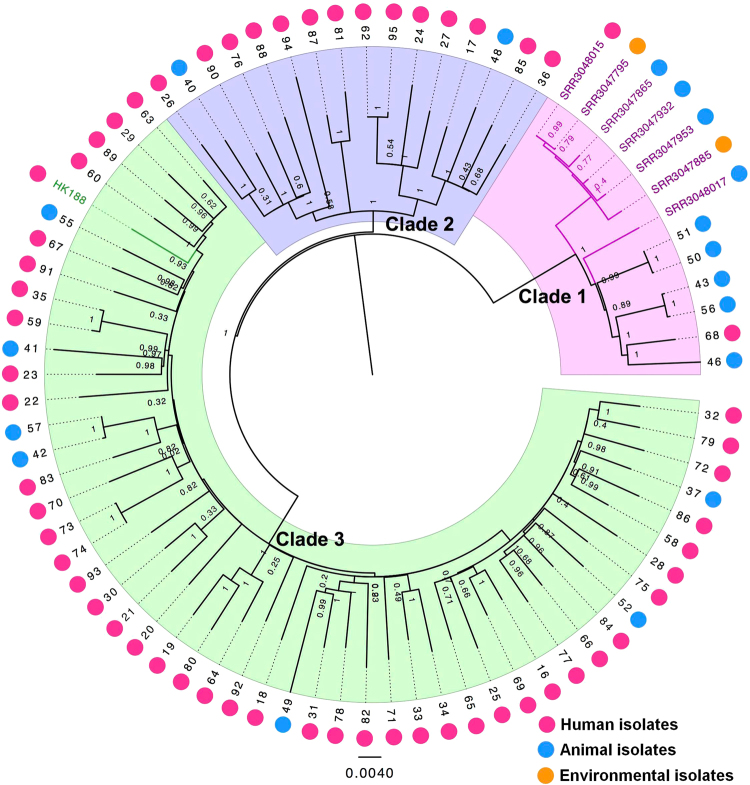
Fig. 2. Maximum-likelihood phylogenetic tree of ST188.
Seventy-two S. aureus ST188 isolates (39 from adult patients, 19 from pediatric patients and 14 from livestock) were used for phylogenetic reconstruction. Relationships are shown with respect to the draft genome of MRSA CUHK_HK188 and seven isolates of MRSA ST188 from North America. Branches are colored by geographic origin of isolates. Black branch: isolates in this study. Pink branch: isolated from North America. Green branch: isolated from Hong Kong. The outer dots indicate the host origin of isolates. Rose-red dots: human-adapted isolates. Blue dots: livestock-adapted isolates. Orange dots: environmental isolates
Fig. 3
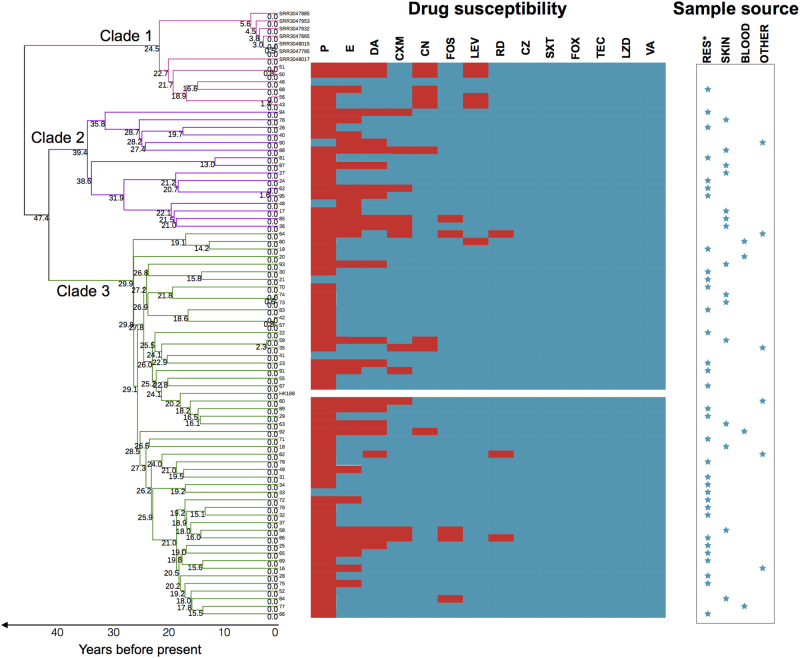
Fig. 3. Antibiotic resistance of ST188 isolates from different sources of infection.
Branches are colored by different clades and scaled with time (years). See Supplementary Figure 3 for further information about the time scale of the emergence of ST188. The splits represent the resistance (red) or sensitivity (blue) to antibiotics. Sample sources are denoted by blue stars
Fig. 4
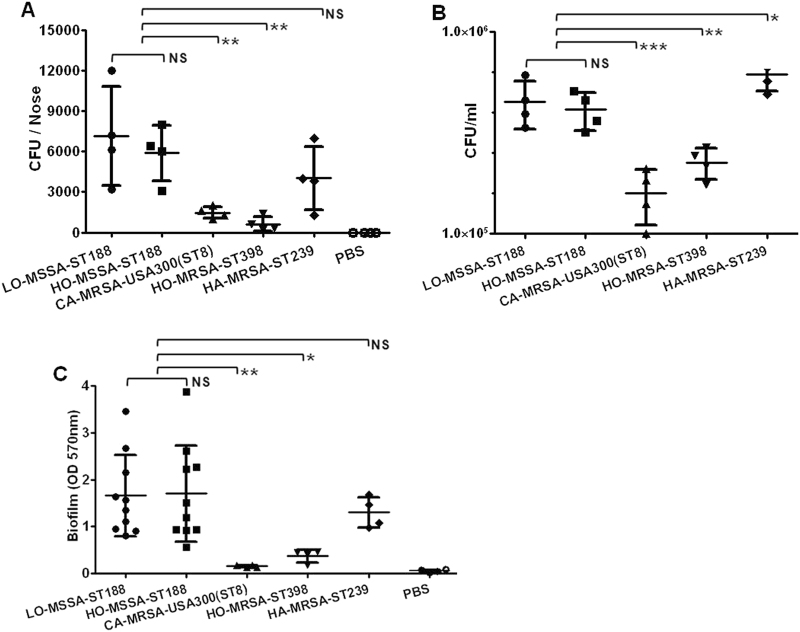
Fig. 4. Nasal colonization, cell adhesion, and biofilm formation ability of host-adapted S. aureus ST188.
a The nasal colonization ability of ST188 in mice was compared with that of CA-MRSA USA300 (ST8), HO-MRSA ST398 and HA-MRSA ST239 (4 isolates were randomly selected/lineage). Each mouse (one mouse/isolate) received 1 × 108 colony-forming units (CFUs) in the nares. Control animals (n = 4) received only sterile PBS. b Adhesion of S. aureus to human alveolar epithelial cells A549. Colony counts of adhesive and internalized bacteria on/in A549 epithelial cells after infection. Control group (n = 4) received only sterile PBS. c Semiquantitative biofilm assays demonstrating the biofilm formation ability of ST188 isolates (10 isolates were randomly selected). *, P < 0.05; **, P < 0.01; ***, P < 0.001; NS, not significant (P ≥ 0.05). LO livestock-originated, HO human-originated
Fig. 5
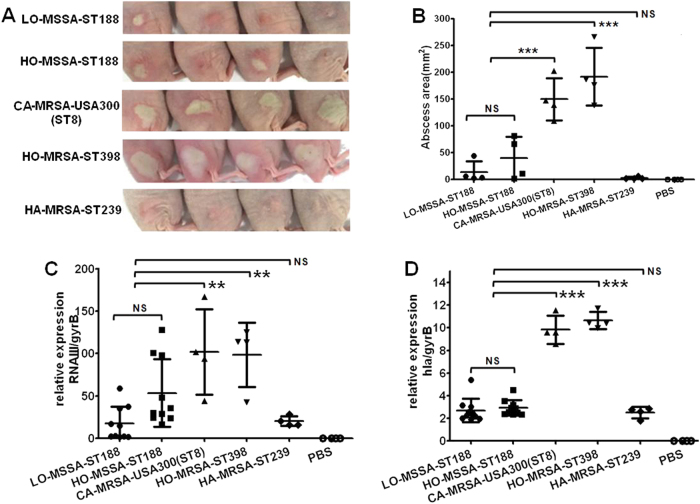
Fig. 5. The ability of host-adapted S. aureus ST188 to cause invasive infection.
a Representative abscesses on day 2 after infection (4 isolates were randomly selected/lineage). Each mouse (one mouse/isolate) received 5 × 107 CFUs on the right dorsum by intradermal injection. Control animals (n = 4) received only sterile PBS. b Abscess areas (=π (length × width)/2) on day 2 after infection. c, d Quantitative RT-PCR analysis of RNAIII and hla gene expression in randomly selected ST188 (10 isolates were randomly selected), CA-MRSA USA300(ST8), HO-MRSA ST398, and HA-MRSA ST239 (4 isolates were randomly selected/lineage), from cells grown to the late logarithmic growth phase (4 h). **, P < 0.01; ***, P < 0.001; NS, not significant (P ≥ 0.05)
Fig. 6
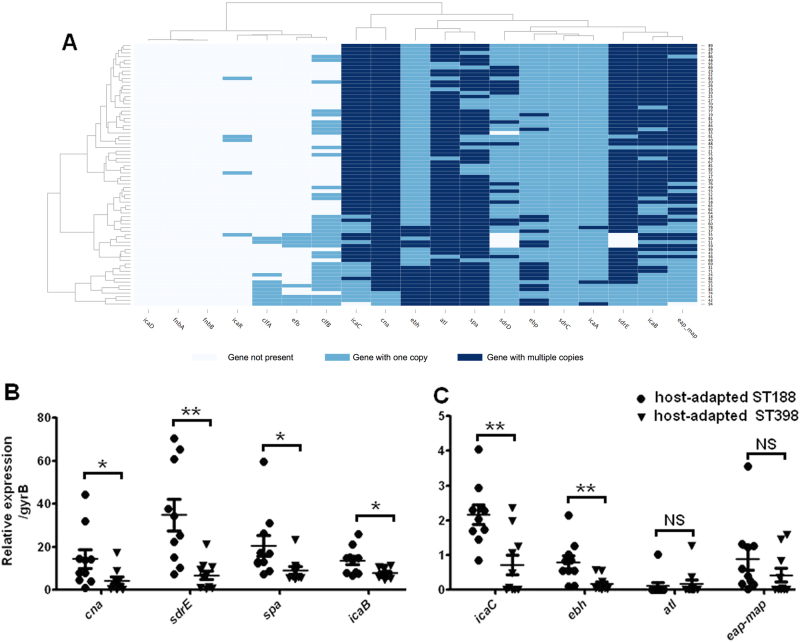
Fig. 6. The carrying and expression levels of genes related to adhesion and biofilm formation.
a The mapping depths of 19 adhesion and biofilm formation genes were detected in all ST188 isolates of this study. A gene with a two-fold higher mapping depth than the average genome sequencing depth was determined as a gene with multiple (≥2) copies (dark blue splits). Genes with one copy were indicated by light blue splits, and genes represented by white splits were determined as absent. b, c Quantitative RT-PCR analysis of genes with multiple (≥2) copies in host-adapted S. aureus ST188 compared with that of host-adapted S. aureus ST398 (10 isolates were randomly selected/lineage). *, P < 0.05; **, P < 0.01; NS, not significant (P ≥ 0.05)

References

    1. Lowy FD. Staphylococcus aureus infections. New Engl. J. Med. 1998;339:520–532. doi: 10.1056/NEJM199808203390806. - DOI - PubMed
    1. Leonard FC, Markey BK. Meticillin-resistant Staphylococcus aureus in animals: a review. Vet. J. 2008;175:27–36. doi: 10.1016/j.tvjl.2006.11.008. - DOI - PubMed
    1. Bradley AJ, Leach KA, Breen JE, Green LE, Green MJ. Survey of the incidence and aetiology of mastitis on dairy farms in England and Wales. Vet. Rec. 2007;160:253–257. doi: 10.1136/vr.160.8.253. - DOI - PubMed
    1. Hasman H, et al. Spa type distribution in Staphylococcus aureus originating from pigs, cattle and poultry. Vet. Microbiol. 2010;141:326–331. doi: 10.1016/j.vetmic.2009.09.025. - DOI - PubMed
    1. Woolhouse M, Gaunt E. Ecological origins of novel human pathogens. Crit. Rev. Microbiol. 2007;33:231–242. doi: 10.1080/10408410701647560. - DOI - PubMed

MeSH terms