


Dexras1 is a homeostatic regulator of exercise-dependent proliferation and cell survival in the hippocampal neurogenic niche
- PMID: 29593295
- PMCID: PMC5871767
- DOI: 10.1038/s41598-018-23673-z
Dexras1 is a homeostatic regulator of exercise-dependent proliferation and cell survival in the hippocampal neurogenic niche
Abstract
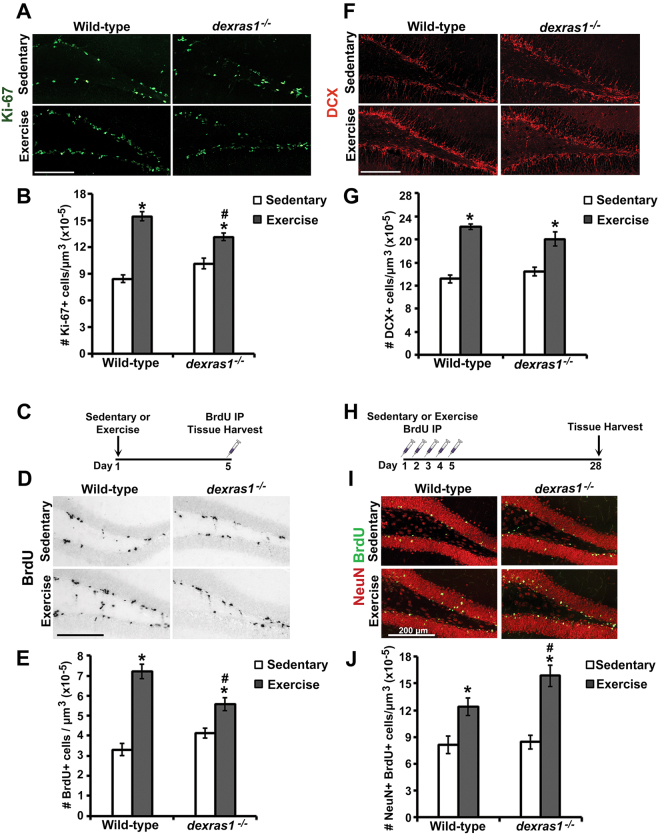
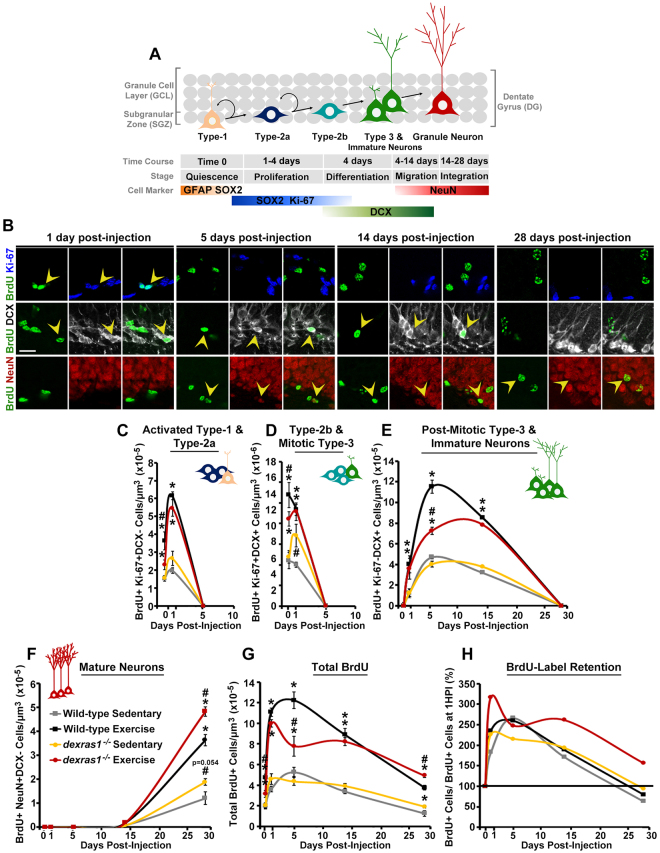
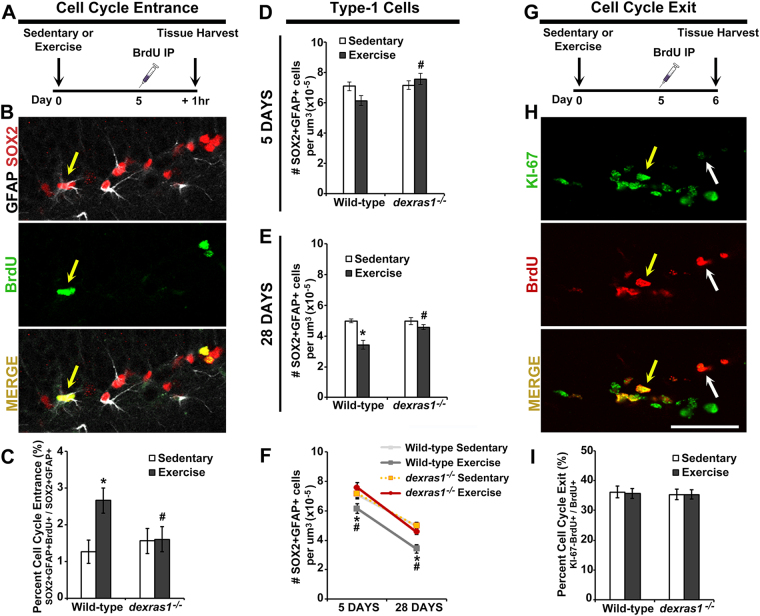
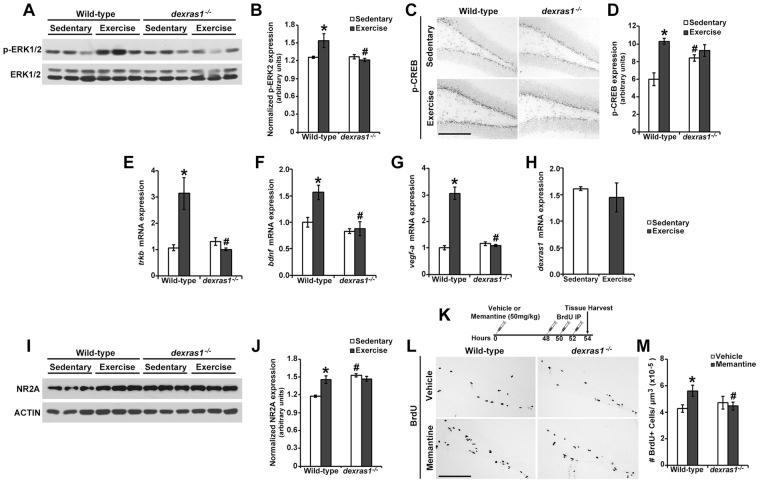
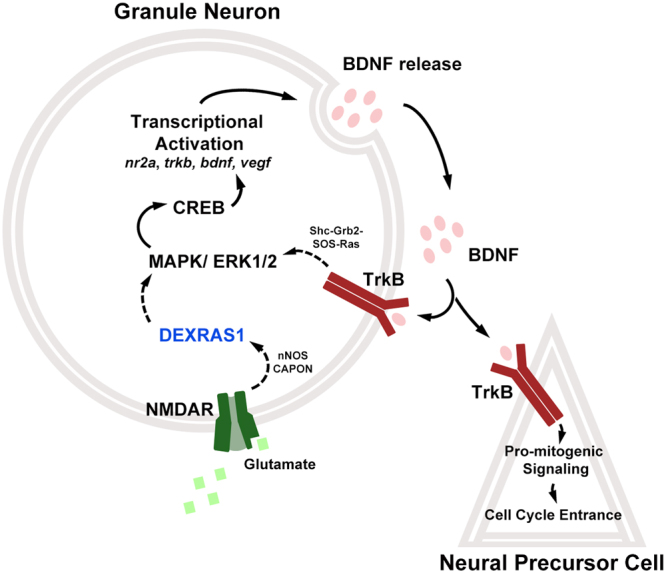
Adult hippocampal neurogenesis is highly responsive to exercise, which promotes the proliferation of neural progenitor cells and the integration of newborn granule neurons in the dentate gyrus. Here we show that genetic ablation of the small GTPase, Dexras1, suppresses exercise-induced proliferation of neural progenitors, alters survival of mitotic and post-mitotic cells in a stage-specific manner, and increases the number of mature newborn granule neurons. Dexras1 is required for exercise-triggered recruitment of quiescent neural progenitors into the cell cycle. Pharmacological inhibition of NMDA receptors enhances SGZ cell proliferation in wild-type but not dexras1-deficient mice, suggesting that NMDA receptor-mediated signaling is dependent on Dexras1. At the molecular level, the absence of Dexras1 abolishes exercise-dependent activation of ERK/MAPK and CREB, and inhibits the upregulation of NMDA receptor subunit NR2A, bdnf, trkB and vegf-a expression in the dentate gyrus. Our study reveals Dexras1 as an important stage-specific regulator of exercise-induced neurogenesis in the adult hippocampus by enhancing pro-mitogenic signaling to neural progenitor cells and modulating cell survival.
Conflict of interest statement
The authors declare no competing interests.
Figures
References
Publication types
MeSH terms
Substances
Grants and funding
LinkOut - more resources
Full Text Sources
Other Literature Sources
Molecular Biology Databases
Miscellaneous
