


Vagus Nerve as Modulator of the Brain-Gut Axis in Psychiatric and Inflammatory Disorders
- PMID: 29593576
- PMCID: PMC5859128
- DOI: 10.3389/fpsyt.2018.00044
Vagus Nerve as Modulator of the Brain-Gut Axis in Psychiatric and Inflammatory Disorders
Abstract
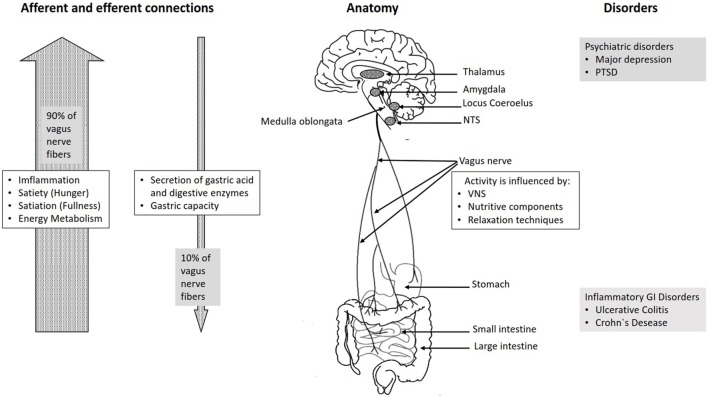
The vagus nerve represents the main component of the parasympathetic nervous system, which oversees a vast array of crucial bodily functions, including control of mood, immune response, digestion, and heart rate. It establishes one of the connections between the brain and the gastrointestinal tract and sends information about the state of the inner organs to the brain via afferent fibers. In this review article, we discuss various functions of the vagus nerve which make it an attractive target in treating psychiatric and gastrointestinal disorders. There is preliminary evidence that vagus nerve stimulation is a promising add-on treatment for treatment-refractory depression, posttraumatic stress disorder, and inflammatory bowel disease. Treatments that target the vagus nerve increase the vagal tone and inhibit cytokine production. Both are important mechanism of resiliency. The stimulation of vagal afferent fibers in the gut influences monoaminergic brain systems in the brain stem that play crucial roles in major psychiatric conditions, such as mood and anxiety disorders. In line, there is preliminary evidence for gut bacteria to have beneficial effect on mood and anxiety, partly by affecting the activity of the vagus nerve. Since, the vagal tone is correlated with capacity to regulate stress responses and can be influenced by breathing, its increase through meditation and yoga likely contribute to resilience and the mitigation of mood and anxiety symptoms.
Keywords: PTSD; depression; inflammatory bowel disease; meditation; nutrition; probiotics; vagus nerve stimulation; yoga.
Figures
References
Publication types
LinkOut - more resources
Full Text Sources
Other Literature Sources
Medical
