


Potential drug-drug interactions with direct oral anticoagulants in elderly hospitalized patients
- PMID: 29593860
- PMCID: PMC5865464
- DOI: 10.1177/2042098617719815
Potential drug-drug interactions with direct oral anticoagulants in elderly hospitalized patients
Abstract
Background: To determine the prevalence and nature of potential drug-drug interactions (DDIs) with direct oral anticoagulants (DOACs) in elderly hospitalized patients.
Methods: This was a retrospective observational study. Inclusion criteria were: aged over 65 years; taking apixaban, rivaroxaban or dabigatran; and admitted to the Repatriation General Hospital between April 2014 and July 2015. A list of clinically relevant 'perpetrator' drugs was compiled from product information, the Australian Medicines Handbook, the Australian National Prescribing Service resources, and local health network guidelines. The prevalence and nature of potential DDIs with DOACs was determined by comparing inpatient drug charts with the list of perpetrator drugs.
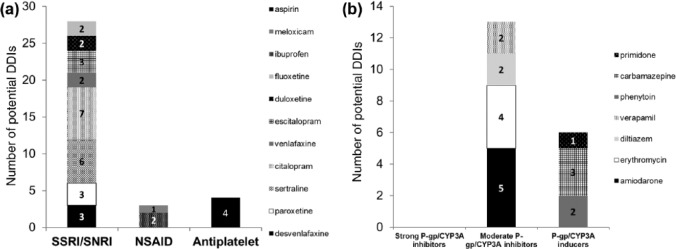
Results: There were 122 patients in the study with a mean age of 82 years. Most patients had nonvalvular atrial fibrillation and were taking DOACs to prevent thrombotic stroke (83%). Overall, 45 patients (37%) had a total of 54 potential DDIs. Thirty-five patients had potential pharmacodynamic DDIs with antidepressants, nonsteroidal anti-inflammatory drugs and antiplatelets (35/122, 29%). Nineteen patients had potential pharmacokinetic DDIs (19/122, 16%). Of these, 68% (13/19) were taking drugs that increase DOAC plasma concentrations (amiodarone, erythromycin, diltiazem or verapamil) and 32% (6/19) were taking drugs that decrease DOAC plasma concentrations (carbamazepine, primidone or phenytoin). There were no cases of patients taking contraindicated interacting drugs.
Discussion: Potential DDIs with DOACs in elderly hospital inpatients are relatively common, particularly interactions that may increase the risk of bleeding. The risk-benefit ratio of DOACs in elderly patients on polypharmacy should always be carefully considered.
Keywords: DOACs; bleeding; direct oral anticoagulants; drug–drug interactions; selective serotonin reuptake inhibitors.
Conflict of interest statement
Conflict of interest statement: The authors declare that there is no conflict of interest.
Figures
References
-
- Stöllberger C, Finsterer J. Concerns about the use of new oral anticoagulants for stroke prevention in elderly patients with atrial fibrillation. Drugs Aging 2013; 30: 949–958. - PubMed
-
- Snyder BD, Polasek TM, Doogue MP. Drug interactions: principles and practice. Aust Prescr 2012; 35: 85–88.
-
- Hellwig T, Gulseth M. Pharmacokinetic and pharmacodynamic drug interactions with new oral anticoagulants. Ann Pharmacother 2013; 47(11): 1478–1487. - PubMed
LinkOut - more resources
Full Text Sources
Other Literature Sources
Miscellaneous
