eHealth and mHealth in prostate cancer detection and active surveillance
- PMID: 29594031
- PMCID: PMC5861289
- DOI: 10.21037/tau.2017.12.22
eHealth and mHealth in prostate cancer detection and active surveillance
Abstract
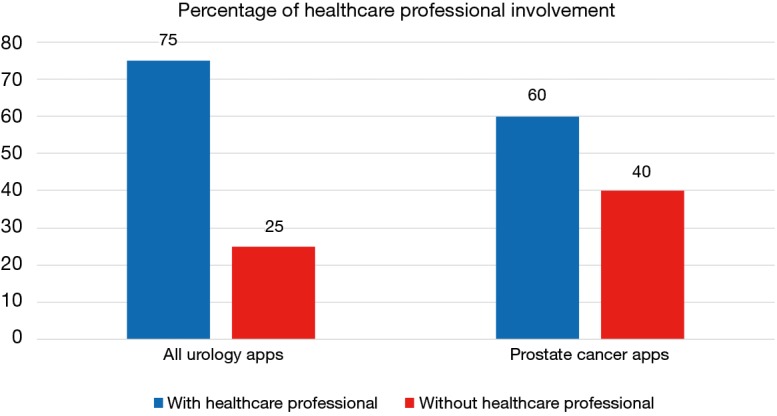
eHealth and mobile health (mHealth) offer patients, healthcare providers, researchers, and policy makers new potential to improve wellness, practice prevention and reduce suffering from diseases. While the eHealth market is growing to an expected US $26 billion, its potential in the field of Urology is still underused. Research has shown that currently only 176 apps (of the 300,000 medical apps available) were found in the Apple App Store and Google Play Store, of which 20 were prostate cancer related. Three good examples of eHealth/mHealth applications are the Rotterdam Prostate Cancer Risk Calculator (RPCRC) website and app, the Prostate cancer Research International Active Surveillance (PRIAS) website and the Follow MyPSA app for men on active surveillance for prostate cancer: they are tools with a clear vision that offer true added value in daily clinical practice and which positively influence healthcare beyond borders. To increase the uptake of eHealth applications in the coming years, it is important to involve professionals in their design and development, and to guarantee the safety and privacy of its users and their data.
Keywords: Active surveillance; e-Health; information and communication technologies (ICT); m-Health; prostate cancer.
Conflict of interest statement
Conflicts of Interest: The authors have no conflicts of interest to declare.
Figures

References
-
- World Health Organization. eHealth at WHO. Available online: http://www.who.int/ehealth/about/en/
-
- European Commission. eHealth Action Plan 2012-2020: Innovative healthcare for the 21st century. Available online: https://ec.europa.eu/digital-single-market/en/news/ehealth-action-plan-2...
Publication types
LinkOut - more resources
Full Text Sources
Other Literature Sources