


Exogenous application of the plant signalers methyl jasmonate and salicylic acid induces changes in volatile emissions from citrus foliage and influences the aggregation behavior of Asian citrus psyllid (Diaphorina citri), vector of Huanglongbing
- PMID: 29596451
- PMCID: PMC5875780
- DOI: 10.1371/journal.pone.0193724
Exogenous application of the plant signalers methyl jasmonate and salicylic acid induces changes in volatile emissions from citrus foliage and influences the aggregation behavior of Asian citrus psyllid (Diaphorina citri), vector of Huanglongbing
Abstract
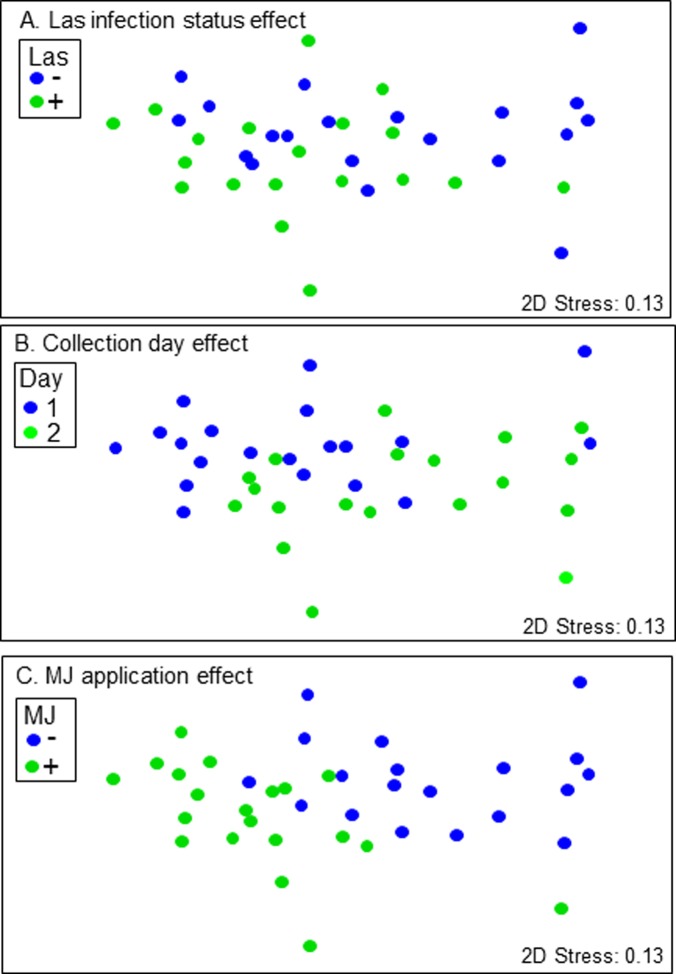
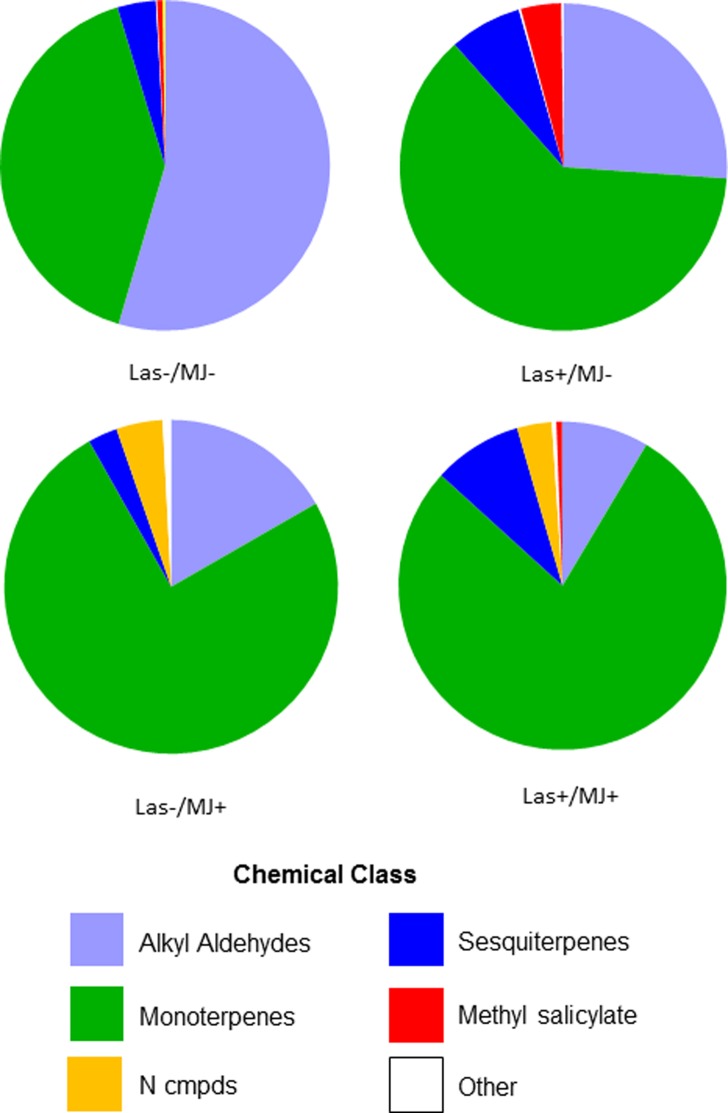
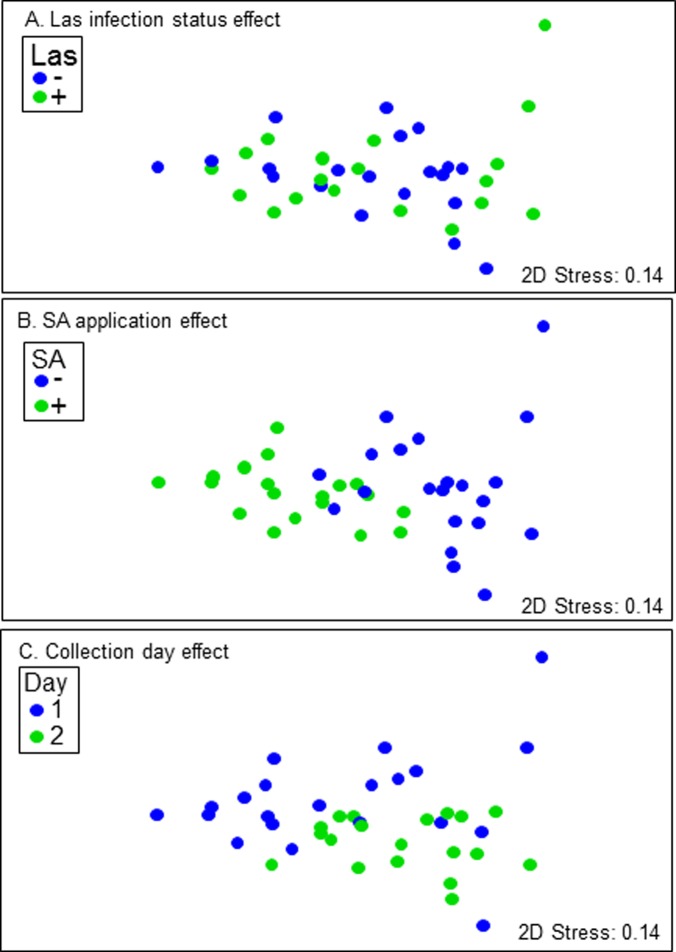
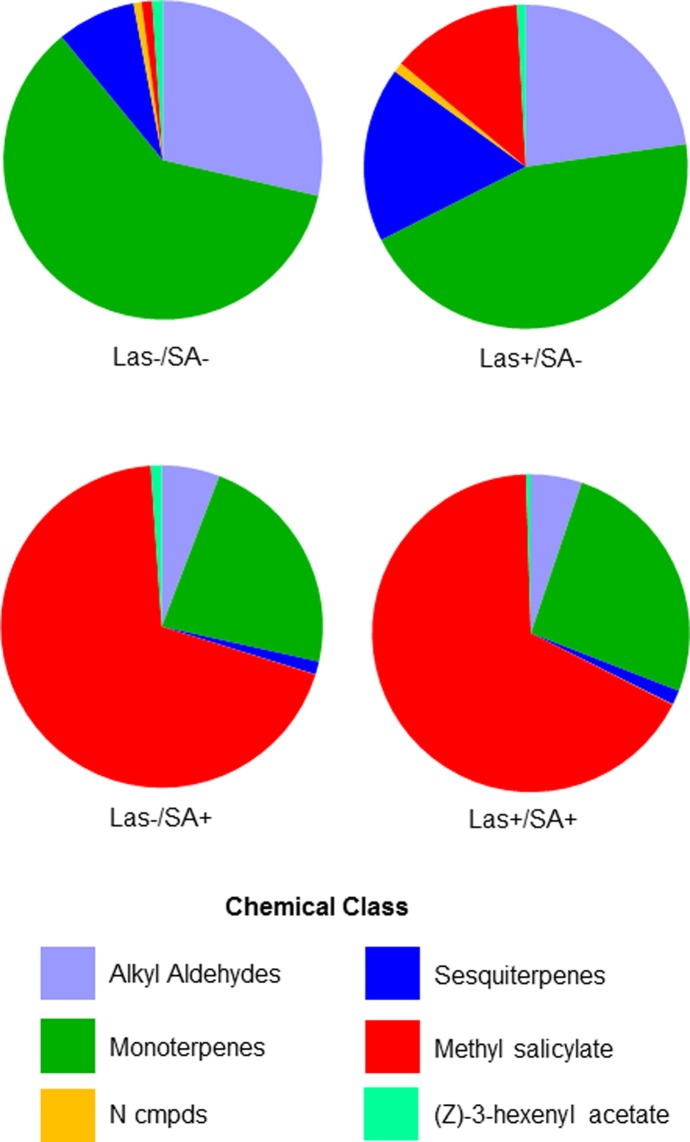
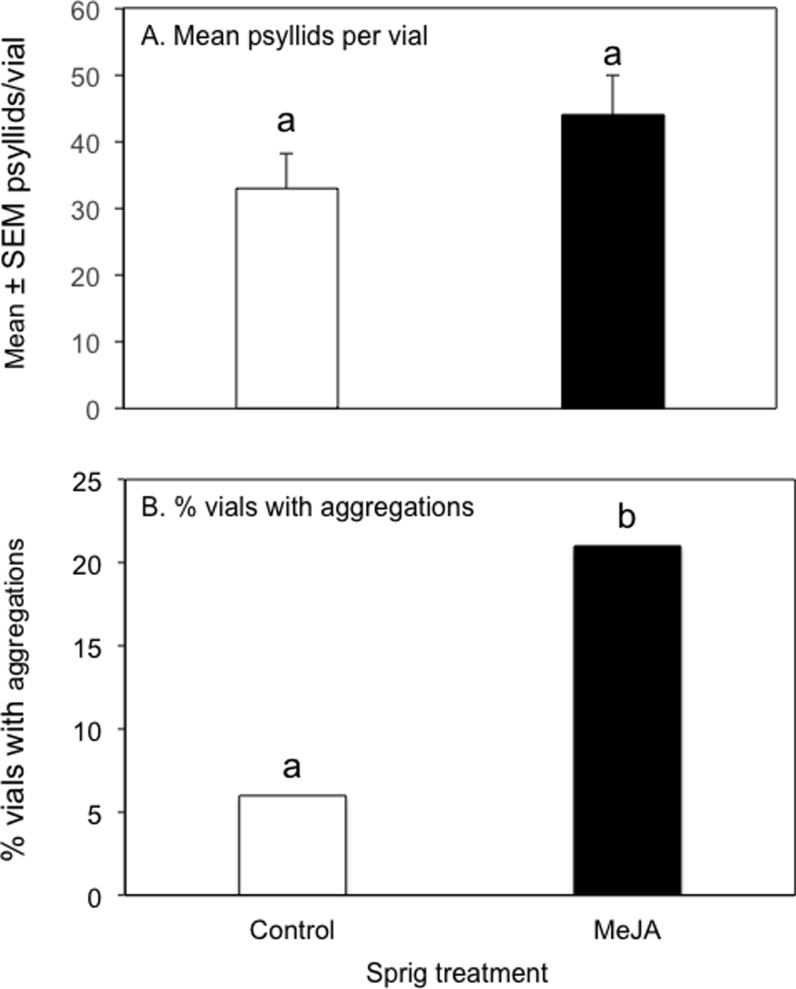
Huanglongbing, also known as citrus greening, is a destructive disease that threatens citrus production worldwide. It is putatively caused by the phloem-limited bacterium Candidatus Liberibacter asiaticus (Las). Currently, the disease is untreatable and efforts focus on intensive insecticide use to control the vector, Asian citrus psyllid (Diaphorina citri). Emerging psyllid resistance to multiple insecticides has generated investigations into the use of exogenously applied signaling compounds to enhance citrus resistance to D. citri and Las. In the present study, we examined whether foliar applications of methyl jasmonate (MJ), a volatile signaling compound associated with the induced systemic resistance pathway, and salicylic acid, a constituent of the systemic acquired resistance pathway, would elicit the emission of defense-related volatiles in citrus foliage, and what effect this might have on the host-plant searching behavior of D. citri. Comparisons were made of volatiles emitted from growing shoots of uninfected and Las-infected 'Valencia' sweet orange (Citrus sinensis) trees over two consecutive sampling days. A settling behavioral assay was used to compare psyllid attraction to MJ-treated vs. Tween-treated citrus sprigs. All three main effects, Las infection status, plant signaler application, and sampling day, influenced the proportions of individual volatile compounds emitted in different treatment groups. MJ- and SA-treated trees had higher emission rates than Tween-treated trees. Methyl salicylate (MeSA) and β-caryophyllene were present in higher proportions in the volatiles collected from Las-infected + trees. On the other hand, Las-infected + MJ-treated trees emitted lower proportions of MeSA than did Las-infected + Tween-treated trees. Because MeSA is a key D. citri attractant, this result suggests that MJ application could suppress MeSA emission from Las-infected trees, an approach that could be used to discourage psyllid colonization during shoot growth. MJ application enhanced emission of E-β-ocimene, indole, volatiles attractive to many of the psyllid's natural enemies, indicating that MJ application could be used in an 'attract and reward' conservation biological control strategy. Volatile emissions in SA-treated trees were dominated by MeSA. MJ application elicited aggregation behavior in D. citri. Similar numbers of psyllids settled on MJ-treated versus Tween-treated sprigs, but a significantly greater percentage of the MJ-treated sprigs had aggregations of nine or more psyllids on them. Taken together, the results of this study indicate that exogenous applications of MJ or SA could be used to influence Asian citrus psyllid settling behavior and attract its natural enemies.
Conflict of interest statement
Figures
References
-
- Citrus Research and Education Center. Greening or Huanglongbing (HLB) Worldwide; 2015. Available from: http://www.crec.ifas.ufl.edu/extension/greening/history.shtml
-
- Boveé JM. Huanglongbing: A destructive, newly emerging, century-old disease of citrus. Journal of Plant Pathology 2006; 88: 7–37.
-
- Gottwald TR. Current epidemiological understanding of citrus Huanglongbing. Annual Review of Phytopathology 2010; 48: 119–39. doi: 10.1146/annurev-phyto-073009-114418 - DOI - PubMed
-
- Moss CB, Grogan KA, Farnsworth D, van Bruggen AHC. The economic cost of huanglongbing (citrus greening) to Florida’s orange industry: estimates of producer and consumer surplus. In: UF Food Resources and Economics Department. Available from: http://www.imok.ufl.edu/hlb/database/pdf/10V_Moss_14.pdf. Accessed 1 Oct 2015.
-
- Court CD, Hodges AW, Rahmani M, Spreen TH. Economic Contributions of the Florida Citrus Industry in 2015–16 Final sponsored project report to the Florida Department of Citrus. University of Florida Food and Resource Economics Department, Gainesville, Florida: (2017) Available from: http://fred.ifas.ufl.edu/pdf/economic-impact-analysis/Economic_Impacts_o...
Publication types
MeSH terms
Substances
LinkOut - more resources
Full Text Sources
Other Literature Sources
