


Comparison of the immune response during acute and chronic Staphylococcus aureus infection
- PMID: 29596507
- PMCID: PMC5875981
- DOI: 10.1371/journal.pone.0195342
Comparison of the immune response during acute and chronic Staphylococcus aureus infection
Abstract
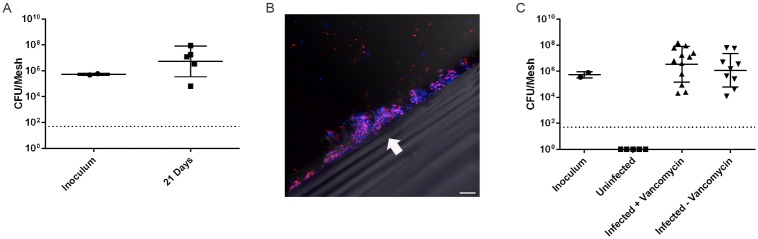
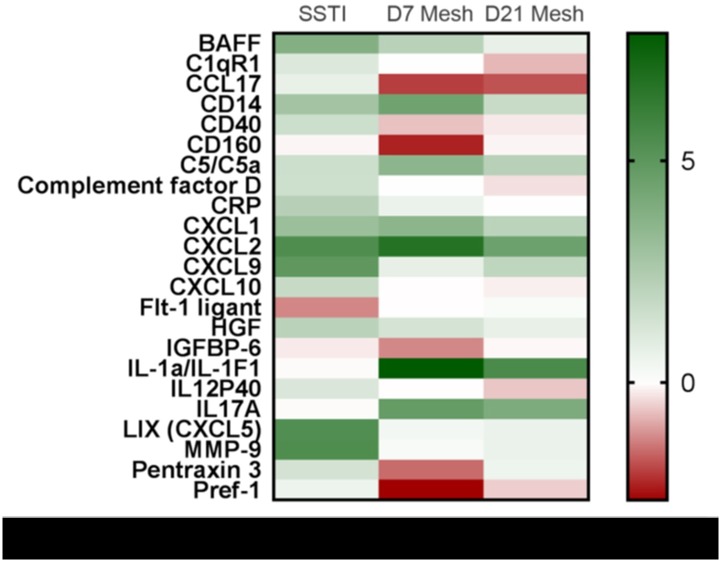
Staphylococcus aureus bacteria are able to grow in a planktonic state that is associated with acute infections and in biofilms that are associated with chronic infections. Acute infections, such as skin infections, are often self-limiting. However, chronic infections, such as implant infections, can be difficult to clear and may require surgical intervention. The host immune response may contribute to the different outcomes often associated with these two disease types. We used proteomic arrays and two murine models for an initial, descriptive characterization of the contribution of the host immune response to outcomes of acute versus chronic S. aureus disease. We compared the immune responses between a model of self-limiting skin and soft tissue infection caused by the planktonic form of S. aureus versus a model of surgical mesh implant infection, which we show to be caused by a bacterial biofilm. The significantly altered host cytokines and chemokines were largely different in the two models, with responses diminished by 21 days post-implantation in surgical mesh infection. Because bacterial levels remained constant during the 21 days that the surgical mesh infection was followed, those cytokines that are significantly increased during chronic infection are not likely effective in eradicating biofilm. Comparison of the levels of cytokines and chemokines in acute versus chronic S. aureus infection can provide a starting point for evaluation of the role of specific immune factors that are present in one disease manifestation but not the other.
Conflict of interest statement
Figures
References
-
- Krespi YP, Kizhner V. Laser-assisted nasal decolonization of Staphylococcus aureus, including methicillin-resistant Staphylococcus aureus. Am J Otolaryngol. 2012;33(5):572–5. Epub 2012/04/17. doi: 10.1016/j.amjoto.2012.02.002 . - DOI - PubMed
-
- Klevens RM, Morrison MA, Nadle J, Petit S, Gershman K, Ray S, et al. Invasive Methicillin-Resistant Staphylococcus aureus Infections in the United States. JAMA. 2007;298(15):1763–71. doi: 10.1001/jama.298.15.1763 - DOI - PubMed
-
- Brady RA, Mocca CP, Prabhakara R, Plaut RD, Shirtliff ME, Merkel TJ, et al. Evaluation of genetically inactivated alpha toxin for protection in multiple mouse models of Staphylococcus aureus infection. PLoS One. 2013;8(4):e63040 doi: 10.1371/journal.pone.0063040 - DOI - PMC - PubMed
-
- Harro JM, Daugherty S, Bruno VM, Jabra-Rizk MA, Rasko DA, Shirtliff ME. Draft Genome Sequence of the Methicillin-Resistant Staphylococcus aureus Isolate MRSA-M2. Genome Announc. 2013;1(1). doi: 10.1128/genomeA.00037-12 - DOI - PMC - PubMed
-
- Highlander SK, Hulten KG, Qin X, Jiang H, Yerrapragada S, Mason EO, et al. Subtle genetic changes enhance virulence of methicillin resistant and sensitive Staphylococcus aureus. BMC Microbiol. 2007;7(1):99 doi: 10.1186/1471-2180-7-99 - DOI - PMC - PubMed
Publication types
MeSH terms
LinkOut - more resources
Full Text Sources
Other Literature Sources
Medical
