


Dimethyl fumarate targets GAPDH and aerobic glycolysis to modulate immunity
- PMID: 29599194
- PMCID: PMC5924419
- DOI: 10.1126/science.aan4665
Dimethyl fumarate targets GAPDH and aerobic glycolysis to modulate immunity
Abstract
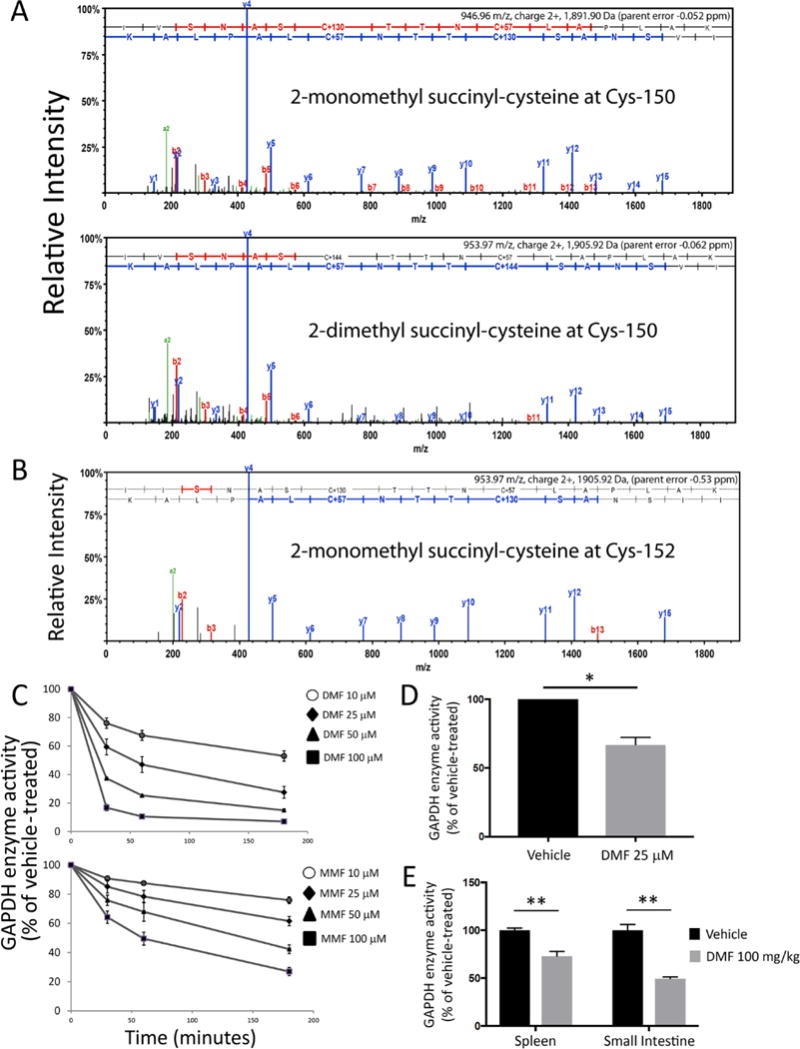
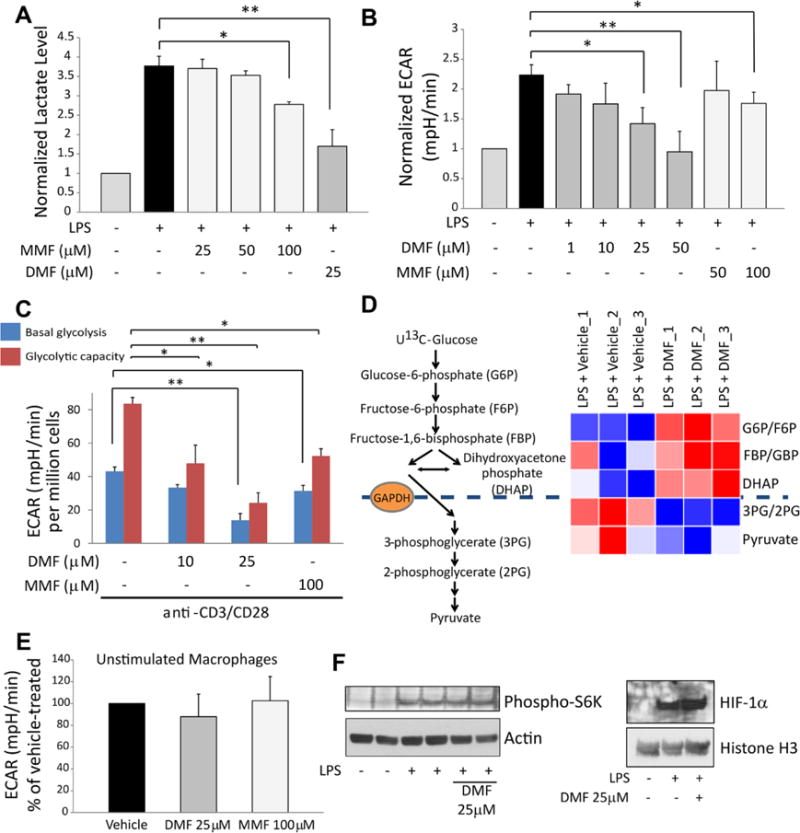
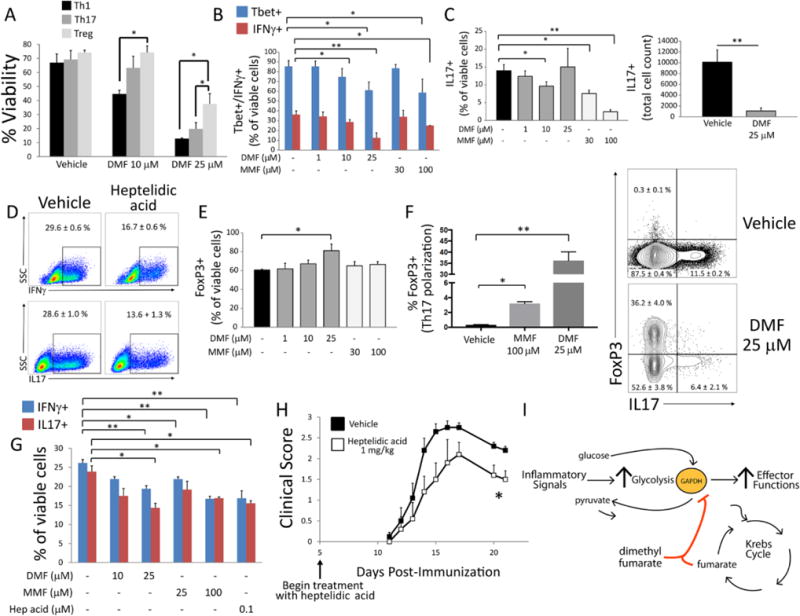
Activated immune cells undergo a metabolic switch to aerobic glycolysis akin to the Warburg effect, thereby presenting a potential therapeutic target in autoimmune disease. Dimethyl fumarate (DMF), a derivative of the Krebs cycle intermediate fumarate, is an immunomodulatory drug used to treat multiple sclerosis and psoriasis. Although its therapeutic mechanism remains uncertain, DMF covalently modifies cysteine residues in a process termed succination. We found that DMF succinates and inactivates the catalytic cysteine of the glycolytic enzyme glyceraldehyde 3-phosphate dehydrogenase (GAPDH) in mice and humans, both in vitro and in vivo. It thereby down-regulates aerobic glycolysis in activated myeloid and lymphoid cells, which mediates its anti-inflammatory effects. Our results provide mechanistic insight into immune modulation by DMF and represent a proof of concept that aerobic glycolysis is a therapeutic target in autoimmunity.
Copyright © 2018 The Authors, some rights reserved; exclusive licensee American Association for the Advancement of Science. No claim to original U.S. Government Works.
Conflict of interest statement
P.A.C. has received research funding in the past from Biogen, the company that sells DMF (trade name Tecfidera) as a therapy for MS. He received a consulting honorarium from Biogen in 2015 for work related to the compound opicinumab. The other authors declare no competing interests.
Figures

Comment in
-
Immunometabolism: Old drug, new trick.Nat Rev Immunol. 2018 May;18(5):295. doi: 10.1038/nri.2018.29. Epub 2018 Apr 16. Nat Rev Immunol. 2018. PMID: 29658511 No abstract available.
-
Disrupting metabolism to treat autoimmunity.Science. 2018 Apr 27;360(6387):377-378. doi: 10.1126/science.aat4984. Science. 2018. PMID: 29700251 No abstract available.
-
Dimethyl fumarate: targeting glycolysis to treat MS.Cell Res. 2018 Jun;28(6):613-615. doi: 10.1038/s41422-018-0045-3. Cell Res. 2018. PMID: 29844579 Free PMC article. No abstract available.
References
-
- Tannahill GM, Curtis AM, Adamik J, Palsson-McDermott EM, McGettrick AF, Goel G, Frezza C, Bernard NJ, Kelly B, Foley NH, Zheng L, Gardet A, Tong Z, Jany SS, Corr SC, Haneklaus M, Caffrey BE, Pierce K, Walmsley S, Beasley FC, Cummins E, Nizet V, Whyte M, Taylor CT, Lin H, Masters SL, Gottlieb E, Kelly VP, Clish C, Auron PE, Xavier RJ, O’Neill LAJ. Succinate is an inflammatory signal that induces IL-1β through HIF-1α. Nature. 2013;496:238–242. doi: 10.1038/nature11986. - DOI - PMC - PubMed
Publication types
MeSH terms
Substances
Grants and funding
LinkOut - more resources
Full Text Sources
Other Literature Sources
Research Materials
