


Streptococcus suis - The "Two Faces" of a Pathobiont in the Porcine Respiratory Tract
- PMID: 29599763
- PMCID: PMC5862822
- DOI: 10.3389/fmicb.2018.00480
Streptococcus suis - The "Two Faces" of a Pathobiont in the Porcine Respiratory Tract
Abstract
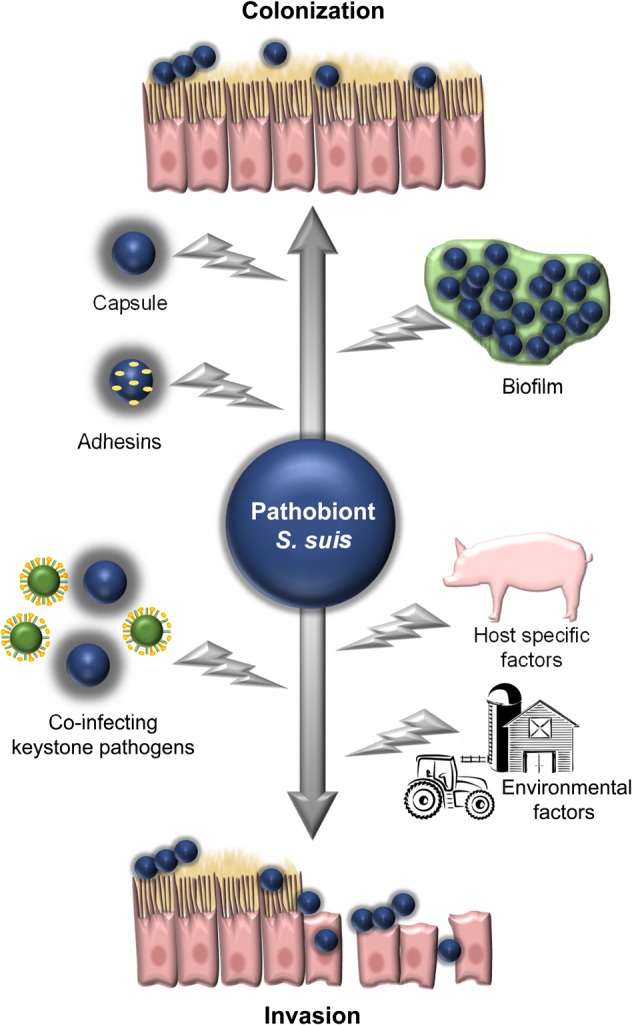
Streptococcus (S.) suis is a frequent early colonizer of the upper respiratory tract of pigs. In fact, it is difficult to find S. suis-free animals under natural conditions, showing the successful adaptation of this pathogen to its porcine reservoir host. On the other hand, S. suis can cause life-threatening diseases and represents the most important bacterial cause of meningitis in pigs worldwide. Notably, S. suis can also cause zoonotic infections, such as meningitis, septicemia, endocarditis, and other diseases in humans. In Asia, it is classified as an emerging zoonotic pathogen and currently considered as one of the most important causes of bacterial meningitis in adults. The "two faces" of S. suis, one of a colonizing microbe and the other of a highly invasive pathogen, have raised many questions concerning the interpretation of diagnostic detection and the definition of virulence. Thus, one major research challenge is the identification of virulence-markers which allow differentiation of commensal and virulent strains. This is complicated by the high phenotypic and genotypic diversity of S. suis, as reflected by the occurrence of (at least) 33 capsular serotypes. In this review, we present current knowledge in the context of S. suis as a highly diverse pathobiont in the porcine respiratory tract that can exploit disrupted host homeostasis to flourish and promote inflammatory processes and invasive diseases in pigs and humans.
Keywords: Streptococcus suis; co-infections; pathobiont; porcine respiratory tract; respiratory infections.
Figures
References
-
- Auray G., Lachance C., Wang Y., Gagnon C. A., Segura M., Gottschalk M. (2016). Transcriptional analysis of PRRSV-infected porcine dendritic cell response to Streptococcus suis infection reveals up-regulation of inflammatory-related genes expression. PLoS One 11:e0156019. 10.1371/journal.pone.0156019 - DOI - PMC - PubMed
Publication types
LinkOut - more resources
Full Text Sources
Other Literature Sources
