Editorial
doi: 10.21037/jtd.2017.12.26.
Temperature and duration targets during post-arrest care: choosing the right prescription for the right patient
Affiliations
- PMID: 29600010
- PMCID: PMC5863178
- DOI: 10.21037/jtd.2017.12.26
Item in Clipboard
Editorial
Temperature and duration targets during post-arrest care: choosing the right prescription for the right patient
J Thorac Dis.
2018 Jan.
No abstract available
Conflict of interest statement
Conflicts of Interest: Dr. Abella receives speaking honoraria from CR Bard and Physio-Control. The other authors have no conflicts of interest to declare.
Figures
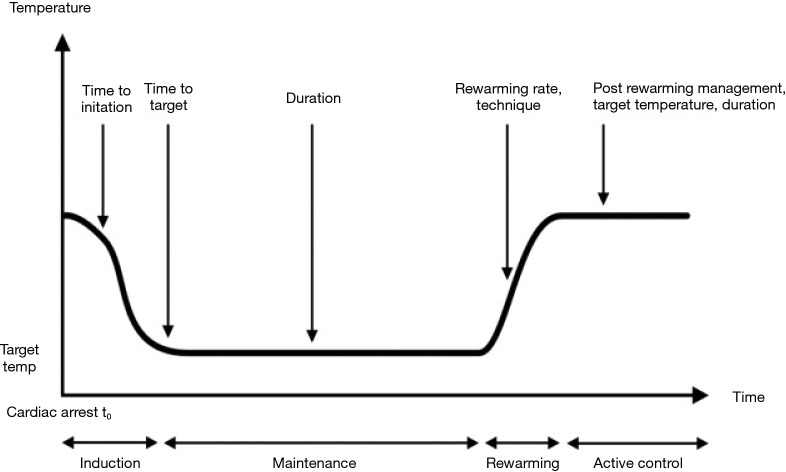
Prescription considerations in targeted temperature management.
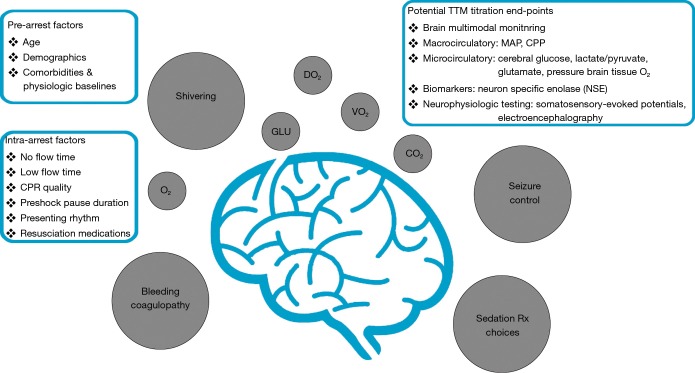
Potential clinical confounders and treatment endpoints in targeted temperature management. Glucose (GLU), delivery of oxygen (DO2), oxygen consumption (VO2), carbon dioxide (CO2), tissue oxygen level (O2), shivering, seizures, sedation, bleeding, and coagulopathy.
Comment in
-
Prolonged targeted temperature management in patients suffering from out-of-hospital cardiac arrest.J Thorac Dis. 2018 Oct;10(10):E752-E754. doi: 10.21037/jtd.2018.09.78. J Thorac Dis. 2018. PMID: 30505518 Free PMC article. No abstract available.
Comment on
-
Targeted Temperature Management for 48 vs 24 Hours and Neurologic Outcome After Out-of-Hospital Cardiac Arrest: A Randomized Clinical Trial.JAMA. 2017 Jul 25;318(4):341-350. doi: 10.1001/jama.2017.8978. JAMA. 2017. PMID: 28742911 Free PMC article. Clinical Trial.
References
Publication types
LinkOut - more resources
Full Text Sources
Other Literature Sources