


Histone/protein deacetylase inhibitor therapy for enhancement of Foxp3+ T-regulatory cell function posttransplantation
- PMID: 29603600
- PMCID: PMC6035084
- DOI: 10.1111/ajt.14749
Histone/protein deacetylase inhibitor therapy for enhancement of Foxp3+ T-regulatory cell function posttransplantation
Abstract
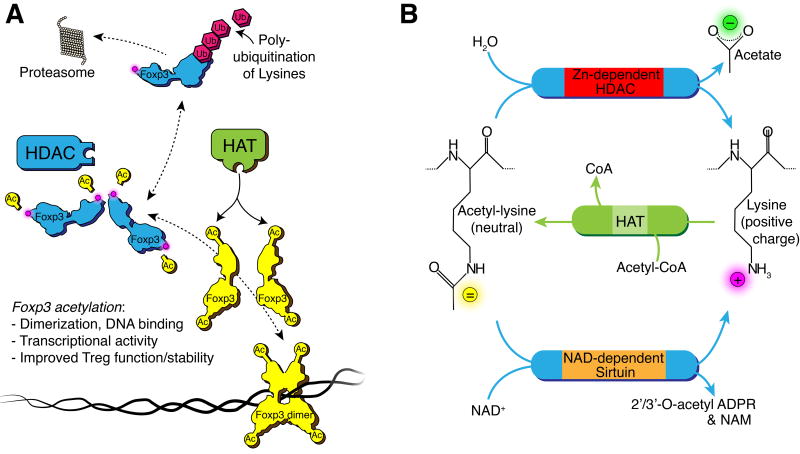
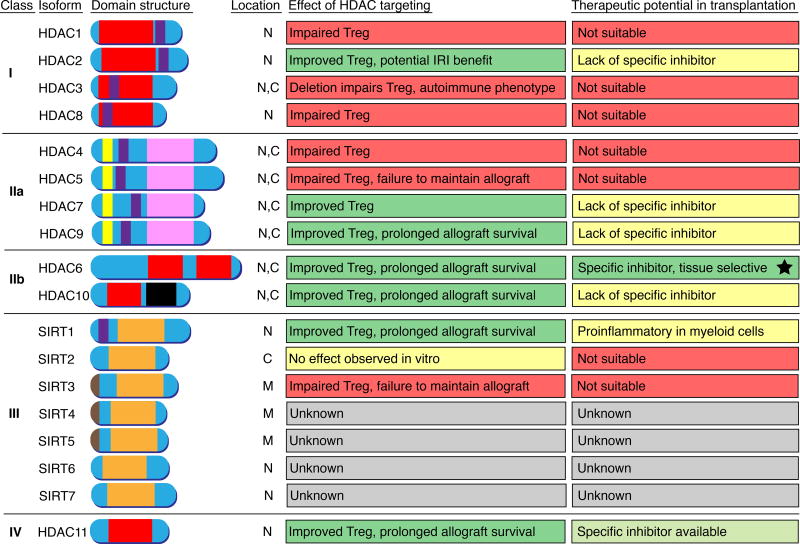
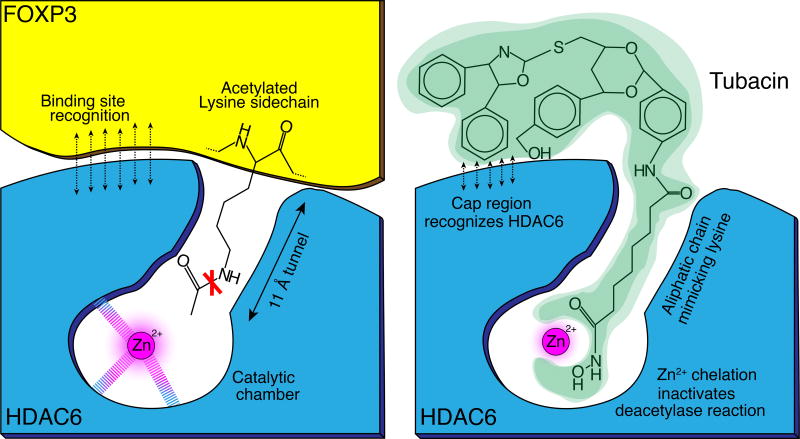
T-regulatory (Treg) cells are like other cells present throughout the body in being subject to biochemical modifications in response to extracellular signals. An important component of these responses involves changes in posttranslational modifications (PTMs) of histones and many nonhistone proteins, including phosphorylation/dephosphorylation, ubiquitination/deubiquitination, and acetylation/deacetylation. Foxp3, the key transcription factor of Tregs, is constantly being rapidly turned over, and a number of these PTMs determine its level of expression and activity. Of interest in the transplant setting, modulation of the acetylation or deacetylation of key lysine residues in Foxp3 can promote the stability and function, leading to increased Treg production and increased Treg suppressive activity. This mini-review focuses on recent data concerning the roles that histone/protein deacetylases (HDACs) play in control of Treg function, and how small molecule HDAC inhibitors can be used to promote Treg-dependent allograft survival in experimental models. These data are discussed in the light of increasing interest in the identification and clinical evaluation of isoform-selective HDAC inhibitors, and their potential application as tools to modulate Foxp3+ Treg cell numbers and function in transplant recipients.
Keywords: T cell biology; basic (laboratory) research/science; cellular biology; immunobiology; immunosuppressant - other; immunosuppression/immune modulation; tolerance; translational research/science.
© 2018 The American Society of Transplantation and the American Society of Transplant Surgeons.
Conflict of interest statement
The authors of this manuscript have no conflicts of interest to disclose as described by the American Journal of Transplantation.
Figures
References
-
- Nishizuka Y, Sakakura T. Thymus and reproduction: sex-linked dysgenesia of the gonad after neonatal thymectomy in mice. Science. 1969;166:753–755. - PubMed
-
- Sakaguchi S, Sakaguchi N, Asano M, Itoh M, Toda M. Immunologic self-tolerance maintained by activated T cells expressing IL-2 receptor alpha-chains (CD25). Breakdown of a single mechanism of self-tolerance causes various autoimmune diseases. J Immunol. 1995;155:1151–1164. - PubMed
-
- Wildin RS, Ramsdell F, Peake J, Faravelli F, Casanova JL, Buist N, et al. X-linked neonatal diabetes mellitus, enteropathy and endocrinopathy syndrome is the human equivalent of mouse scurfy. Nat Genet. 2001;27:18–20. - PubMed
-
- Bennett CL, Christie J, Ramsdell F, Brunkow ME, Ferguson PJ, Whitesell L, et al. The immune dysregulation, polyendocrinopathy, enteropathy, X-linked syndrome (IPEX) is caused by mutations of FOXP3. Nat Genet. 2001;27:20–21. - PubMed
-
- Brunkow ME, Jeffery EW, Hjerrild KA, Paeper B, Clark LB, Yasayko SA, et al. Disruption of a new forkhead/winged-helix protein, scurfin, results in the fatal lymphoproliferative disorder of the scurfy mouse. Nat Genet. 2001;27:68–73. - PubMed
Publication types
MeSH terms
Substances
Grants and funding
LinkOut - more resources
Full Text Sources
Other Literature Sources
Medical
Miscellaneous
