


Early and prolonged opportunities to practice suturing increases medical student comfort with suturing during clerkships: Suturing during cadaver dissection
- PMID: 29603672
- PMCID: PMC6165707
- DOI: 10.1002/ase.1785
Early and prolonged opportunities to practice suturing increases medical student comfort with suturing during clerkships: Suturing during cadaver dissection
Abstract
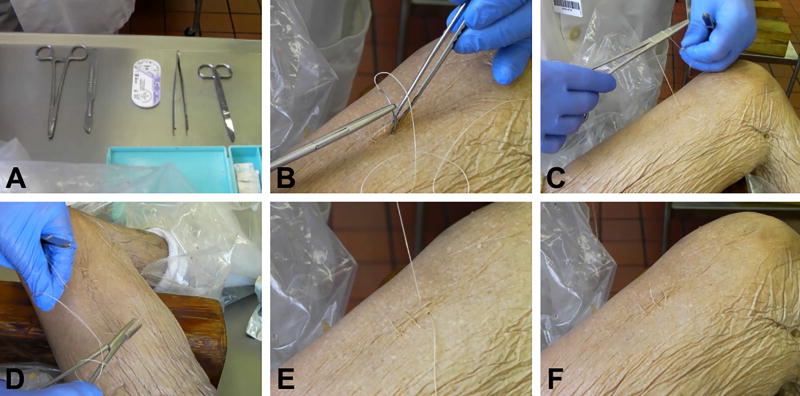
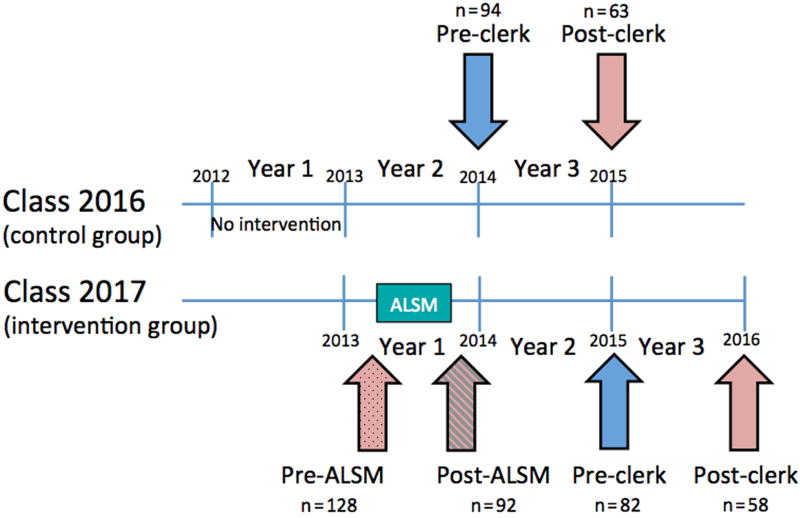
Medical students are expected to perform common procedures such as suturing on patients during their third-year clerkships. However, these experiences are often viewed by medical students as stressors rather than opportunities for learning. The source of this stress is the lack of instruction on common procedures prior to being asked to observe or perform the procedure on a patient. First-time exposures to procedures in stressful environments may result in decreased confidence in medical students and decrease the frequency with which they perform these procedures in the future. The authors sought to change this paradigm by: (1) introducing a suturing module to first-year medical students in the context of the anatomy dissection laboratory and (2) measuring its effects on student attitudes and behavior over the course of their third-year clerkships when they encounter patients. The authors found that early and prolonged introduction to suturing was associated with increased student confidence relative to suturing a patient. Participation in the suturing module was associated with increased student confidence in identifying suturing instruments (P < 0.001) and suturing patients (P = 0.013). Further it positively affected their behavior as demonstrated by increased performance of suturing events from students exposed to the suturing module. (P < 0.001) This study demonstrates that early and prolonged opportunities to practice a procedural skill in a low-stress environment increases student confidence during patient interactions and alters student behavior.
Keywords: behavioral change; confidence; early exposure; gross anatomy education; gross anatomy laboratory; medical education; surgical skills; suturing module.
© 2018 American Association of Anatomists.
Conflict of interest statement
The authors have no conflicts of interest to disclose.
Figures
References
-
- AAMC. Learning objectives for medical student education—Guidelines for medical schools: Report I of the Medical School Objectives Project. Acad Med. 1999;74:13–18. - PubMed
-
- Are C, Stoddard HA, Northam LC, Thompson JS, Todd GL. An experience in surgical anatomy to provide first-year medical students with an early exposure to general surgery: A pilot study. J Surg Educ. 2009;66:186–189. - PubMed
-
- Are C, Stoddard HA, Thompson JS, Todd GL. The influence of surgical demonstrations during an anatomy course on the perceptions of first-year medical students toward surgeons and a surgical career. J Surg Educ. 2010;67:320–324. - PubMed
-
- Böckers A, Mayer C, Böckers TM. Does learning in clinical context in anatomical sciences improve examination results, learning motivation, or learning orientation? Anat Sci Educ. 2014;7:3–11. - PubMed
MeSH terms
Grants and funding
LinkOut - more resources
Full Text Sources
Other Literature Sources
Medical
