A fluid membrane enhances the velocity of cargo transport by small teams of kinesin-1
- PMID: 29604873
- PMCID: PMC6910576
- DOI: 10.1063/1.5006806
A fluid membrane enhances the velocity of cargo transport by small teams of kinesin-1
Abstract
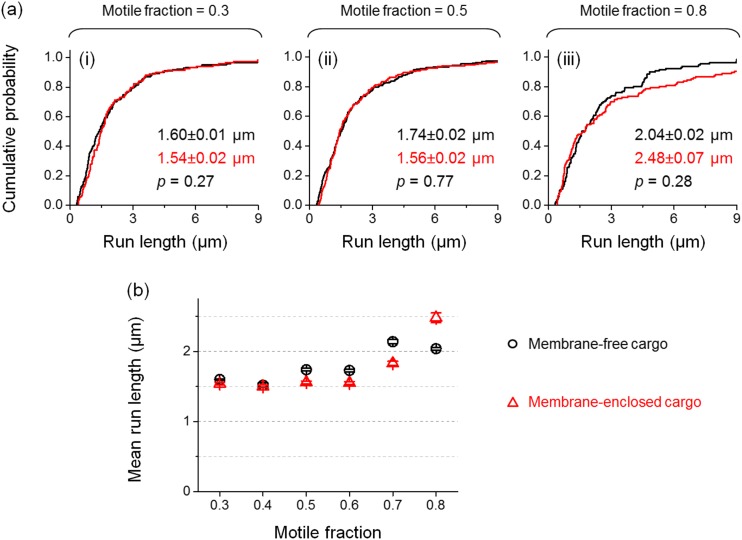
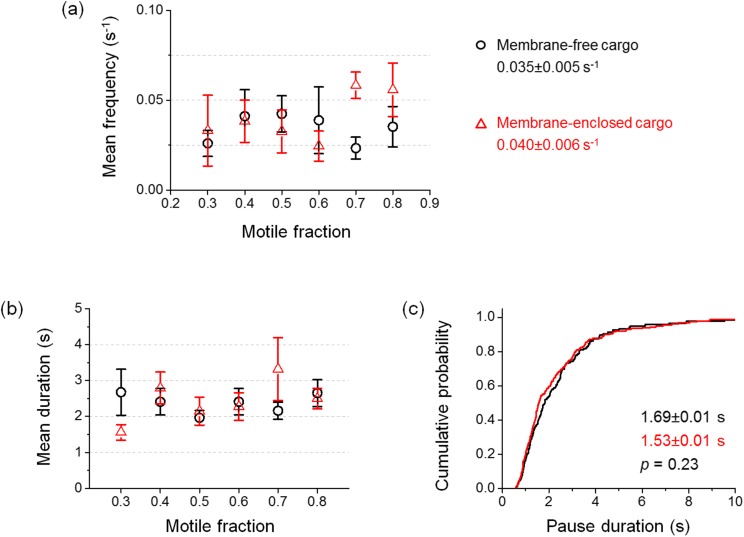
Kinesin-1 (hereafter referred to as kinesin) is a major microtubule-based motor protein for plus-end-directed intracellular transport in live cells. While the single-molecule functions of kinesin are well characterized, the physiologically relevant transport of membranous cargos by small teams of kinesins remains poorly understood. A key experimental challenge remains in the quantitative control of the number of motors driving transport. Here we utilized "motile fraction" to overcome this challenge and experimentally accessed transport by a single kinesin through the physiologically relevant transport by a small team of kinesins. We used a fluid lipid bilayer to model the cellular membrane in vitro and employed optical trapping to quantify the transport of membrane-enclosed cargos versus traditional membrane-free cargos under identical conditions. We found that coupling motors via a fluid membrane significantly enhances the velocity of cargo transport by small teams of kinesins. Importantly, enclosing a cargo in a fluid lipid membrane did not impact single-kinesin transport, indicating that membrane-dependent velocity enhancement for team-based transport arises from altered interactions between kinesins. Our study demonstrates that membrane-based coupling between motors is a key determinant of kinesin-based transport. Enhanced velocity may be critical for fast delivery of cargos in live cells.
Figures



References
MeSH terms
Substances
Grants and funding
LinkOut - more resources
Full Text Sources
Other Literature Sources