Review
. 2018:152:167-176.
doi: 10.1016/B978-0-444-63849-6.00013-X.

CNS immune reconstitution inflammatory syndrome

Affiliations
Review

CNS immune reconstitution inflammatory syndrome

Lauren Bowen et al. Handb Clin Neurol. 2018.

Abstract

Immune reconstitution inflammatory syndrome (IRIS) describes a syndrome of aberrant reconstituted immunity, often in association with HIV infection, beginning with a normalization of CD4+ T-cell counts resulting in a dysregulated immune response against an infecting opportunistic pathogen and the host. In this chapter, we discuss the unique nature of IRIS when present in the central nervous system (CNS IRIS) and the changes experienced with each host pathogen and its unique influence on the immune system. Consensus on the mechanism of action of the immune system in IRIS pathology is less clear and multiple theories have been proposed. Here we explore the early history of the term IRIS, proposed mechanisms and animal models, as well as common CNS pathogens associated with IRIS, and management strategies.

Keywords: CNS immune reconstitution inflammatory syndrome (CNS IRIS); Cryptococcus neoformans; HIV encephalitis; Toxoplasma gondii; progressive multifocal leukoencephalopathy (PML).


Figures

Fig. 13.1.
Fig. 13.1.
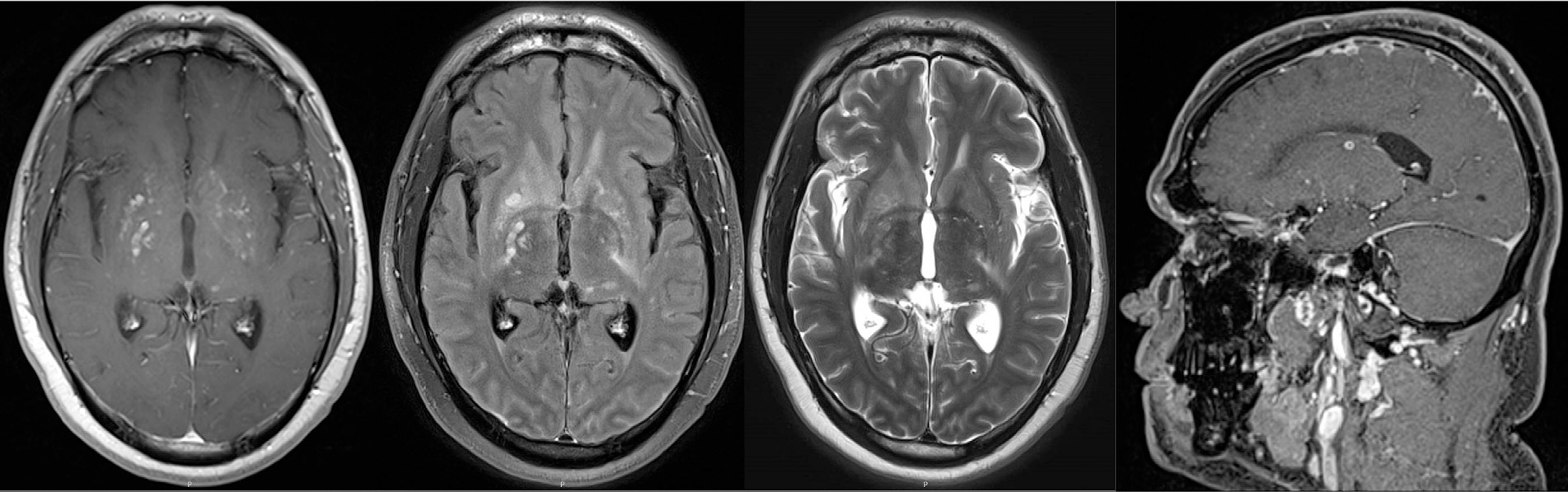
Recurrent cryptococcal meningitis immune reconstitution inflammatory syndrome. Magnetic resonance imaging (MRI) sequences from left to right: axial T1 postcontrast, postcontrast T2 fluid-attenuated inversion recovery (FLAIR), T2, and sagittal three-dimensional (3D) T1 postcontrast. MRI sequences show multiple enhancing foci in the bilateral basal ganglia and periventricular white matter. Abnormal enhancement is seen along the posterior margins of the anterior interhemispheric fissure in the sagittal 3D T1 images and abnormal postcontrast signal within the anterior falx and leptomeninges representing meningitis is seen on contrasted T2 FLAIR.
Fig. 13.2.
Fig. 13.2.
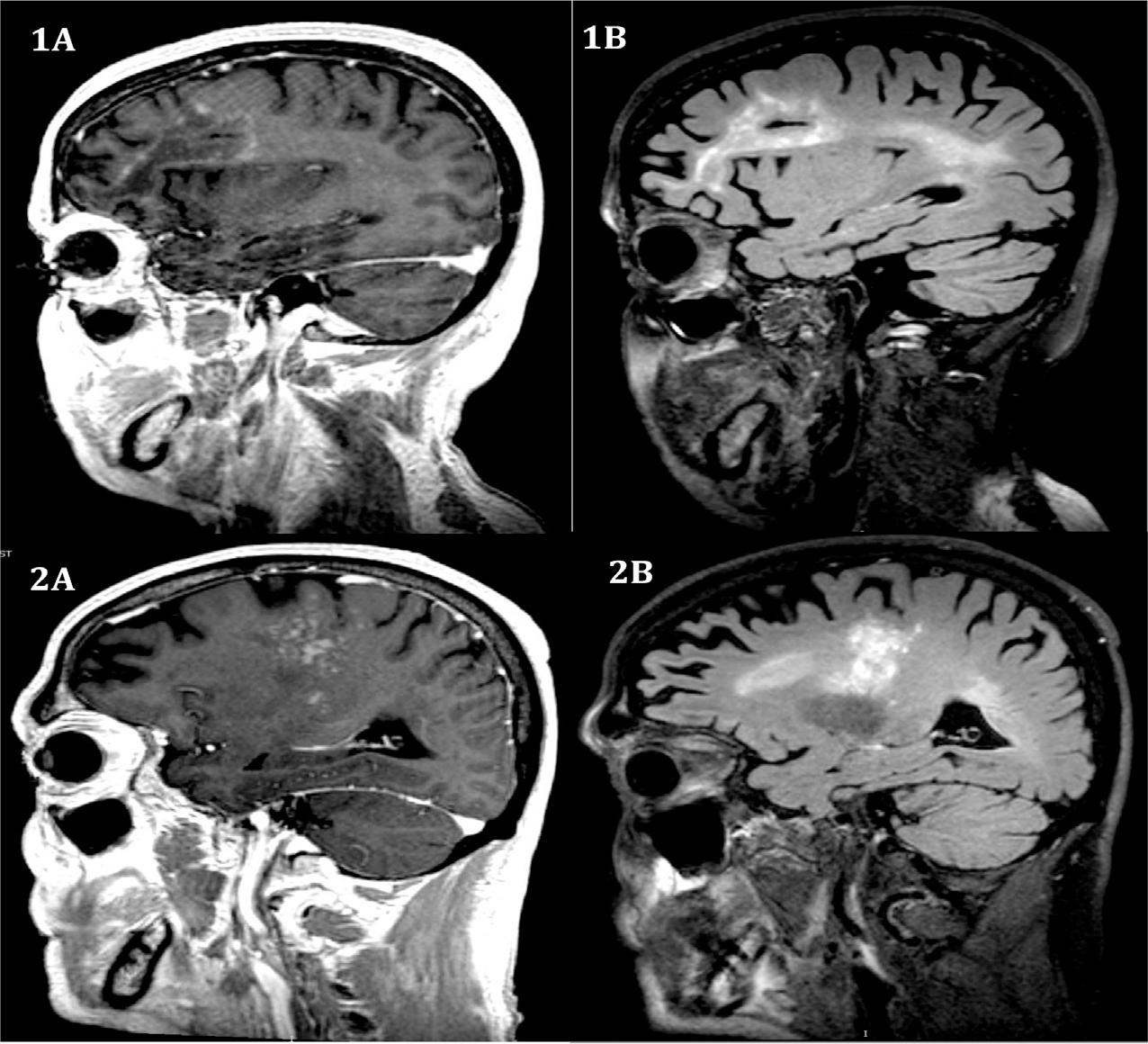
Patterns of contrast enhancement in progressive multifocal leukoencephalopathy immune reconstitution inflammatory syndrome. Magnetic resonance imaging sequences from left to right: post-GAD T1, post-GAD T2 fluid-attenuated inversion recovery (FLAIR). (1A) Circumferential enhancement with a left frontal-lobe lesion with incomplete linear enhancement at the leading edge. (1B) Large left frontal and confluent left parietal lobe lesion with extension to the left temporal lobe. Patchy contrast enhancement is again seen at the leading edges of the frontal lobe lesion. (2A) Nodular enhancement in the right posterior frontal lobe extending into the periventricular deep white-matter structures and right thalamus. (2B) Diffuse T2/FLAIR signal hyperintensity within the right thalamus extending into the right frontal lobe, and right periventricular deep white matter.
Fig. 13.3.
Fig. 13.3.
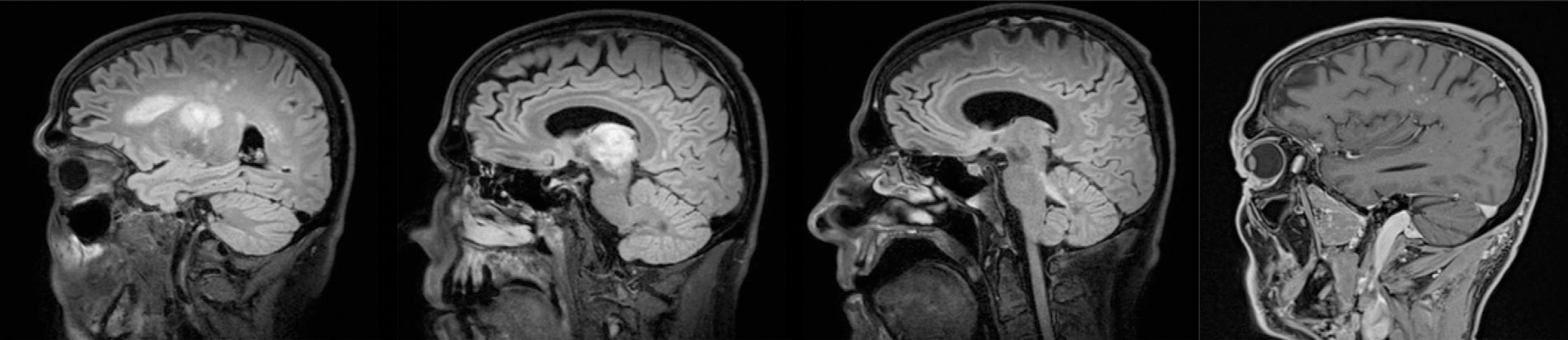
Progressive multifocal leukoencephalopathy immune reconstitution inflammatory syndrome. Magnetic resonance imaging sequences from left to right show extensive T2 fluid-attenuated inversion recovery hyperintensity extending from the right subcortical white matter through the right thalamus into the left cerebellar peduncle. T1 postcontrast imaging in the fourth panel shows punctate enhancement.
Fig. 13.4.
Fig. 13.4.
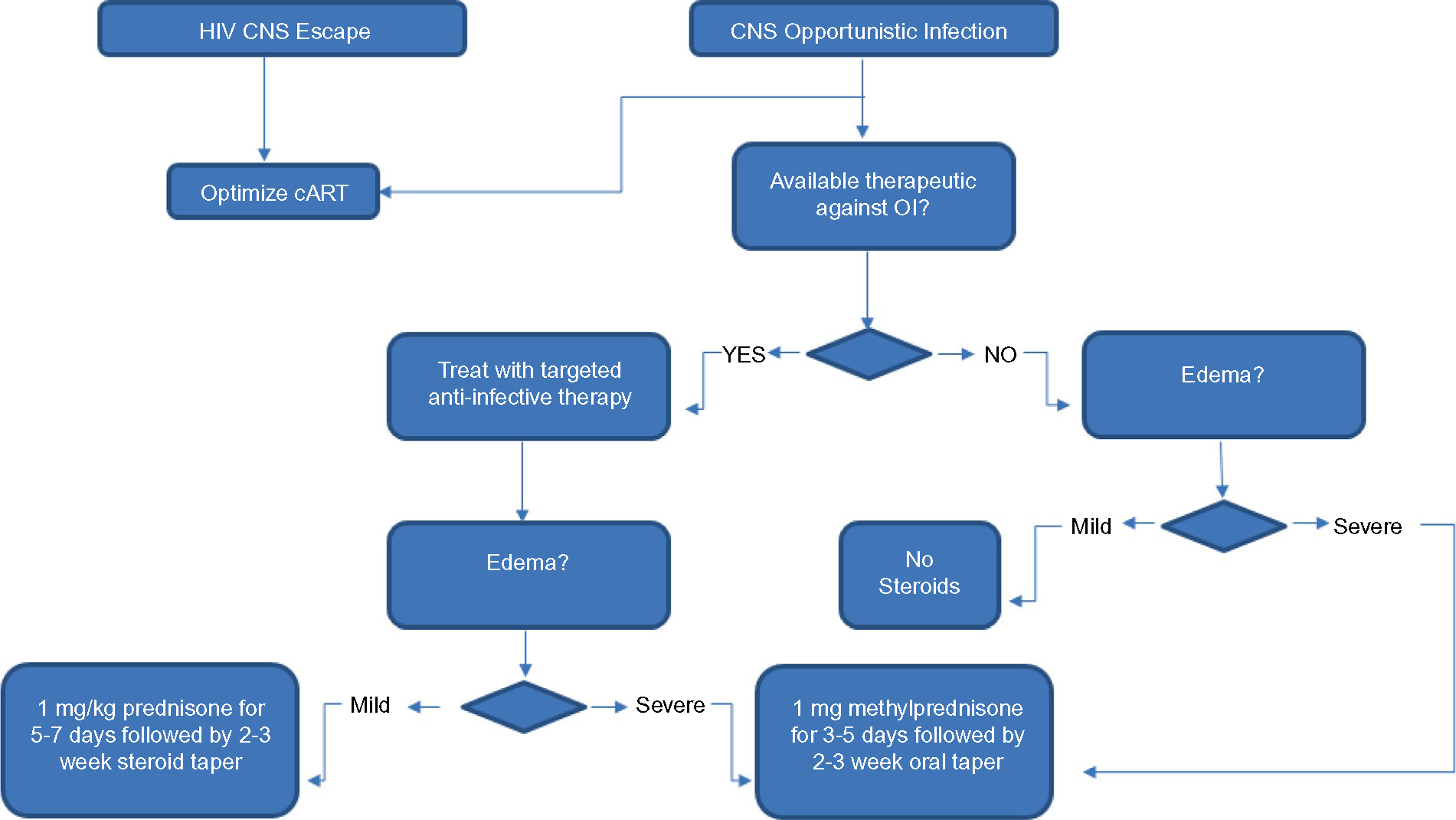
Schematic of immune reconstitution inflammatory syndrome IRIS management. cART, combination antiretroviral therapy; CNS, central nervous system; HIV, human immunodeficiency virus; OI, opportunistic infection.

References

    1. Atreya AR, Arora S, Gadiraju VT et al. (2014). Toxoplasma encephalitis in an HIV-infected patient on highly active antiretroviral therapy despite sustained immune response. Int J STD AIDS 25: 383–386. - PubMed
    1. Barber DL, Mayer-Barber KD, Antonelli LRV et al..(2010).Th1-driven immune reconstitution disease in Mycobacterium avium-infected mice. Blood 116: 3485–3493. - PMC - PubMed
    1. Barber DL, Andrade BB, Sereti I et al. (2012). Immune reconstitution inflammatory syndrome: the trouble with immunity when you had none. Nat Rev Microbiol 10: 150–156. - PMC - PubMed
    1. Behrens GM, Meyer D, Stoll M et al. (2000). Immune reconstitution syndromes in human immuno-deficiency virus infection following effective antiretroviral therapy. Immunobiology 202: 186–193. - PubMed
    1. Bhat R, Pinto M, Dandakeri S et al. (2013). Ulcerating type 1 lepra reaction mimicking lazarine leprosy: an unusual presentation of immune reconstitution inflammatory syndrome in an HIV-infected patient. Int J STD AIDS 24: 992–994. - PubMed

MeSH terms

LinkOut - more resources