


Antioxidant degradation kinetics in apples
- PMID: 29606744
- PMCID: PMC5876198
- DOI: 10.1007/s13197-018-3041-1
Antioxidant degradation kinetics in apples
Abstract
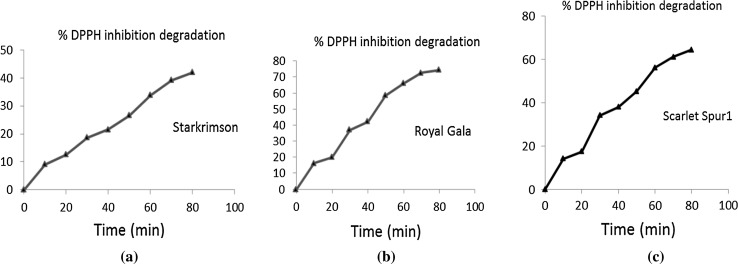
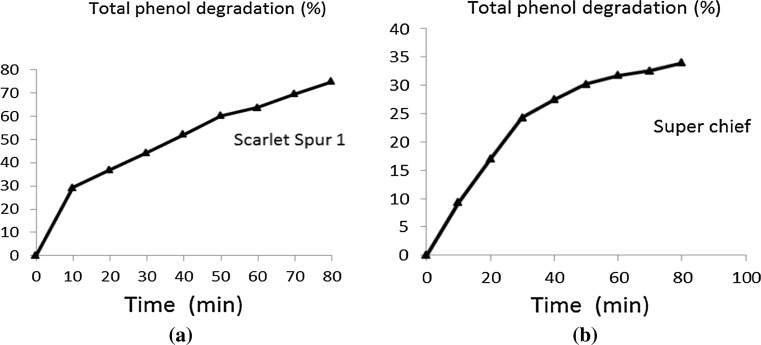
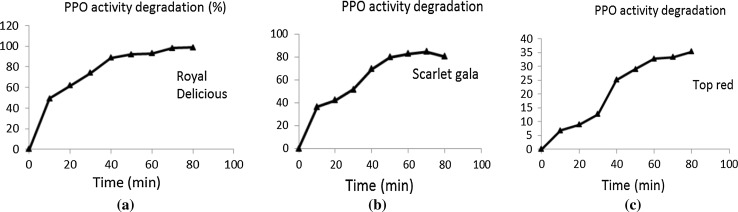
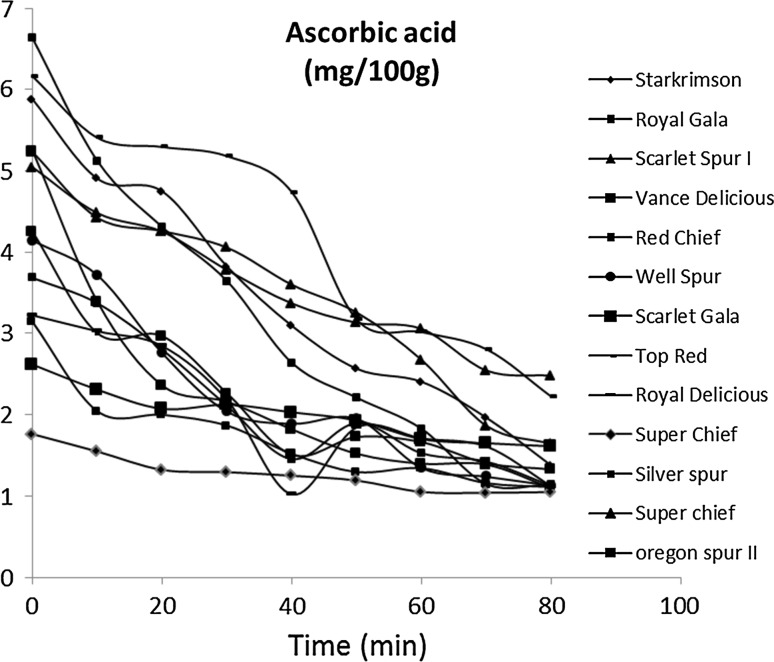
The effect of shelf storage under ambient conditions of cut apple dices on degradation of bioactive compounds such ascorbic acid, total phenols, antioxidant activity (% DPPH inhibition) and PPO activity were investigated. The results indicated that antioxidant activity declined significantly over 80 min storage of diced apples at ambient temperature. Similar trend was observed for ascorbic acid, total phenols and PPO activity. Ascorbic acid, total phenols and antioxidant activity degradation followed first-order kinetics where the rate constant (k) was found to be in range for all the thirteen cultivars, though initial ascorbic acid and phenol content varied in different apple cultivars. The reaction rate constant (k) for first order degradation ranged from 1.16 to 1.97, 0.89 to 1.29 and 0.37 to 1.54 for antioxidant activity, total phenols and ascorbic acid, respectively. This explains that antioxidant activity degrades at higher rate than total phenols and ascorbic acid, which also corroborates that antioxidant activity is affected by both total phenols and ascorbic acid content. In general, total antioxidant activity for apple dices kept for 80 min under ambient conditions exhibited lower values as compared to control.
Keywords: Antioxidant activity; Ascorbic acid; Degradation kinetics; Polyphenol oxidase activity; Total phenols.
Figures
References
-
- AOAC . Official methods of analysis of the association of official analytical chemists, official method 967.21. Washington DC: AOAC International; 2000.
-
- Buckow R, Weiss U, Knorr D. Inactivation kinetics of apple polyphenol oxidase in different pressure-temperature domains. Inn Food Sci Emerg Technol. 2009;10:441–448. doi: 10.1016/j.ifset.2009.05.005. - DOI
LinkOut - more resources
Full Text Sources
Other Literature Sources