


An analysis of the energetic reward offered by field bean (Vicia faba) flowers: Nectar, pollen, and operative force
- PMID: 29607015
- PMCID: PMC5869266
- DOI: 10.1002/ece3.3851
An analysis of the energetic reward offered by field bean (Vicia faba) flowers: Nectar, pollen, and operative force
Abstract
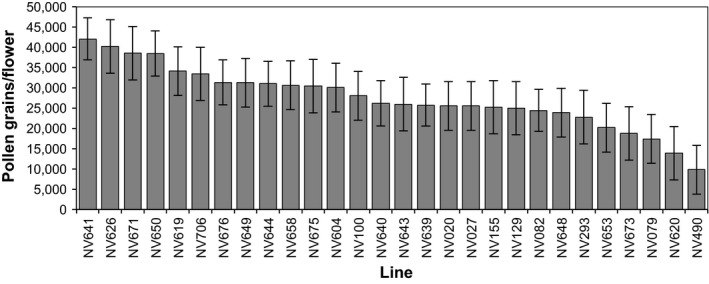
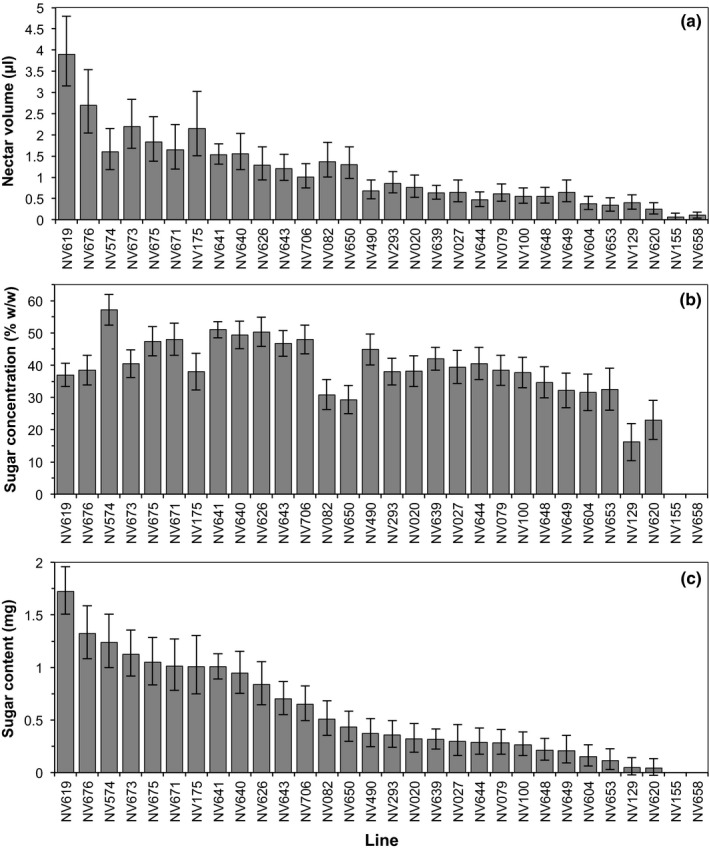
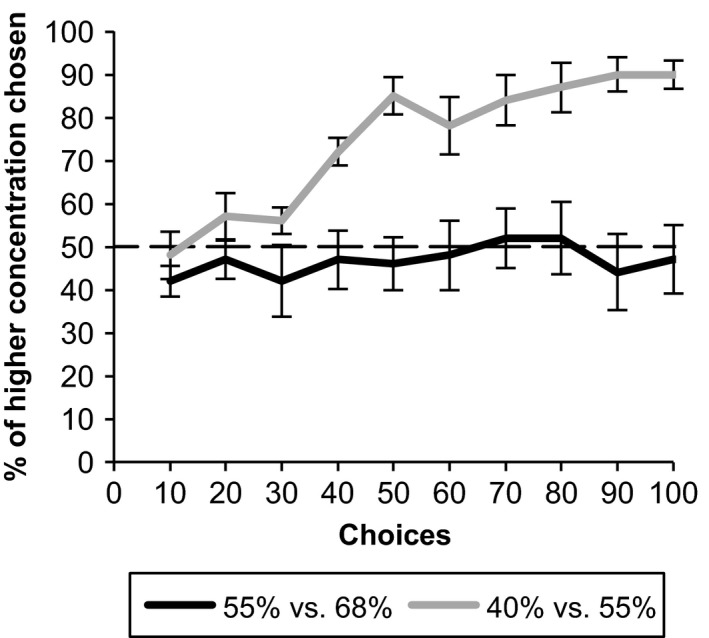
Global consumption of crops with a yield that is dependent on animal pollinators is growing, with greater areas planted each year. However, the floral traits that influence pollinator visitation are not usually the focus of breeding programmes, and therefore, it is likely that yield improvements may be made by optimizing floral traits to enhance pollinator visitation rates. We investigated the variation present in the floral reward of the bee-pollinated crop Vicia faba (field bean). We examined the genetic potential for breeding flowers with a greater reward into current commercial varieties and used bee behavioral experiments to gain insight into the optimal nectar concentration to maximize bee preference. There was a large range of variation in the amount of pollen and nectar reward of flowers in the genotypes investigated. Bee behavioral experiments using nectar sugar concentrations found in V. faba lines suggest that Bombus terrestris prefers 55% w/w sugar solution over 40% w/w, but has no preference between 55% w/w and 68% w/w sugar solution. We provide a first indication of the force required to open V. faba flowers. Our results provide a valuable starting point toward breeding for varieties with optimized floral reward. Field studies are now needed to verify whether the genetic potential for breeding more rewarding flowers can translate into higher yield and yield stability.
Keywords: Bombus terrestris; broad bean; bumblebee; faba bean; opening force; operative strength; plant breeding; pollination; sugar concentration preference.
Figures
References
-
- Aizen, M. A. , & Harder, L. D. (2009). The global stock of domesticated honey bees is growing slower than agricultural demand for pollination. Current Biology, 19, 915–918. https://doi.org/10.1016/j.cub.2009.03.071 - DOI - PubMed
-
- Ashman, T.‐L. (1994). A dynamic perspective on the physiological cost of reproduction in plants. The American Naturalist, 144, 300–316. https://doi.org/10.1086/285676 - DOI
-
- Bailes, E. J. , Ollerton, J. , Pattrick, J. G. , & Glover, B. J. (2015). How can an understanding of plant‐pollinator interactions contribute to global food security? Current Opinion in Plant Biology, 26, 72–79. https://doi.org/10.1016/j.pbi.2015.06.002 - DOI - PubMed
-
- Bates, D. , Mächler, M. , Bolker, B. , & Walker, S. (2015). Fitting linear mixed‐effects models using lme4. Journal of Statistical Software, 67, 1–48.
-
- Bishop, J. , Jones, H. E. , Lukac, M. , & Potts, S. G. (2016). Insect pollination reduces yield loss following heat stress in faba bean (Vicia faba L.). Agriculture, Ecosystems & Environment, 220, 89–96. https://doi.org/10.1016/j.agee.2015.12.007 - DOI - PMC - PubMed
LinkOut - more resources
Full Text Sources
Other Literature Sources
