Review
. 2018 Mar 28;6(1):69-78.
doi: 10.14218/JCTH.2017.00031. Epub 2017 Dec 17.

Current and Future Treatment of Hepatocellular Carcinoma: An Updated Comprehensive Review

Affiliations
Review

Current and Future Treatment of Hepatocellular Carcinoma: An Updated Comprehensive Review

Saleh Daher et al. J Clin Transl Hepatol. .

Abstract

Hepatocellular carcinoma (HCC) is among the leading causes of cancer-related mortality. The principal treatment is surgical resection or liver transplantation, depending on whether the patient is a suitable transplant candidate. However, in most patients with HCC the diagnosis is often late, thereby excluding the patients from definitive surgical resection. Medical treatment includes sorafenib, which is the most commonly used systemic therapy; although, it has been shown to only minimally impact patient survival by several months. Chemotherapy and radiotherapy are generally ineffective. Due to the poor prognosis of patients with HCC, newer treatments are needed with several being in development, either in pre-clinical or clinical studies. In this review article, we provide an update on the current and future medical and surgical management of HCC.

Keywords: HCC; Mortality; Sorafenib; Treatments.


Conflict of interest statement

The authors have no conflict of interests related to this publication.

Figures
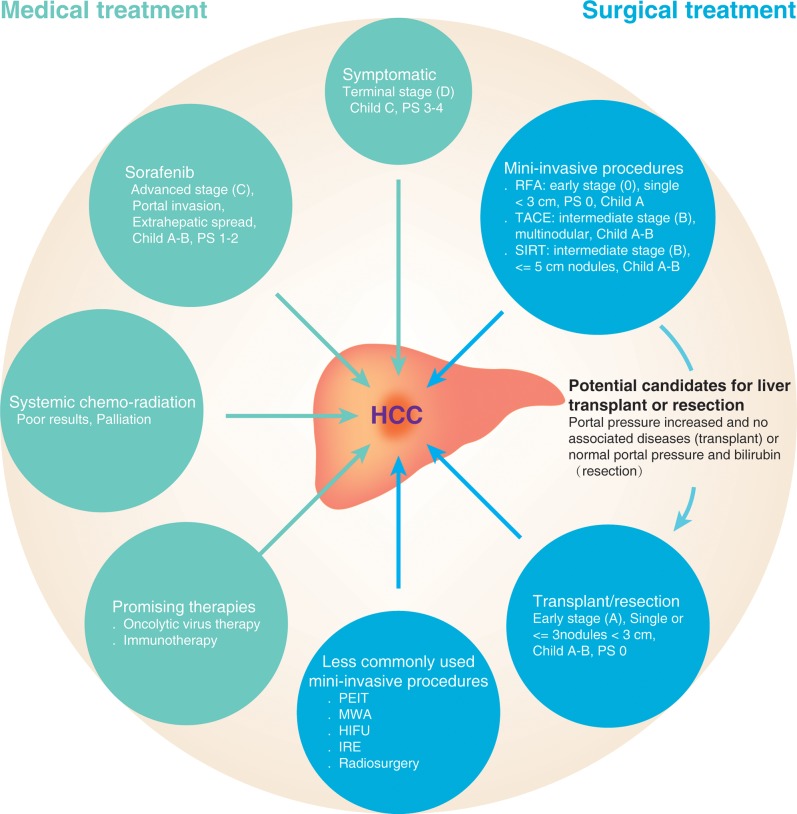
Fig. 1.
Fig. 1.. Summary of the available medical and surgical treatment options for HCC.
Fig. 2.
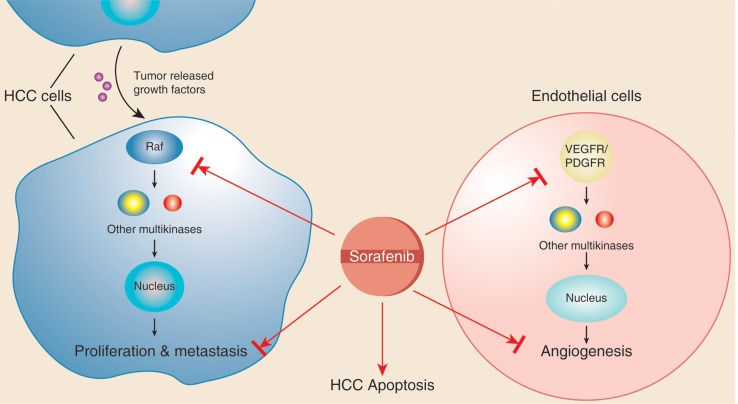
Fig. 2.. Mechanism of action of sorafenib.
Sorafenib inhibits the action of tyrosine kinase Raf and other factors involved in vasculogenesis (vascular endothelial growth factor receptor and platelet-derived growth factor receptor), which in turn inhibits activation of other downstream multikinases that are normally essential for cell growth, angiogenesis, proliferation and metastasis of HCC cells.
Fig. 3.
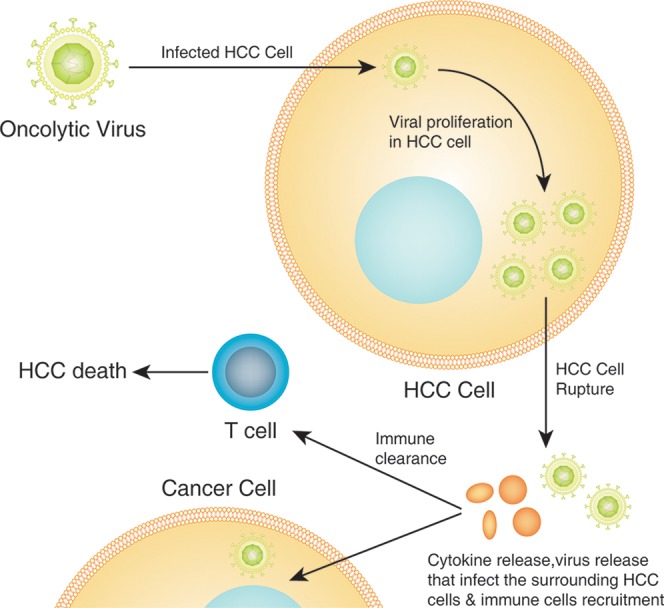
Fig. 3.. Mechanism of action of oncolytic virus therapy.
After HCC-induced oncolytic virus infection, the virus multiplies within the HCC cells, leading to cell rupture and release of second-generation viruses that infect the surrounding HCC cells, as well to cytokines release which in turn activate the antitumor immune response by recruitment of immune cells (innate and adaptive immune system) that lead to immune clearance and HCC apoptosis.

References

    1. Jemal A, Bray F, Center MM, Ferlay J, Ward E, Forman D. Global cancer statistics. CA Cancer J Clin. 2011;61:69–90. doi: 10.3322/caac.20107. - DOI - PubMed
    1. Venook AP, Papandreou C, Furuse J, de Guevara LL. The incidence and epidemiology of hepatocellular carcinoma: a global and regional perspective. Oncologist. 2010;15(Suppl 4):5–13. doi: 10.1634/theoncologist.2010-S4-05. - DOI - PubMed
    1. Yang JD, Roberts LR. Hepatocellular carcinoma: A global view. Nat Rev Gastroenterol Hepatol. 2010;7:448–458. doi: 10.1038/nrgastro.2010.100. - DOI - PMC - PubMed
    1. Ferlay J, Shin HR, Bray F, Forman D, Mathers C, Parkin DM. Estimates of worldwide burden of cancer in 2008: GLOBOCAN 2008. Int J Cancer. 2010;127:2893–2917. doi: 10.1002/ijc.25516. - DOI - PubMed
    1. Singal AG, El-Serag HB. Hepatocellular carcinoma from epidemiology to prevention: translating knowledge into practice. Clin Gastroenterol Hepatol. 2015;13:2140–2151. doi: 10.1016/j.cgh.2015.08.014. - DOI - PMC - PubMed