


Antileukotriene therapy by reducing tau phosphorylation improves synaptic integrity and cognition of P301S transgenic mice
- PMID: 29607621
- PMCID: PMC5946065
- DOI: 10.1111/acel.12759
Antileukotriene therapy by reducing tau phosphorylation improves synaptic integrity and cognition of P301S transgenic mice
Abstract
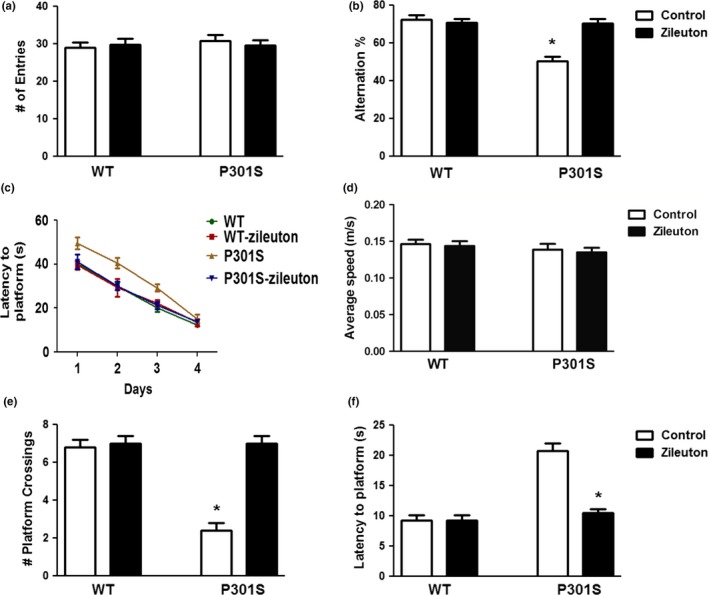
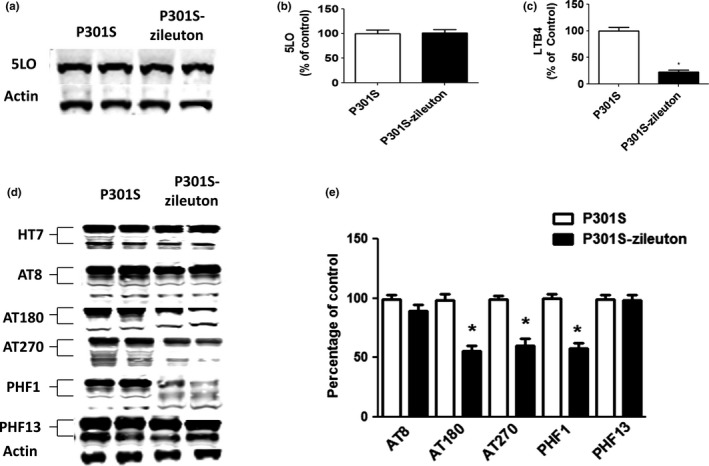
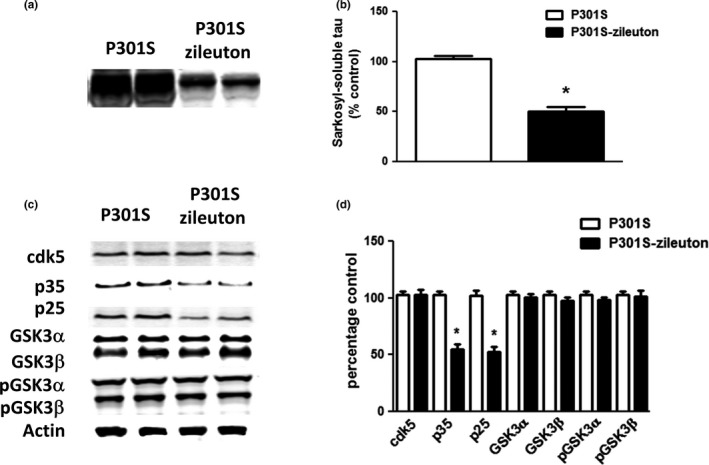
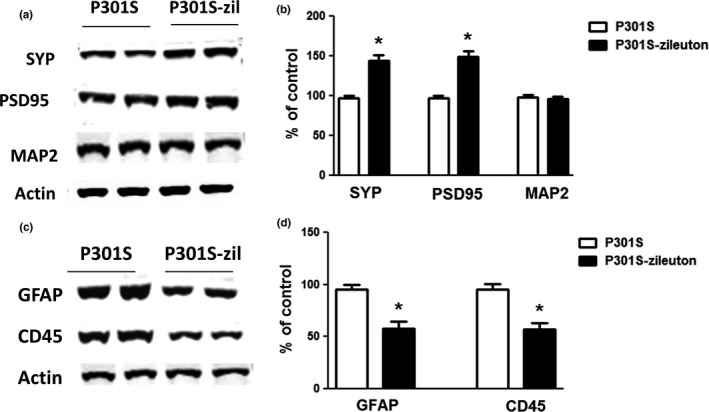
The 5-lipoxygenase (5LO) is a source of inflammatory leukotrienes and is upregulated in Alzheimer's disease and related tauopathies. However, whether it directly modulates tau phosphorylation and the development of its typical neuropathology in the absence of Aβ or is a secondary event during the course of the disease pathogenesis remains to be fully elucidated. The goal of this study was to evaluate the effect that pharmacologic blockade of this inflammatory pathway has on the phenotype of a transgenic mouse model of tauopathy, the P301S mice. Starting at 3 months of age, P301S mice were randomized to receive zileuton, a specific 5LO blocker, for 7 months; then, its effect on their behavioral deficits and neuropathology was assessed. Inhibition of leukotrienes formation was associated with a reduction in tau phosphorylation and an amelioration of memory and learning as well as synaptic integrity, which were secondary to a downregulation of the cdk5 kinase pathway. Our results demonstrate that the 5LO enzyme is a key player in modulating tau phosphorylation and pathology and that blockade of its enzymatic activity represents a desirable disease-modifying therapeutic approach for tauopathy.
Keywords: leukotrienes; neuroinflammation; rodent behavior; tauopathy; transgenic mice.
© 2018 The Authors. Aging Cell published by the Anatomical Society and John Wiley & Sons Ltd.
Figures
References
Publication types
MeSH terms
Substances
LinkOut - more resources
Full Text Sources
Other Literature Sources
Molecular Biology Databases
