


The SGLT2 Inhibitor Dapagliflozin Significantly Improves the Peripheral Microvascular Endothelial Function in Patients with Uncontrolled Type 2 Diabetes Mellitus
- PMID: 29607968
- PMCID: PMC6120841
- DOI: 10.2169/internalmedicine.0701-17
The SGLT2 Inhibitor Dapagliflozin Significantly Improves the Peripheral Microvascular Endothelial Function in Patients with Uncontrolled Type 2 Diabetes Mellitus
Abstract
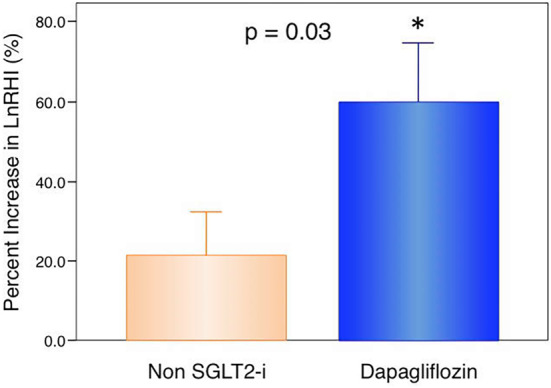
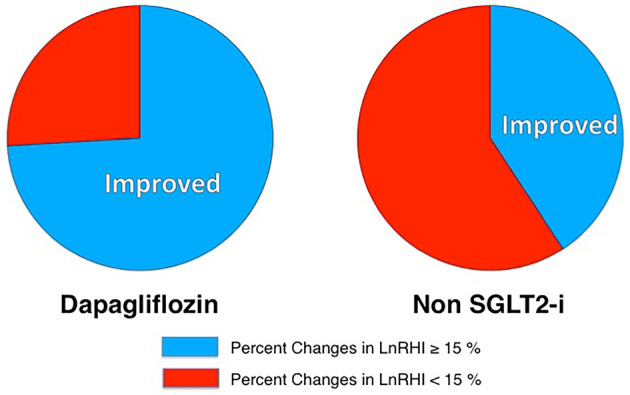
Objective Sodium-glucose co-transporter 2 (SGLT2) inhibitors reduce cardiovascular events and decrease the body fat mass in patients with type 2 diabetes mellitus (T2DM). We examined whether or not the SGLT2-inhibitor dapagliflozin can improve the endothelial function associated with a reduction in abdominal fat mass. Methods We prospectively recruited patients with uncontrolled [hemoglobin A1c (HbA1c) >7.0%] T2DM who were not being treated by SGLT2 inhibitors. Patients were treated with add-on dapagliflozin (5 mg/day) or non-SGLT2 inhibitor medicines for 6 months to improve their HbA1c. We measured the peripheral microvascular endothelial function as assessed by reactive hyperemia peripheral arterial tonometry (RH-PAT) and calculated the natural logarithmic transformed value of the RH-PAT index (LnRHI). We then investigated changes in the LnRHI and abdominal fat area using computed tomography (CT). Results The subjects were 54 patients with uncontrolled T2DM (72.2% men) with a mean HbA1c of 8.1%. The HbA1c was significantly decreased in both groups, with no significant difference between the groups. Dapagliflozin treatment, but not non-SGLT2 inhibitor treatment, significantly increased the LnRHI. The changes in the LnRHI were significantly greater in the dapagliflozin group than in the non-SGLT2 inhibitor group. Dapagliflozin treatment, but not non-SGLT2 inhibitor treatment, significantly decreased the abdominal visceral fat area, subcutaneous fat area (SFA), and total fat area (TFA) as assessed by CT and significantly increased the plasma adiponectin levels. The percentage changes in the LnRHI were significantly correlated with changes in the SFA, TFA, systolic blood pressure, and adiponectin. Conclusion Add-on treatment with dapagliflozin significantly improves the glycemic control and endothelial function associated with a reduction in the abdominal fat mass in patients with uncontrolled T2DM.
Keywords: endothelial function; fat mass; sodium-glucose co-transporter 2 inhibitor; type 2 diabetes.
Figures
References
-
- Vallon V. The mechanisms and therapeutic potential of SGLT2 inhibitors in diabetes mellitus. Annu Rev Med 66: 255-270, 2015. - PubMed
-
- Bolinder J, Ljunggren O, Kullberg J, et al. Effects of dapagliflozin on body weight, total fat mass, and regional adipose tissue distribution in patients with type 2 diabetes mellitus with inadequate glycemic control on metformin. J Clin Endocrinol Metab 97: 1020-1031, 2012. - PubMed
-
- Ribola FA, Cancado FB, Schoueri JH, De Toni VF, Medeiros VH, Feder D. Effects of SGLT2 inhibitors on weight loss in patients with type 2 diabetes mellitus. Eur Rev Med Pharmacol Sci 21: 199-211, 2017. - PubMed
-
- Scheen AJ, Van Gaal LF. Combating the dual burden: therapeutic targeting of common pathways in obesity and type 2 diabetes. Lancet Diabetes Endocrinol 2: 911-922, 2014. - PubMed
-
- Tahrani AA, Barnett AH, Bailey CJ. Pharmacology and therapeutic implications of current drugs for type 2 diabetes mellitus. Nat Rev Endocrinol 12: 566-592, 2016. - PubMed
MeSH terms
Substances
LinkOut - more resources
Full Text Sources
Other Literature Sources
Medical
