


Under-estimation of maternal and perinatal mortality revealed by an enhanced surveillance system: enumerating all births and deaths in Pakistan
- PMID: 29609571
- PMCID: PMC5880001
- DOI: 10.1186/s12889-018-5363-3
Under-estimation of maternal and perinatal mortality revealed by an enhanced surveillance system: enumerating all births and deaths in Pakistan
Abstract
Background: Reliable and timely data on maternal and neonatal mortality is required to implement health interventions, monitor progress, and evaluate health programs at national and sub-national levels. In most South Asian countries, including Pakistan, vital civil registration and health information systems are inadequate. The aim of this study is to determine accurate maternal and perinatal mortality through enhanced surveillance of births and deaths, compared with prior routinely collected data.
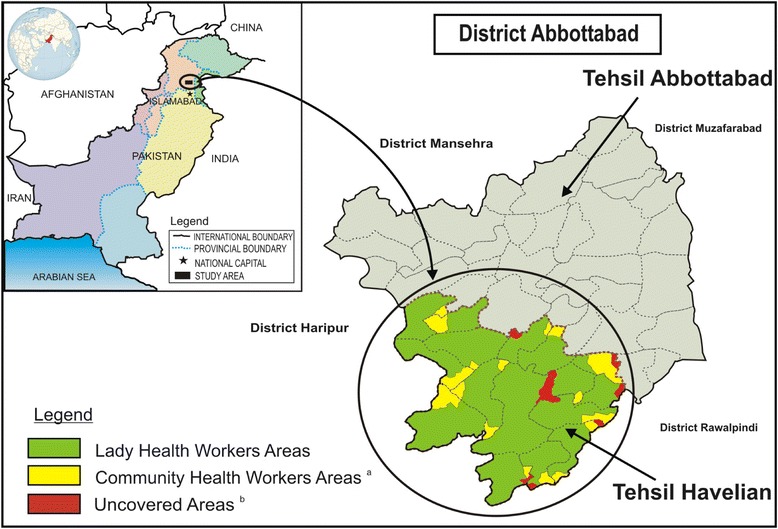
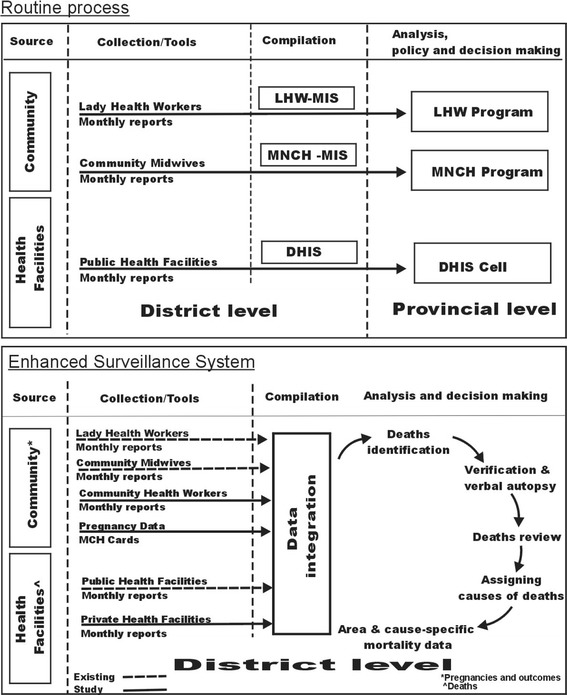
Methods: An enhanced surveillance system was established that measured maternal, perinatal and neonatal mortality rates through more complete enumeration of births and deaths in a rural district of Pakistan. Data were collected over a period of 1 year (2015/16) from augmentation of the existing health information system covering public healthcare facilities (n = 19), and the community through 273 existing Lady Health Workers; and with the addition of private healthcare facilities (n = 10), and 73 additional Community Health Workers to cover a total study population of 368,454 consisting of 51,690 eligible women aged 18 to 49 years with 7580 pregnancies and 7273 live births over 1 year. Maternal, neonatal, perinatal and stillbirth rates and ratios were calculated, with comparisons to routine reporting from the previous period (2014-15).
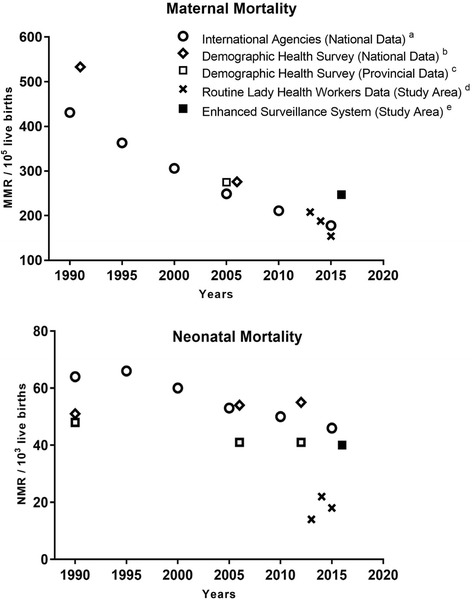
Results: Higher maternal mortality, perinatal mortality and neonatal mortality rates were observed through enhanced surveillance compared to mortality rates in the previous 1.5 years from the routine monitoring system from increased completeness and coverage. Maternal mortality was 247 compared to 180 per 100, 000 live births (p = 0.36), neonatal mortality 40 compared to 20 per 1, 000 live births (p < 0.001), and perinatal mortality 60 compared to 47 per 1000 live births (p < 0.001). All the mortality rates were higher than provincial and national estimates proffered by international agencies based on successive Pakistan Demographic and Health Surveys and projections.
Conclusion: Extension of coverage and improvement in completeness through reconciliation of data from health information systems is possible and required to obtain accurate maternal, perinatal and neonatal mortality for assessment of health service interventions at a local level.
Keywords: Health information system; Health system strengthening; Maternal mortality; Mortality surveillance; Neonatal mortality; Pakistan; Perinatal mortality; Stillbirths.
Conflict of interest statement
Authors’ information
JA is a medical doctor and public health specialist having a decade of experience working with World Health Organization. JA was awarded AusAID scholarship to obtain Master degree in applied science from the University of Sydney. JA is currently enrolled in a PhD program at the University of New South Wales and was awarded international scholarship for his PhD studies.
Ethics approval and consent to participate
Ethics approval was obtained from the Pakistan Medical Research Council (ref. no. 4–87/15/NBC-186/RDC411), and the University of New South Wales, Sydney (ref. no. HC14338). Administrative approvals and use of health resources including LHWs, District health staff and health information system data were obtained from the Director General Health Services of the province and concerned programs. Written informed consent was obtained from all study participants including women who become pregnant during the study period and the respondents of the verbal autopsy interviews.
Consent for publication
Not applicable.
Competing interests
The authors declare that they have no competing interests.
Publisher’s Note
Springer Nature remains neutral with regard to jurisdictional claims in published maps and institutional affiliations.
Figures
References
-
- World Health Organization . Trends in maternal mortality: 1990 to 2015 estimates by WHO, UNICEF, UNFPA, The World Bank and the United Nations Population Division. 2015.
-
- You D, Hug L, Ejdemyr S, Beise J. Levels and trends in child mortality. Report 2015. Estimates developed by the UN Inter-agency Group for Child Mortality Estimation. 2015.
-
- World Health Organization. World health statistics 2016: monitoring health for the SDGs sustainable development goals. Geneva: World Health Organization; 2016.
-
- National Institute of Population Studies (Pakistan) and ICF International . Pakistan demographic and health survey 2012-13. 2013.
Publication types
MeSH terms
LinkOut - more resources
Full Text Sources
Other Literature Sources
