


Microbes vs. chemistry in the origin of the anaerobic gut lumen
- PMID: 29610310
- PMCID: PMC5910840
- DOI: 10.1073/pnas.1718635115
Microbes vs. chemistry in the origin of the anaerobic gut lumen
Erratum in
-
Correction for Friedman et al., Microbes vs. chemistry in the origin of the anaerobic gut lumen.Proc Natl Acad Sci U S A. 2022 Jun 14;119(24):e2207826119. doi: 10.1073/pnas.2207826119. Epub 2022 Jun 6. Proc Natl Acad Sci U S A. 2022. PMID: 35666878 Free PMC article. No abstract available.
Abstract
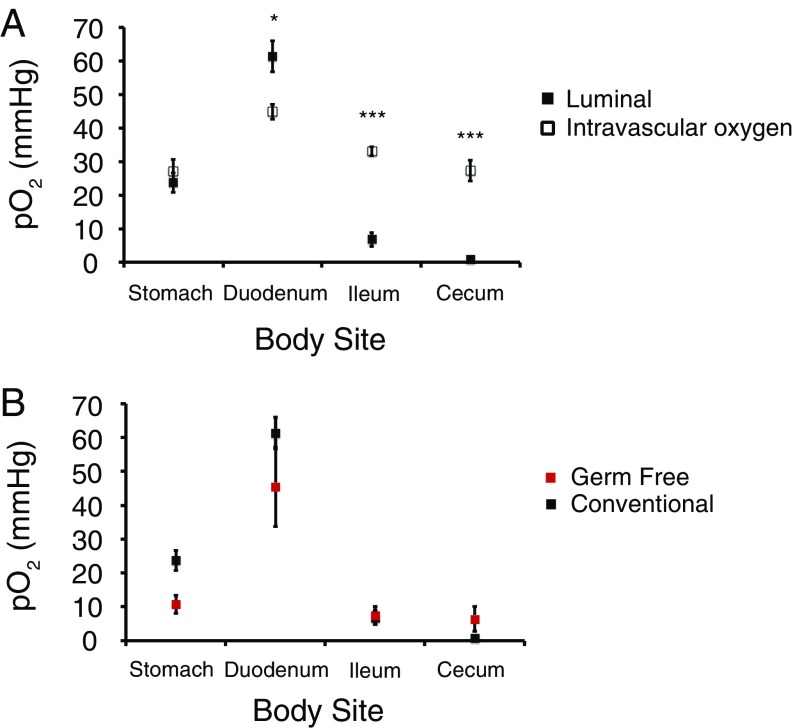
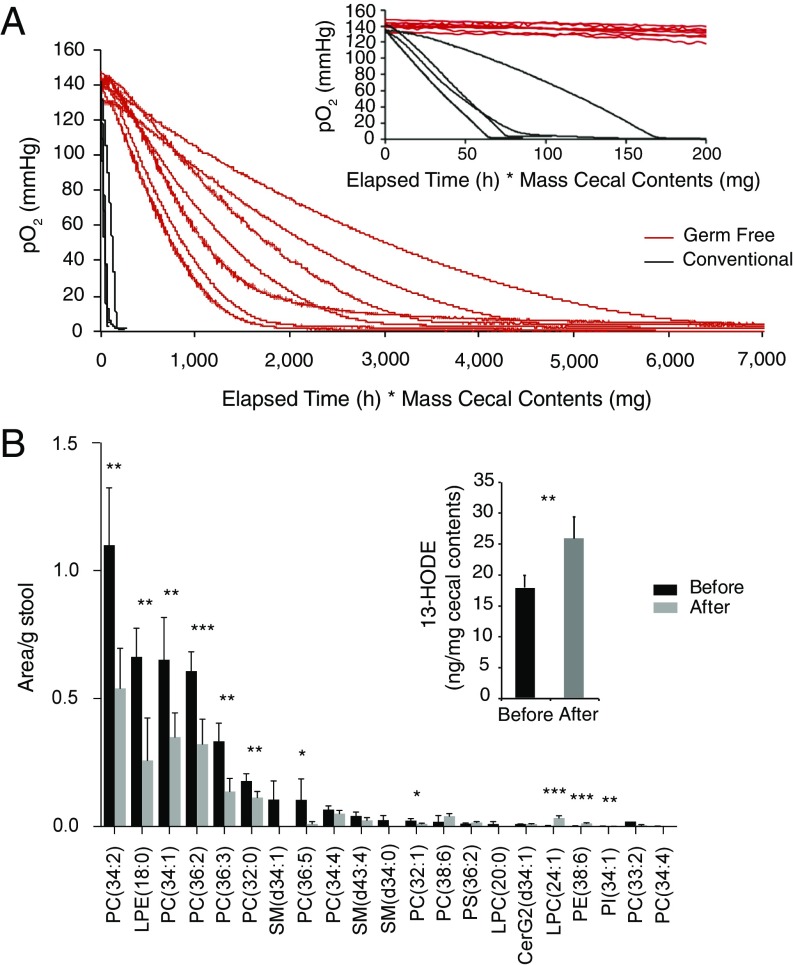
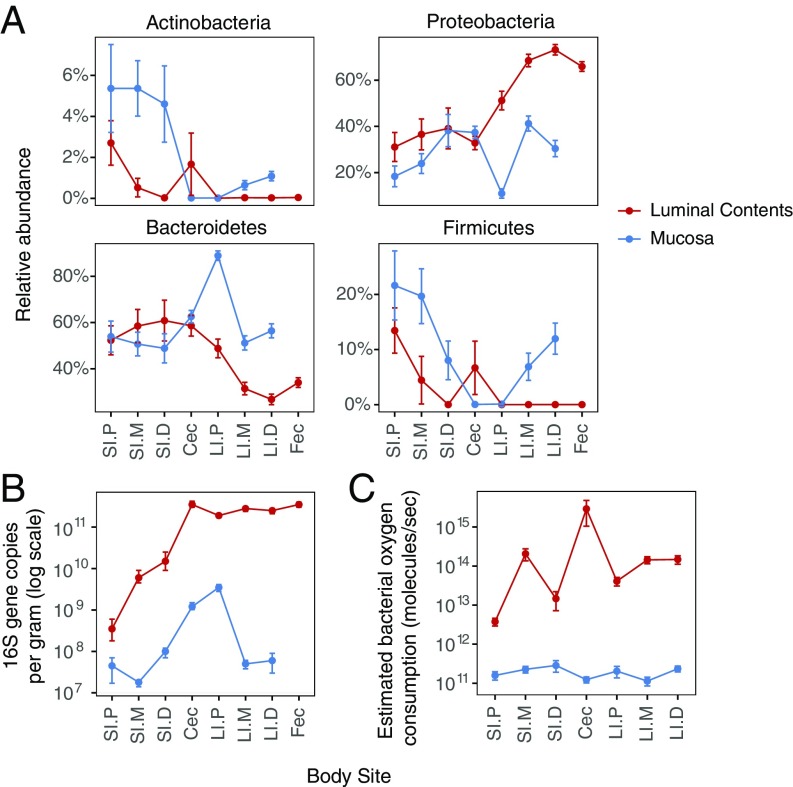
The succession from aerobic and facultative anaerobic bacteria to obligate anaerobes in the infant gut along with the differences between the compositions of the mucosally adherent vs. luminal microbiota suggests that the gut microbes consume oxygen, which diffuses into the lumen from the intestinal tissue, maintaining the lumen in a deeply anaerobic state. Remarkably, measurements of luminal oxygen levels show nearly identical pO2 (partial pressure of oxygen) profiles in conventional and germ-free mice, pointing to the existence of oxygen consumption mechanisms other than microbial respiration. In vitro experiments confirmed that the luminal contents of germ-free mice are able to chemically consume oxygen (e.g., via lipid oxidation reactions), although at rates significantly lower than those observed in the case of conventionally housed mice. For conventional mice, we also show that the taxonomic composition of the gut microbiota adherent to the gut mucosa and in the lumen throughout the length of the gut correlates with oxygen levels. At the same time, an increase in the biomass of the gut microbiota provides an explanation for the reduction of luminal oxygen in the distal vs. proximal gut. These results demonstrate how oxygen from the mammalian host is used by the gut microbiota, while both the microbes and the oxidative chemical reactions regulate luminal oxygen levels, shaping the composition of the microbial community throughout different regions of the gut.
Keywords: gut microbiota; luminal oxygen; microbial ecology; oxygen probes; phosphorescence quenching.
Conflict of interest statement
The authors declare no conflict of interest.
Figures
References
-
- Swidsinski A, Loening-Baucke V, Verstraelen H, Osowska S, Doerffel Y. Biostructure of fecal microbiota in healthy subjects and patients with chronic idiopathic diarrhea. Gastroenterology. 2008;135:568–579. - PubMed
-
- Sonnenburg JL, et al. Glycan foraging in vivo by an intestine-adapted bacterial symbiont. Science. 2005;307:1955–1959. - PubMed
Publication types
MeSH terms
Substances
Grants and funding
LinkOut - more resources
Full Text Sources
Other Literature Sources
Molecular Biology Databases
