


The Extracorporeal Life Support Organization Maastricht Treaty for Nomenclature in Extracorporeal Life Support. A Position Paper of the Extracorporeal Life Support Organization
- PMID: 29614239
- PMCID: PMC6118026
- DOI: 10.1164/rccm.201710-2130CP
The Extracorporeal Life Support Organization Maastricht Treaty for Nomenclature in Extracorporeal Life Support. A Position Paper of the Extracorporeal Life Support Organization
Abstract
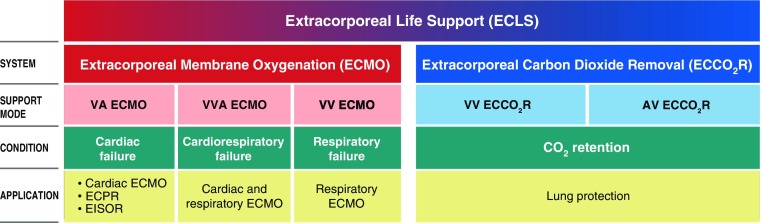
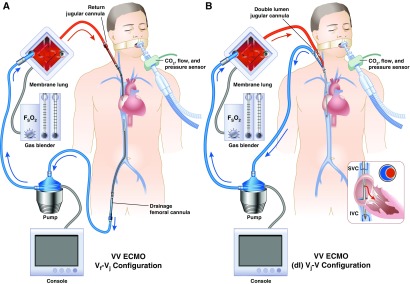
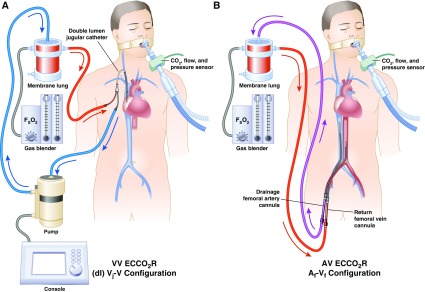
Extracorporeal life support (ECLS) was developed more than 50 years ago, initially with venoarterial and subsequently with venovenous configurations. As the technique of ECLS significantly improved and newer skills developed, complexity in terminology and advances in cannula design led to some misunderstanding of and inconsistency in definitions, both in clinical practice and in scientific research. This document is a consensus of multispecialty international representatives of the Extracorporeal Life Support Organization, including the North America, Latin America, EuroELSO, South West Asia and Africa, and Asia-Pacific chapters, imparting a global perspective on ECLS. The goal is to provide a consistent and unambiguous nomenclature for ECLS and to overcome the inconsistent use of abbreviations for ECLS cannulation. Secondary benefits are ease of multicenter collaboration in research, improved registry data quality, and clear communication among practitioners and researchers in the field.
Keywords: cannula; extracorporeal circulation; extracorporeal membrane oxygenation; membrane oxygenators; terminology.
Figures

References
-
- Fortenberry JD, Lorusso R. The history and development of extracorporeal support. In: Brogan TV, Lequier L, Lorusso R, MacLaren G, Peek G, editors. Extracorporeal life support: the ELSO Red Book. 5th ed. Ann Arbor, MI: Extracorporeal Life Support Organization; 2017. pp. 1–15.
-
- Hill JD, O’Brien TG, Murray JJ, Dontigny L, Bramson ML, Osborn JJ, et al. Prolonged extracorporeal oxygenation for acute post-traumatic respiratory failure (shock-lung syndrome): use of the Bramson membrane lung. N Engl J Med. 1972;286:629–634. - PubMed
-
- Javidfar J, Brodie D, Wang D, Ibrahimiye AN, Yang J, Zwischenberger JB, et al. Use of bicaval dual-lumen catheter for adult venovenous extracorporeal membrane oxygenation. Ann Thorac Surg. 2011;91:1763–1768, discussion 1769. - PubMed
-
- Biscotti M, Lee A, Basner RC, Agerstrand C, Abrams D, Brodie D, et al. Hybrid configurations via percutaneous access for extracorporeal membrane oxygenation: a single-center experience. ASAIO J. 2014;60:635–642. - PubMed
Publication types
MeSH terms
Grants and funding
LinkOut - more resources
Full Text Sources
Other Literature Sources
Research Materials
