


A 35-gene signature discriminates between rapidly- and slowly-progressing glioblastoma multiforme and predicts survival in known subtypes of the cancer
- PMID: 29614978
- PMCID: PMC5883543
- DOI: 10.1186/s12885-018-4103-5
A 35-gene signature discriminates between rapidly- and slowly-progressing glioblastoma multiforme and predicts survival in known subtypes of the cancer
Abstract
Background: Gene expression can be employed for the discovery of prognostic gene or multigene signatures cancer. In this study, we assessed the prognostic value of a 35-gene expression signature selected by pathway and machine learning based methods in adjuvant therapy-linked glioblastoma multiforme (GBM) patients from the Cancer Genome Atlas.
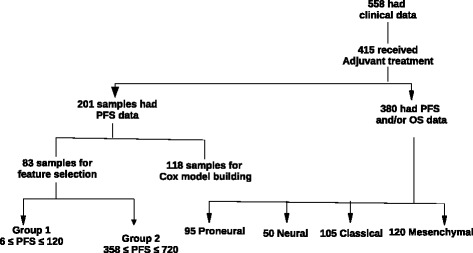
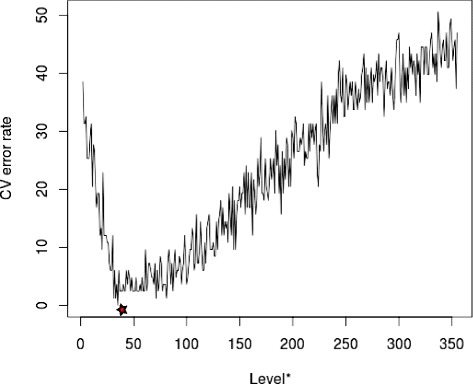
Methods: Genes with high expression variance was subjected to pathway enrichment analysis and those having roles in chemoradioresistance pathways were used in expression-based feature selection. A modified Support Vector Machine Recursive Feature Elimination algorithm was employed to select a subset of these genes that discriminated between rapidly-progressing and slowly-progressing patients.
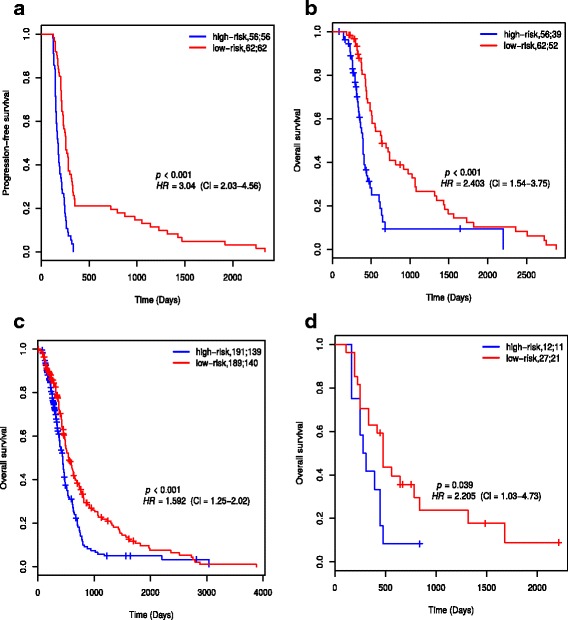
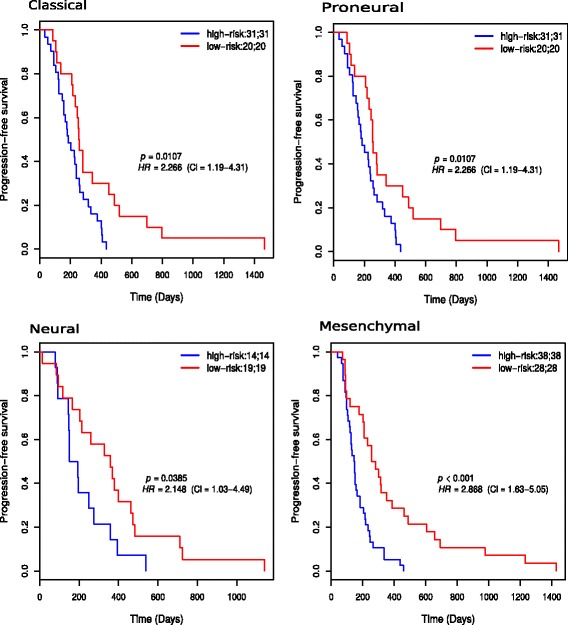
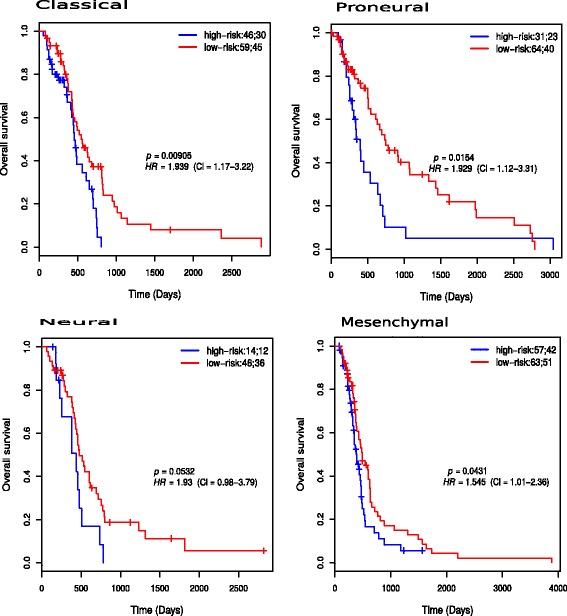
Results: Survival analysis on TCGA samples not used in feature selection and samples from four GBM subclasses, as well as from an entirely independent study, showed that the 35-gene signature discriminated between the survival groups in all cases (p<0.05) and could accurately predict survival irrespective of the subtype. In a multivariate analysis, the signature predicted progression-free and overall survival independently of other factors considered.
Conclusion: We propose that the performance of the signature makes it an attractive candidate for further studies to assess its utility as a clinical prognostic and predictive biomarker in GBM patients. Additionally, the signature genes may also be useful therapeutic targets to improve both progression-free and overall survival in GBM patients.
Keywords: Chemoradiation resistance pathways; Glioblastoma multiforme; Prognostic genes; Risk groups.
Conflict of interest statement
Ethics approval and consent to participate
Not applicable.
Consent for publication
Not applicable.
Competing interests
The authors declare that they have no competing interests.
Publisher’s Note
Springer Nature remains neutral with regard to jurisdictional claims in published maps and institutional affiliations.
Figures
References
-
- Hegi ME, Diserens AC, Gorlia T, Hamou MF, de Tribolet N, Weller M, Kros JM, Hainfellner JA, Mason W, Mariani L, Bromberg JEC, Hau P, Mirimanoff RO, Cairncross JG, Janzer RC, Stupp R. MGMT Gene Silencing and Benefit from Temozolomide in Glioblastoma. N Engl J Med. 2005; 352(10):997–1003. 10.1056/NEJMoa043331. - PubMed
-
- Kim YS, Kim SH, Cho J, Kim JW, Chang JH, Kim DS, Lee KS, Suh CO. MGMT gene promoter methylation as a potent prognostic factor in glioblastoma treated with temozolomide-based chemoradiotherapy: a single-institution study. Int J Radiat Oncol Biol Phys. 2012; 84(3):661–7. 10.1016/j.ijrobp.2011.12.086. - PubMed
-
- Shen D, Liu T, Lin Q, Lu X, Wang Q, Lin F, Mao W. MGMT Promoter Methylation Correlates with an Overall Survival Benefit in Chinese High-Grade Glioblastoma Patients Treated with Radiotherapy and Alkylating Agent-Based Chemotherapy: A Single-Institution Study. PLoS ONE. 2014; 9(9):107558. 10.1371/journal.pone.0107558. - PMC - PubMed
-
- Melguizo C, Prados J, González B, Ortiz R, Concha A, Alvarez PJ, Madeddu R, Perazzoli G, Oliver JA, López R, Rodríguez-Serrano F, Aránega A. MGMT promoter methylation status and MGMT and CD133 immunohistochemical expression as prognostic markers in glioblastoma patients treated with temozolomide plus radiotherapy. J Transl Med. 2012; 10(1):250. 10.1186/1479-5876-10-250. - PMC - PubMed
-
- Costa BM, Caeiro C, Guimarães I, Martinho O, Jaraquemada T, Augusto I, Castro L, Osório L, Linhares P, Honavar M, Resende M, Braga F, Silva A, Pardal F, Amorim J, Nabiço R, Almeida R, Alegria C, Pires M, Pinheiro C, Carvalho E, Lopes JM, Costa P, Damasceno M, Reis RM. Prognostic value of MGMT promoter methylation in glioblastoma patients treated with temozolomide-based chemoradiation: a Portuguese multicentre study. Oncol Rep. 2010;23(6):1655–62. - PubMed
MeSH terms
Substances
LinkOut - more resources
Full Text Sources
Other Literature Sources
Medical
