


Population genetic analysis of the recently rediscovered Hula painted frog (Latonia nigriventer) reveals high genetic diversity and low inbreeding
- PMID: 29615810
- PMCID: PMC5882862
- DOI: 10.1038/s41598-018-23587-w
Population genetic analysis of the recently rediscovered Hula painted frog (Latonia nigriventer) reveals high genetic diversity and low inbreeding
Abstract
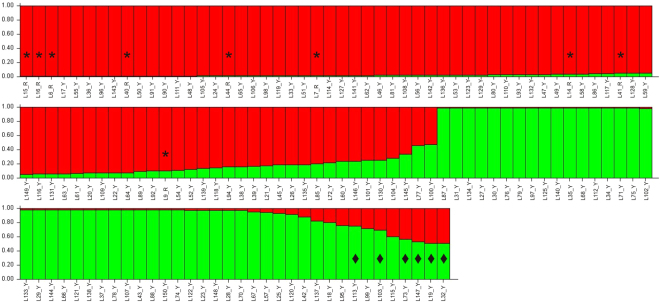
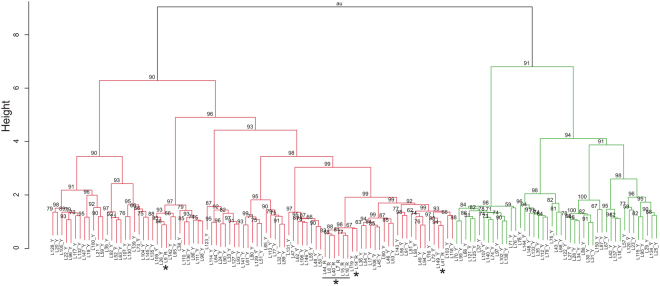
After its recent rediscovery, the Hula painted frog (Latonia nigriventer) has remained one of the world's rarest and least understood amphibian species. Together with its apparently low dispersal capability and highly disturbed niche, the low abundance of this living fossil calls for urgent conservation measures. We used 18 newly developed microsatellite loci and four different models to calculate the effective population size (Ne) of a total of 125 Hula painted frog individuals sampled at a single location. We compare the Ne estimates to the estimates of potentially reproducing adults in this population (Nad) determined through a capture-recapture study on 118 adult Hula painted frogs captured at the same site. Surprisingly, our data suggests that, despite Nad estimates of only ~234-244 and Ne estimates of ~16.6-35.8, the species appears to maintain a very high genetic diversity (HO = 0.771) and low inbreeding coefficient (FIS = -0.018). This puzzling outcome could perhaps be explained by the hypotheses of either genetic rescue from one or more unknown Hula painted frog populations nearby or by recent admixture of genetically divergent subpopulations. Independent of which scenario is correct, the original locations of these populations still remain to be determined.
Conflict of interest statement
The authors declare no competing interests.
Figures

References
-
- Honegger R. List of amphibians and reptiles either known or thought to have become extinct since 1600. Biol. Conserv. 1981;19:141–158. doi: 10.1016/0006-3207(81)90049-5. - DOI
-
- Dimentman, C. H., Bromley, H. J. & Por, F. D. Lake Hula: Reconstruction of the Fauna and Hydrobiology of a Lost Lake. (The Israel Academy of Sciences and Humanities, Jerusalem, 1992).
-
- Perl, R. G. B. et al. Natural history and conservation of the rediscovered Hula painted frog, Latonia nigriventer. Contrib. Zool.86, 11–37 (2017).
-
- IUCN. The IUCN Red List of Threatened Species. Version2017–2, http://www.iucnredlist.org (2017). (Date of access: 02.10.2017)
Publication types
MeSH terms
LinkOut - more resources
Full Text Sources
Other Literature Sources
Molecular Biology Databases
