


Natural history of eosinophilic esophagitis: a systematic review of epidemiology and disease course
- PMID: 29617744
- PMCID: PMC6102800
- DOI: 10.1093/dote/doy015
Natural history of eosinophilic esophagitis: a systematic review of epidemiology and disease course
Abstract
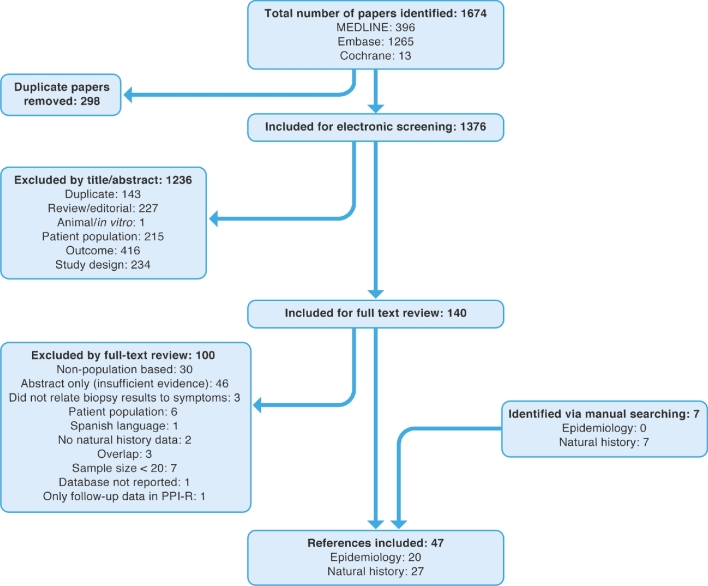
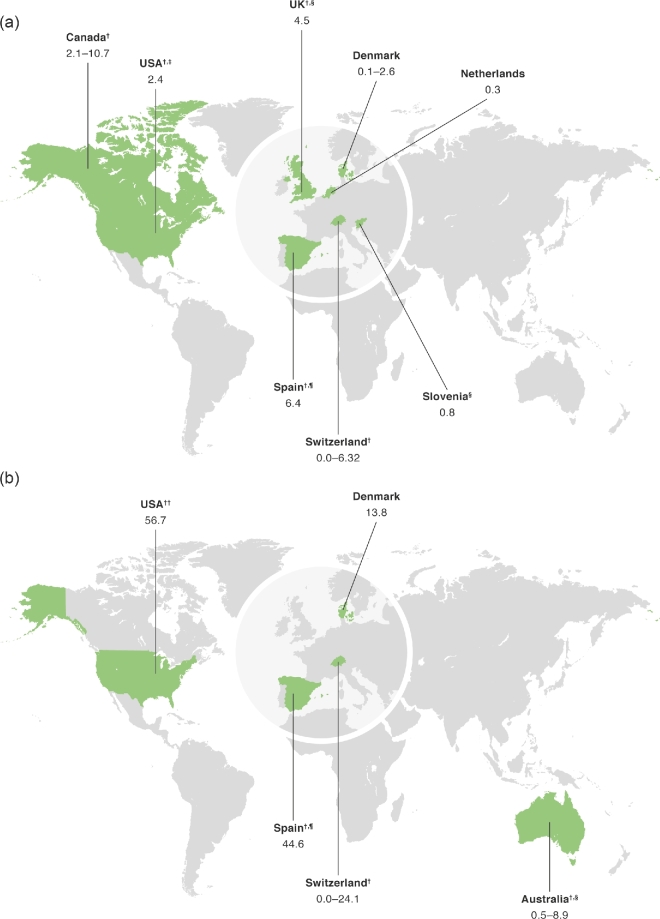
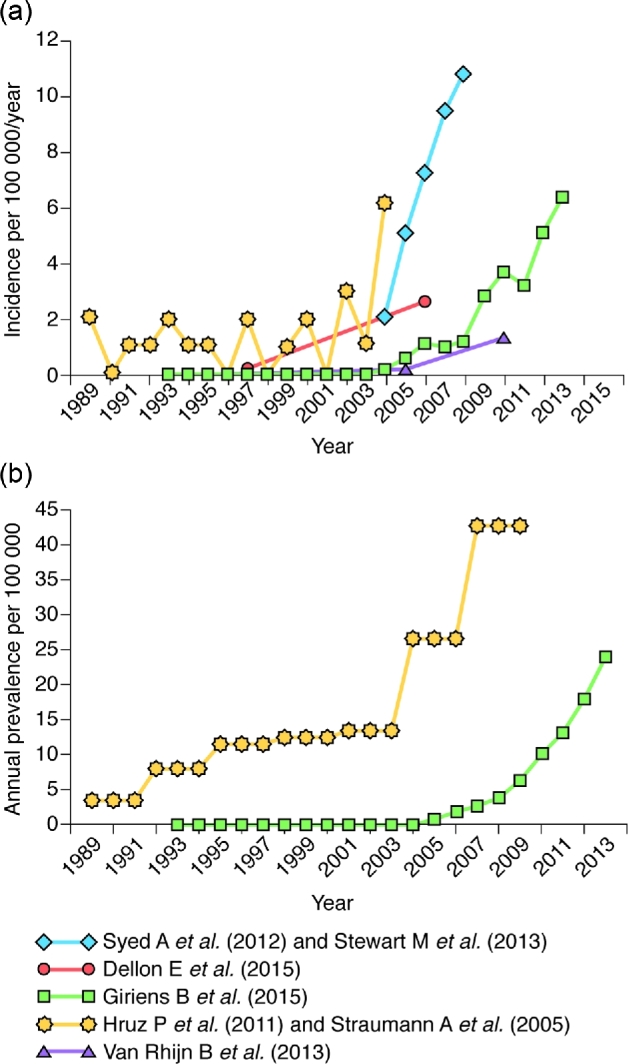
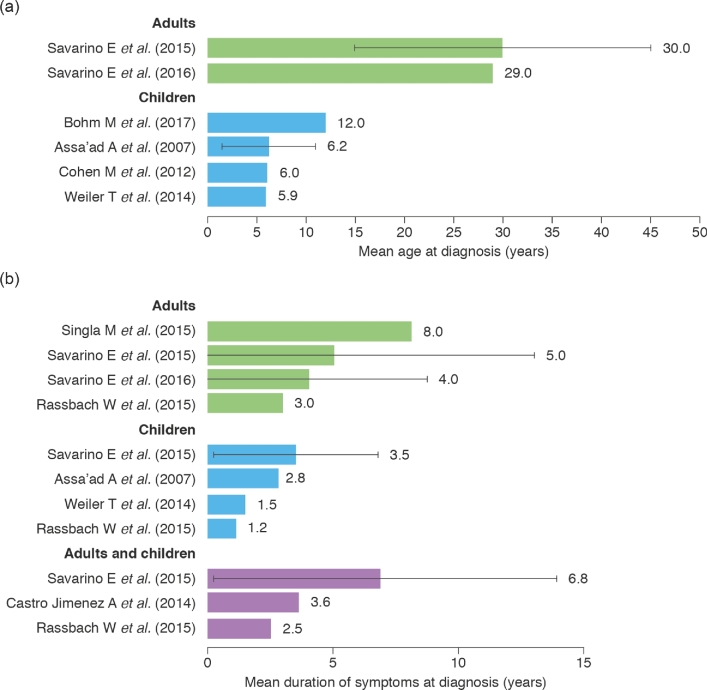
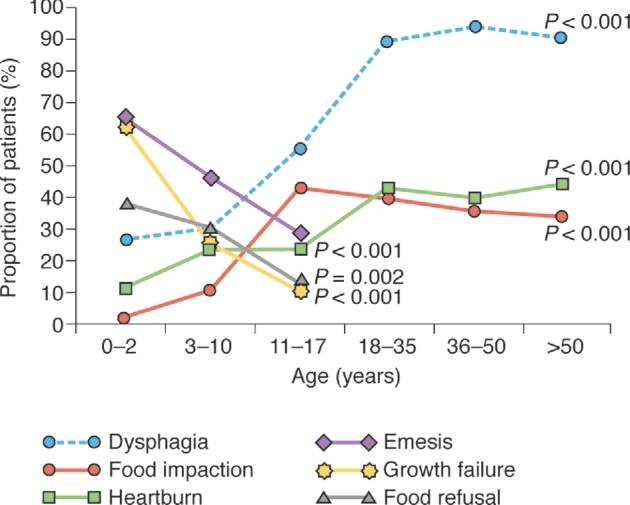
Eosinophilic esophagitis is a chronic immune-mediated esophageal disorder. For its timely diagnosis, clinicians must recognize common symptoms, and understand differences in symptoms across patient groups. The aim of this study is to systematically review the epidemiology and natural history of eosinophilic esophagitis. The MEDLINE, Embase, and Cochrane databases were searched from 1974 to February 2017 for studies describing the epidemiology and natural history of eosinophilic esophagitis. Congress abstracts from 2014 to 2016 were also searched. Search results were screened against predetermined inclusion/exclusion criteria by two independent reviewers, and data extraction was performed in accordance with the Preferred Reporting Items for Systematic Reviews and Meta-Analyses guidelines. Of 1376 articles identified, 47 met the inclusion criteria: 20 on epidemiology and 27 on natural history. Incidence and prevalence of eosinophilic esophagitis varied widely across North America and Europe, and increased over time. Incidence increased 131-fold in the Netherlands (1996-2010), 20-fold in Denmark (1997-2006), and 5.1-fold in Calgary, Canada (2004-2008). The most commonly reported symptoms were emesis and abdominal pain in children, and dysphagia and food impaction in adults. Age at diagnosis was 5.9-12.0 years in children, and approximately 30 years in adults. Time between symptom onset and diagnosis was 1.2-3.5 years in children and 3.0-8.0 years in adults. Diagnostic delay was associated with an increased risk of endoscopic features of fibrostenosis. Symptoms of eosinophilic esophagitis differed significantly by age and race. In conclusion, there is an increasing incidence and prevalence of eosinophilic esophagitis. The considerable delay between symptom onset and diagnosis suggests that clinicians do not readily recognize the disease, which may have important clinical ramifications.
Figures

References
-
- Liacouras C A, Furuta G T, Hirano I et al. Eosinophilic esophagitis: updated consensus recommendations for children and adults. Aliment Pharmacol Ther 2011; 128: 3–15. - PubMed
-
- Furuta G T, Liacouras C A, Collins M H et al. Eosinophilic esophagitis in children and adults: a systematic review and consensus recommendations for diagnosis and treatment. Gastroenterology 2007; 133: 1342–63. - PubMed
-
- Ally M R, Maydonovitch C L, Betteridge J D, Veerappan G R, Moawad F J. Prevalence of eosinophilic esophagitis in a United States military health-care population. Dis Esophagus 2015; 28: 505–11. - PubMed
Publication types
MeSH terms
LinkOut - more resources
Full Text Sources
Other Literature Sources
Medical
Molecular Biology Databases
Miscellaneous
