Cervical collar makes difficult airway: a simulation study using the LEMON criteria
- PMID: 29618189
- PMCID: PMC5891742
- DOI: 10.15441/ceem.16.185
Cervical collar makes difficult airway: a simulation study using the LEMON criteria
Abstract
Objective: Endotracheal intubation is extremely difficult to perform in patients wearing a cervical collar for a head and neck injury. Therefore, we analyzed actual measurements using the look externally, evaluate 3-3-2, Mallampati score, obstruction, and neck mobility (LEMON) criteria before and after cervical collar application to investigate the causes of a difficult airway.
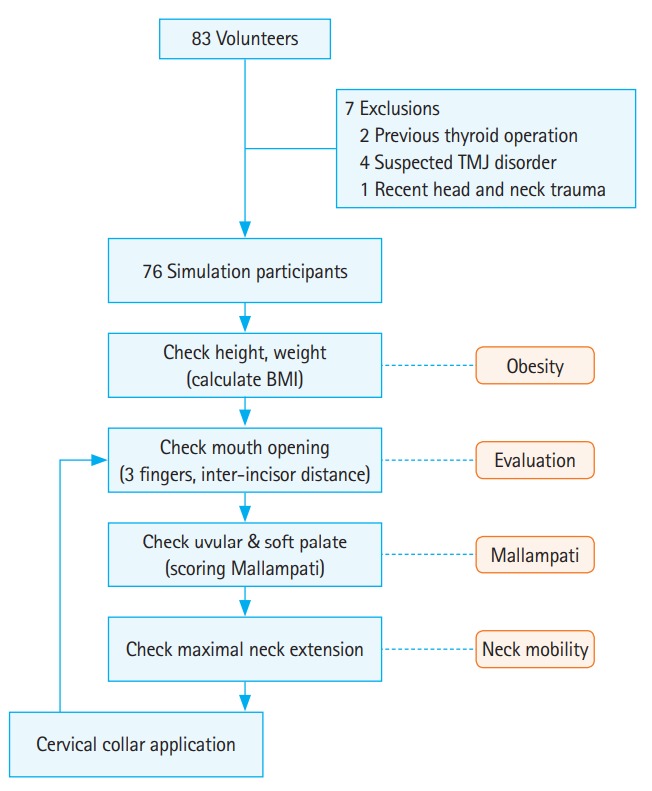
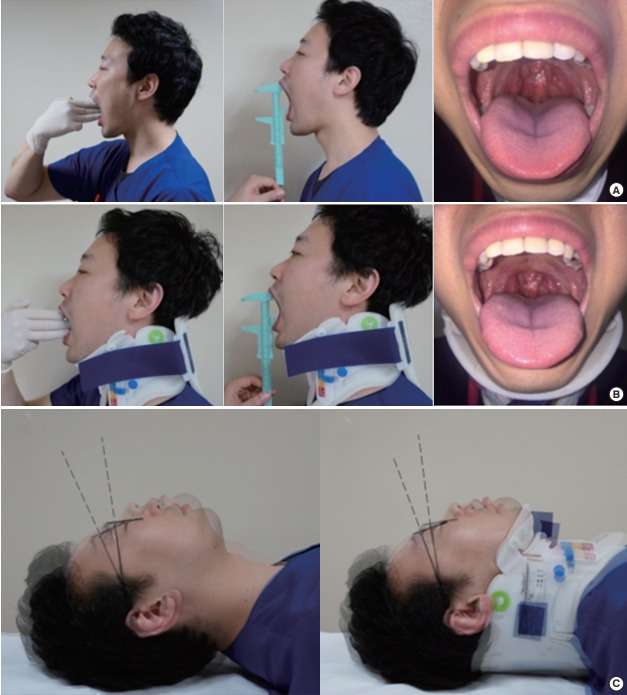
Methods: This simulation study was performed in 76 healthy volunteers. We measured the mouth opening, modified Mallampati classification, and neck extension before and after cervical collar application.
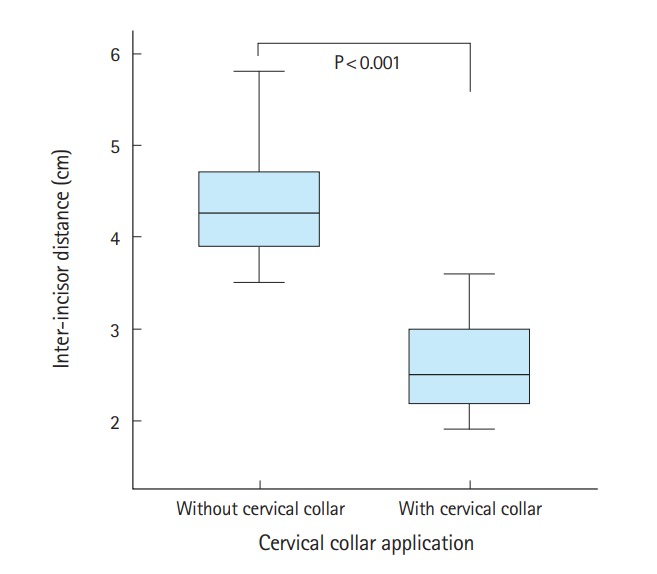
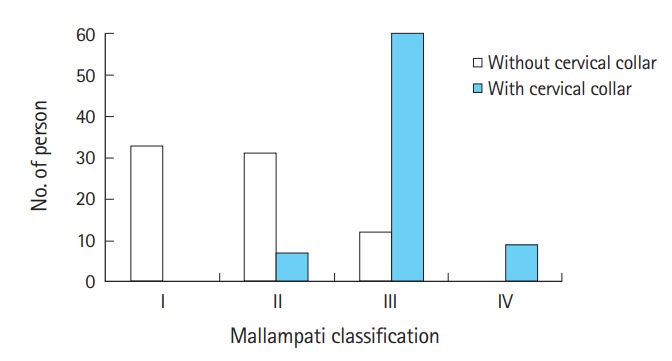
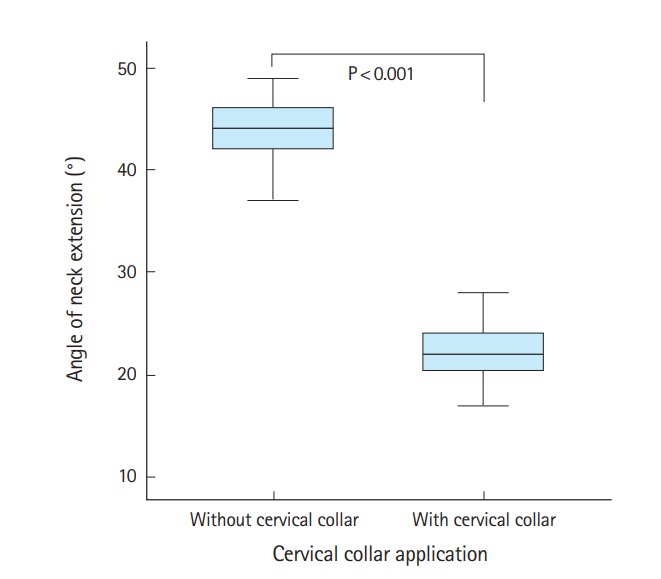
Results: The mean inter-incisor distance significantly decreased from 4.3 to 2.6 cm (P<0.001). Fifty-seven participants classified as I and II were newly classified as III and IV according to the modified Mallampati classification after cervical collar application (16% to 91%). The angles of neck extension significantly decreased from 44° to 22° after cervical collar application (P<0.001). Before cervical collar application, our simulations predicted that 14 of 76 participants (18%) would have a difficult airway, whereas after cervical collar application, 76 of 76 (100%) were predicted to have a difficult airway.
Conclusion: All values for the LEMON criteria (mouth opening, modified Mallampati classification, and neck extension) worsened significantly after cervical collar application. Additionally, a difficult airway was predicted in all participants after cervical collar application.
Keywords: Airway management; Cervical collar; Difficult airway; LEMON criteria.
Conflict of interest statement
No potential conflict of interest relevant to this article was reported.
Figures
References
-
- ATLS Subcommittee. American College of Surgeons’ Committee on Trauma. International ATLS working group Advanced trauma life support (ATLS): the ninth edition. J Trauma Acute Care Surg. 2013;74:1363–6. - PubMed
-
- Holley J, Jorden R. Airway management in patients with unstable cervical spine fractures. Ann Emerg Med. 1989;18:1237–9. - PubMed
-
- Hills MW, Deane SA. Head injury and facial injury: is there an increased risk of cervical spine injury? J Trauma. 1993;34:549–53. - PubMed
-
- American Society of Anesthesiologists Task Force on Management of the Difficult Airway Practice guidelines for management of the difficult airway: an updated report by the American Society of Anesthesiologists Task Force on Management of the Difficult Airway. Anesthesiology. 2003;98:1269–77. - PubMed
LinkOut - more resources
Full Text Sources
Other Literature Sources