


Chloroplast genome analyses and genomic resource development for epilithic sister genera Oresitrophe and Mukdenia (Saxifragaceae), using genome skimming data
- PMID: 29618324
- PMCID: PMC5885378
- DOI: 10.1186/s12864-018-4633-x
Chloroplast genome analyses and genomic resource development for epilithic sister genera Oresitrophe and Mukdenia (Saxifragaceae), using genome skimming data
Abstract
Background: Epilithic sister genera Oresitrophe and Mukdenia (Saxifragaceae) have an epilithic habitat (rocky slopes) and a parapatric distribution in East Asia, which makes them an ideal model for a more comprehensive understanding of the demographic and divergence history and the influence of climate changes in East Asia. However, the genetic background and resources for these two genera are scarce.
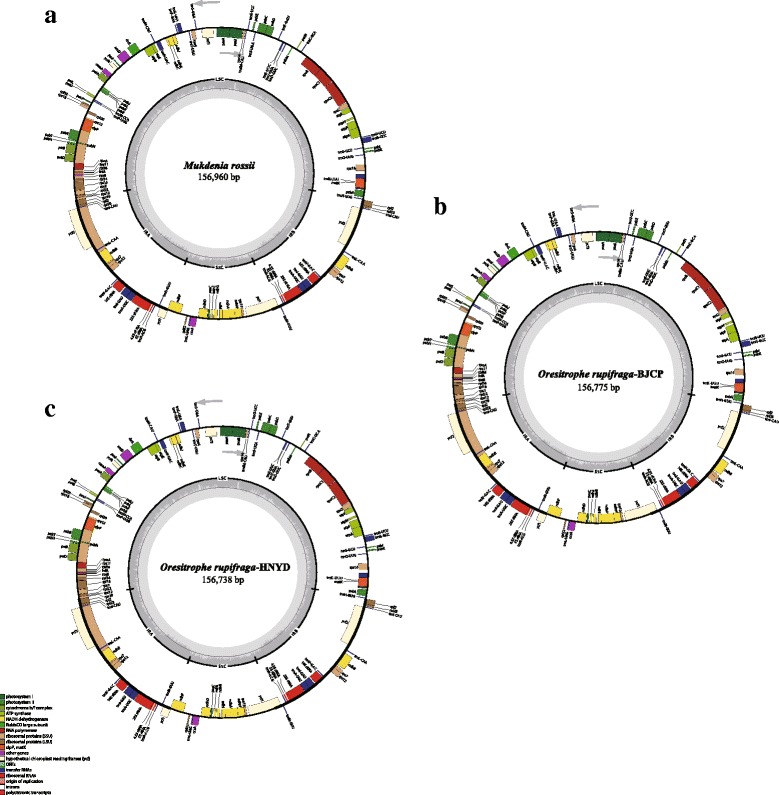
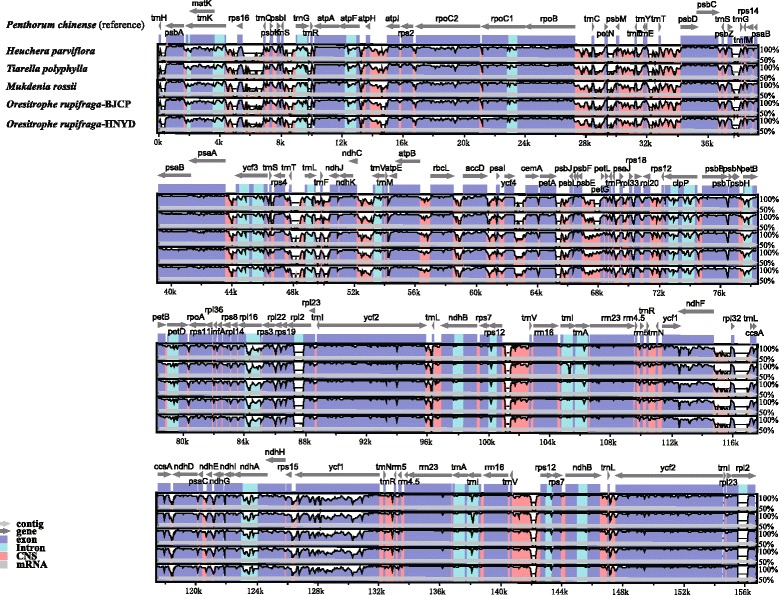
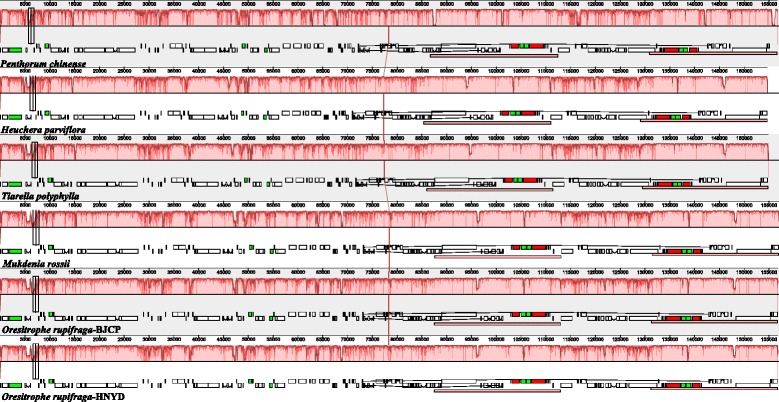
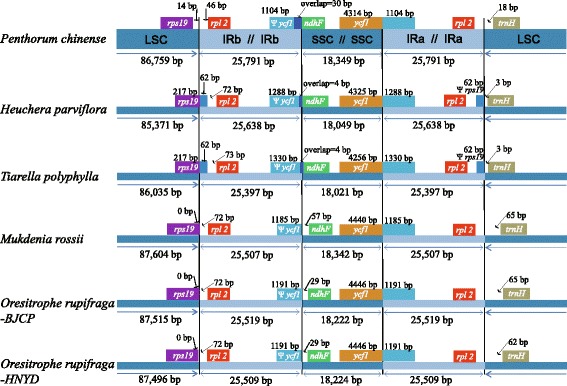
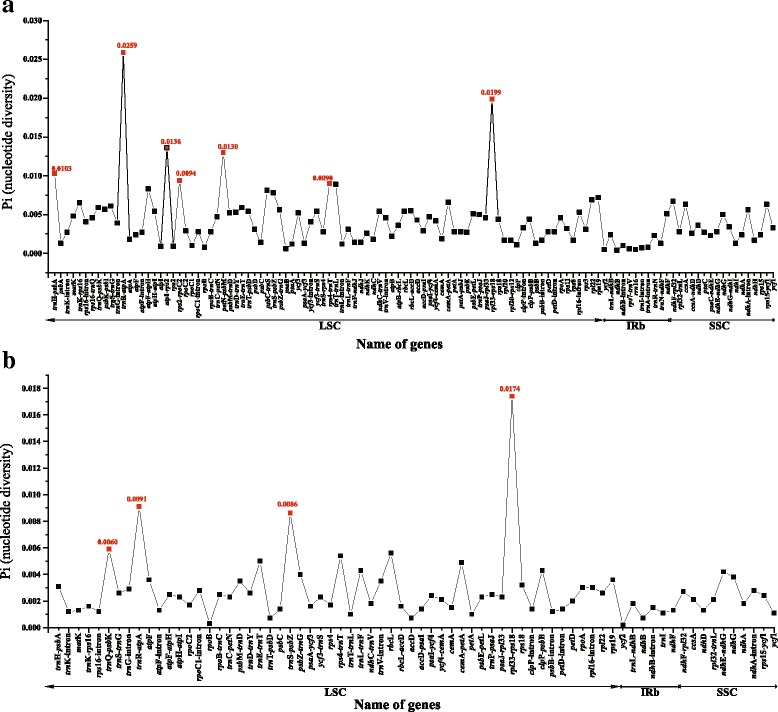
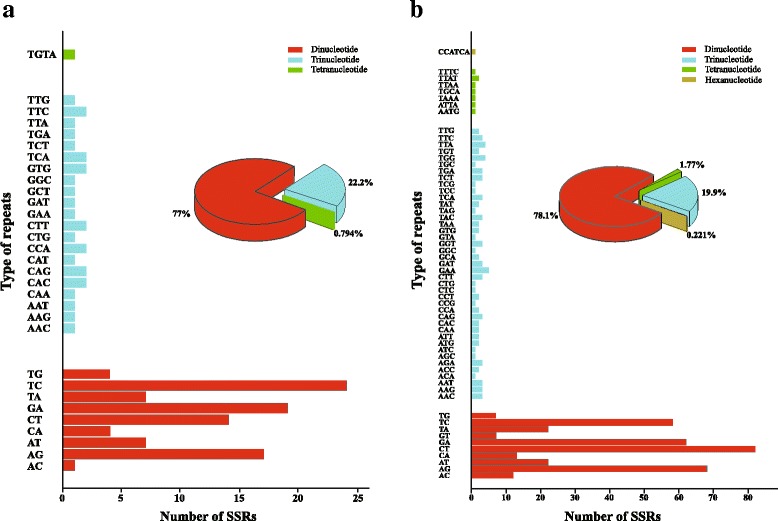
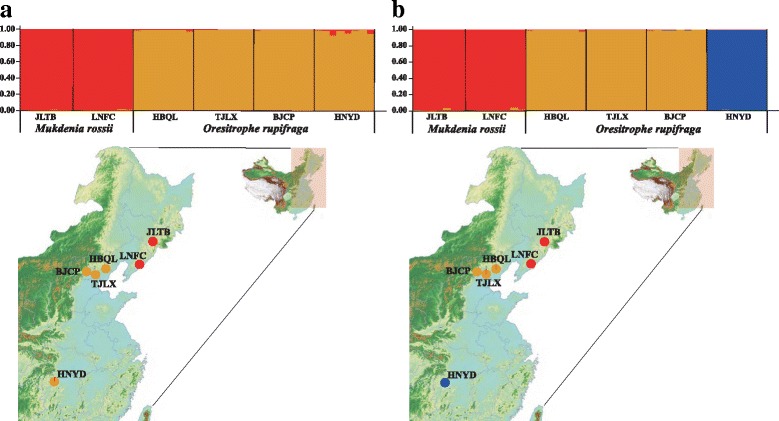
Results: The complete chloroplast (cp) genomes of two Oresitrophe rupifraga and one Mukdenia rossii individuals were reconstructed and comparative analyses were conducted to examine the evolutionary pattern of chloroplast genomes in Saxifragaceae. The cp genomes ranged from 156,738 bp to 156,960 bp in length and had a typical quadripartite structure with a conserved genome arrangement. Comparative analysis revealed the intron of rpl2 has been lost in Heuchera parviflora, Tiarella polyphylla, M. rossii and O. rupifraga but presents in the reference genome of Penthorum chinense. Seven cp hotspot regions (trnH-psbA, trnR-atpA, atpI-rps2, rps2-rpoC2, petN-psbM, rps4-trnT and rpl33-rps18) were identified between Oresitrophe and Mukdenia, while four hotspots (trnQ-psbK, trnR-atpA, trnS-psbZ and rpl33-rps18) were identified within Oresitrophe. In addition, 24 polymorphic cpSSR loci were found between Oresitrophe and Mukdenia. Most importantly, we successfully developed 126 intergeneric polymorphic gSSR markers between Oresitrophe and Mukdenia, as well as 452 intrageneric ones within Oresitrophe. Twelve randomly selected intergeneric gSSRs have shown that these two genera exhibit a significant genetic structure.
Conclusions: In this study, we conducted genome skimming for Oresitrophe rupifraga and Mukdenia rossii. Using these data, we were able to not only assemble their complete chloroplast genomes, but also develop abundant genetic resources (cp hotspots, cpSSRs, polymorphic gSSRs). The genomic patterns and genetic resources presented here will contribute to further studies on population genetics, phylogeny and conservation biology in Saxifragaceae.
Keywords: Chloroplast genome; Cp hotspot; East Asia; Population genetics; SSR.
Conflict of interest statement
Ethics approval and consent to participate
Not applicable.
Consent for publication
Not applicable.
Competing interests
The authors declare that they have no competing interests.
Publisher’s Note
Springer Nature remains neutral with regard to jurisdictional claims in published maps and institutional affiliations.
Figures
References
-
- Petit R, Aguinagalde I, de Beaulieu JL, Bittkau C, Brewer S, Cheddadi R, Ennos R, Fineschi S, Grivet D, Lascoux M, et al. Glacial refugia: hotspots but not melting pots of genetic diversity. Science. 2003;300(5625):1563–1565. - PubMed
-
- Hewitt G. The genetic legacy of the quaternary ice ages. Nature. 2000;405:907. - PubMed
Publication types
MeSH terms
Substances
Grants and funding
LinkOut - more resources
Full Text Sources
Other Literature Sources
Molecular Biology Databases
Miscellaneous
