


Maintenance of intestinal homeostasis by mucosal barriers
- PMID: 29619131
- PMCID: PMC5879757
- DOI: 10.1186/s41232-018-0063-z
Maintenance of intestinal homeostasis by mucosal barriers
Abstract
Background: The intestine is inhabited by a tremendous number of microorganisms, which provide many benefits to nutrition, metabolism and immunity. Mucosal barriers by intestinal epithelial cells make it possible to maintain the symbiotic relationship between the gut microbiota and the host by separating them. Recent evidence indicates that mucosal barrier dysfunction contributes to the development of inflammatory bowel disease (IBD). In this review, we focus on the mechanisms by which mucosal barriers maintain gut homeostasis.
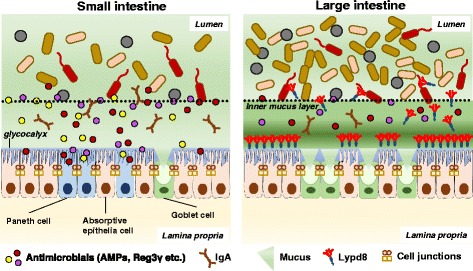
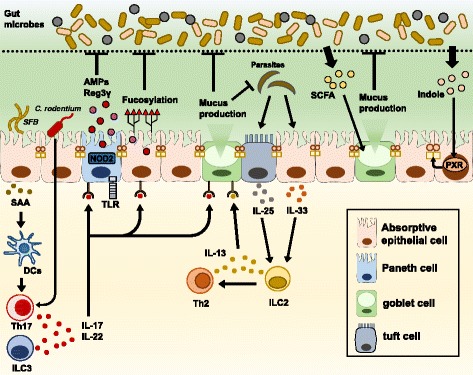
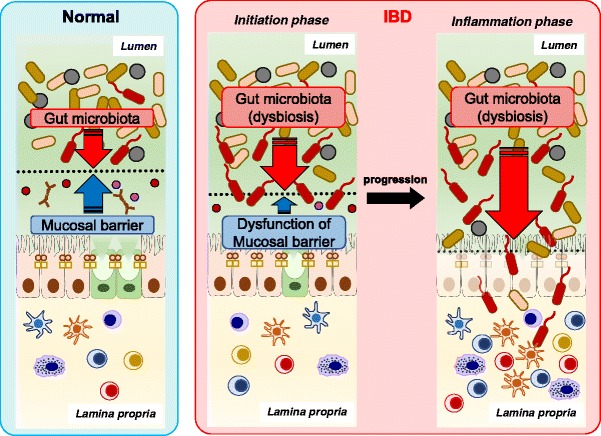
Main text: Gut mucosal barriers are classified into chemical and physical barriers. Chemical barriers, including antimicrobial peptides (AMPs), are chemical agents that attack invading microorganisms, and physical barriers, including the mucus layer and the cell junction, are walls that physically repel invading microorganisms. These barriers, which are ingeniously modulated by gut microbiota and host immune cells, spatially segregate gut microbiota and the host immunity to avoid unnecessary immune responses to gut commensal microbes. Therefore, mucosal barrier dysfunction allows gut bacteria to invade gut mucosa, inducing excessive immune responses of the host immune cells, which result in intestinal inflammation.
Conclusion: Gut mucosal barriers constructed by intestinal epithelial cells maintain gut homeostasis by segregating gut microbiota and host immune cells. Impaired mucosal barrier function contributes to the development of IBD. However, the mechanism by which the mucosal barrier is regulated by gut microbiota remains unclear. Thus, it should be further elucidated in the future to develop a novel therapeutic approach to IBD by targeting the mucosal barrier.
Keywords: Gut microbiota; Inflammatory bowel disease; Intestinal epithelial cells; Mucosal barrier.
Conflict of interest statement
Not applicable.Not applicable.The authors declare that they have no competing financial interests.Springer Nature remains neutral with regard to jurisdictional claims in published maps and institutional affiliations.
Figures
References
-
- Gaudier E, Jarry A, Blottiere HM, de Coppet P, Buisine MP, Aubert JP, Laboisse C, Cherbut C, Hoebler C. Butyrate specifically modulates MUC gene expression in intestinal epithelial goblet cells deprived of glucose. Am J Physiol Gastrointest Liver Physiol. 2004;287(6):G1168–G1174. doi: 10.1152/ajpgi.00219.2004. - DOI - PubMed
Publication types
LinkOut - more resources
Full Text Sources
Other Literature Sources
