


Impact of Human Immunodeficiency Virus Infection on Survival and Acute Toxicities From Chemoradiation Therapy for Cervical Cancer Patients in a Limited-Resource Setting
- PMID: 29619965
- PMCID: PMC5999036
- DOI: 10.1016/j.ijrobp.2018.01.067
Impact of Human Immunodeficiency Virus Infection on Survival and Acute Toxicities From Chemoradiation Therapy for Cervical Cancer Patients in a Limited-Resource Setting
Abstract
Purpose: To prospectively compare survival between human immunodeficiency virus (HIV)-infected versus HIV-uninfected cervical cancer patients who initiated curative chemoradiation therapy (CRT) in a limited-resource setting.
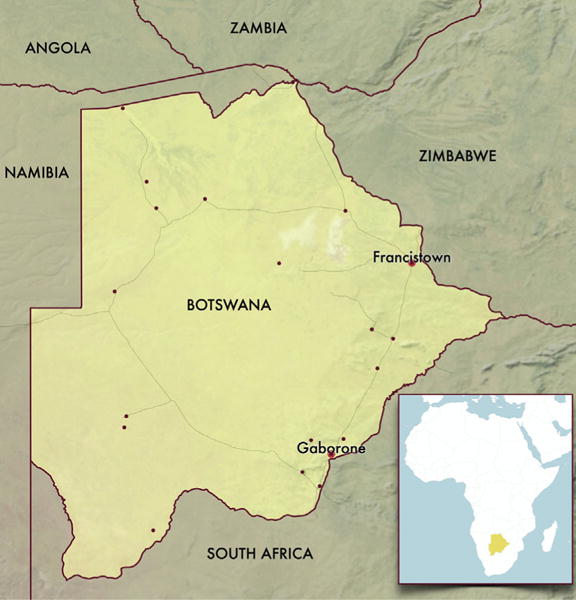
Methods and materials: Women with locally advanced cervical cancer with or without HIV infection initiating radical CRT in Botswana were enrolled in a prospective, observational, cohort study from July 2013 through January 2015.
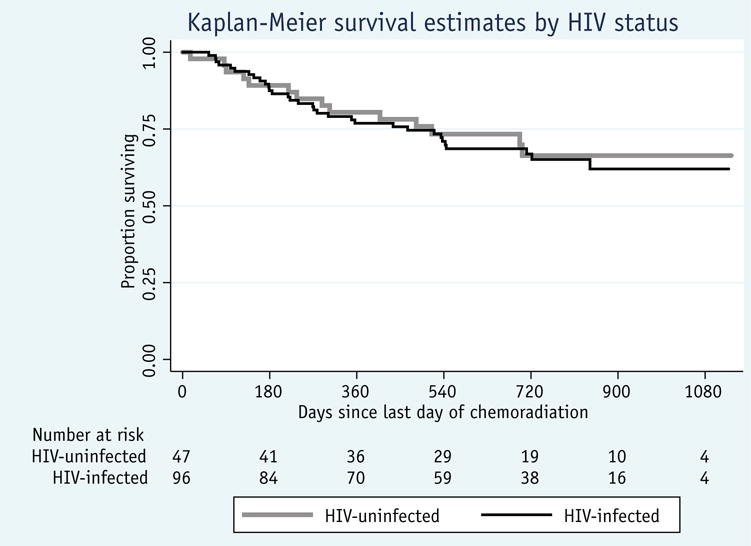
Results: Of 182 women treated for cervical cancer during the study period, 143 women initiating curative CRT were included in the study. Eighty-five percent of the participants (122 of 143) had stage II/III cervical cancer, and 67% (96 of 143) were HIV-infected. All HIV-infected patients were receiving antiretroviral therapy (ART) at the time of curative cervical cancer treatment initiation. We found no difference in toxicities between HIV-infected and HIV-uninfected women. The 2-year overall survival (OS) rates were 65% for HIV-infected women (95% confidence interval [CI] 54%-74%) and 66% for HIV-uninfected women (95% CI 49%-79%) (P = .70). Factors associated with better 2-year OS on multivariate analyses included baseline hemoglobin >10 g/dL (hazard ratio [HR] 0.37, 95% CI 0.19-0.72, P = .003), total radiation dose ≥75 Gy (HR 0.52, 95% CI 0.27-0.97, P = .04), and age <40 years versus 40-59 years (HR 2.17, 95% CI 1.05-4.47, P = .03).
Conclusions: Human immunodeficiency virus status had no effect on 2-year OS or on acute toxicities in women with well-managed HIV infection who initiated curative CRT in Botswana. In our cohort, we found that baseline hemoglobin levels, total radiation dose, and age were associated with survival, regardless of HIV status.
Copyright © 2018 Elsevier Inc. All rights reserved.
Conflict of interest statement
Conflict of interest: none.
Figures
References
-
- World Health Organization. Cervical Cancer, Mortality and Prevalence Worldwide in 2012. Geneva: World Health Organization GLOBOCAN; 2012.
-
- Bosch FX, Manos MM, Munoz N, et al. Prevalence of human papillomavirus in cervical cancer: A worldwide perspective. International Biological Study on Cervical Cancer (IBSCC) Study Group. J Natl Cancer Inst. 1995;87:796–802. - PubMed
-
- Botswana Ministry of Health. Botswana HIV/AIDS Impact Survey III Results. Available at: http://www.gov.bw/Global/NACA_Ministry/wana/BAIS_III_StatsPress.pdf. Accessed August 15, 2016. - PubMed
-
- Denny L, de Sanjose S, Mutebi M, et al. Interventions to close the divide for women with breast and cervical cancer between low-income and middle-income countries and high-income countries. Lancet. 2017;389:861–870. - PubMed
Publication types
MeSH terms
Substances
Grants and funding
LinkOut - more resources
Full Text Sources
Other Literature Sources
Medical
Research Materials
