The Impact of Dialect Density on the Growth of Language and Reading in African American Children
- PMID: 29621803
- PMCID: PMC6105135
- DOI: 10.1044/2018_LSHSS-17-0063
The Impact of Dialect Density on the Growth of Language and Reading in African American Children
Abstract
Purpose: The goal of the current study was to examine the impact of dialect density on the growth of oral language and reading skills in a sample of African American English (AAE)-speaking children reared in urban communities.
Method: Eight hundred thirty-five African American children in first through fifth grades participated. Using an accelerated cohort design, univariate and bivariate growth models were employed to examine dialect density, oral language and reading, and the relationships between these variables.
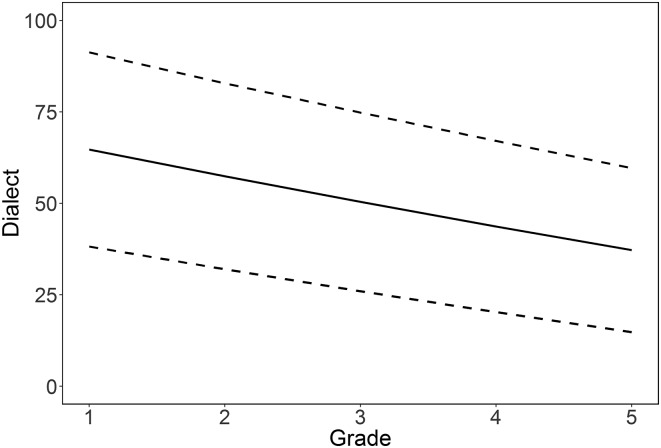
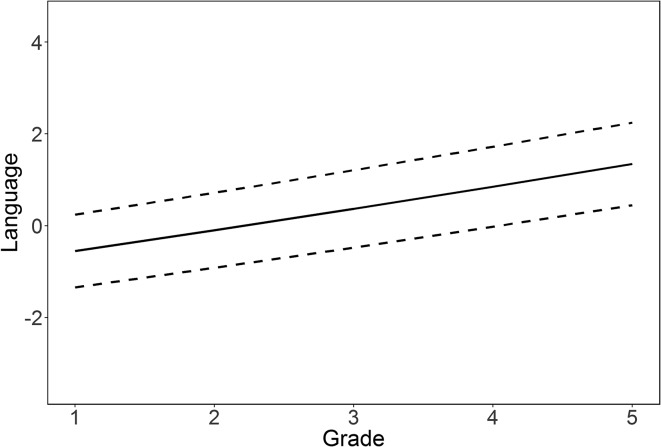
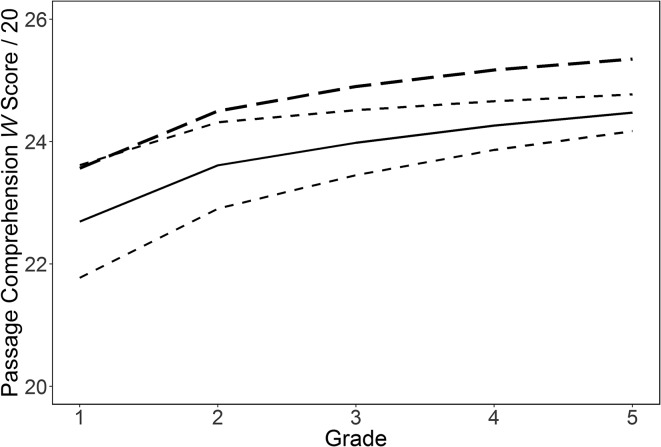
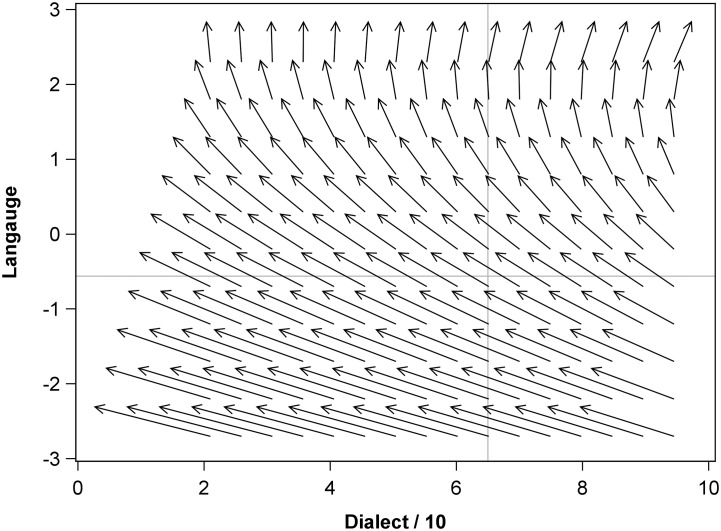
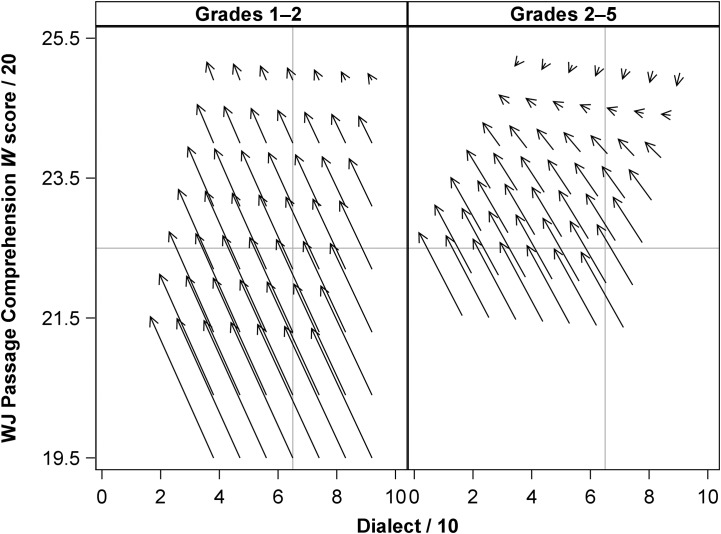
Results: For the univariate models, results indicated that (a) dialect density decreased over time by approximately 5% per year beyond first grade, (b) language skills improved approximately 0.5 SD per year, and (c) reading comprehension increased significantly from first to second grade and slowed 23% per year in second through fifth grades. Results from the bivariate models revealed that (a) dialect density and language ability are negatively associated, although dialect density did not affect change in language over time, and (b) higher dialect density is related to slower growth in reading.
Conclusions: Findings from this investigation provide converging evidence for accounts in the extant literature particularly supporting a negative relationship between dialect density and oral language and between dialect density and reading while also contributing novel longitudinal evidence that suggests that changes in dialect use over time may be driven by oral language skills and that reading and dialect have a reciprocal relationship.
Figures
References
-
- Aram D., Korat O., Saiegh-Haddad E., Arafat S. H., Khoury R., & Elhija J. A. (2013). Early literacy among Arabic-speaking kindergartners: The role of socioeconomic status, home literacy environment and maternal mediation of writing. Cognitive Development, 28(3), 193–208. https://doi.org/10.1016/j.cogdev.2012.10.003
-
- Arnold D. H., Lonigan C. J., Whitehurst G. J., & Epstein J. N. (1994). Accelerating language development through picture book reading: Replication and extension to a videotape training format. Journal of Educational Psychology, 86(2), 235–243.
-
- Bennet M., & Lancaster J. (2013). Improving reading in culturally situated contexts. The Australian Journal of Indigenous Education, 41(2), 208–217.
-
- Campbell T. F., Dollaghan C. A., & Needleman H. L. (1997). Reducing bias in language assessment: Processing dependent measures. Journal of Speech, Language, and Hearing Research, 40, 519–525. - PubMed
-
- Charity A. H., Scarborough H. S., & Griffin D. M. (2004). Familiarity with school English in African American children and its relation to early reading achievement. Child Development, 75(5), 1340–1356. - PubMed
Publication types
MeSH terms
Grants and funding
LinkOut - more resources
Full Text Sources
Other Literature Sources