Efficacy of Aedes aegypti control by indoor Ultra Low Volume (ULV) insecticide spraying in Iquitos, Peru
- PMID: 29624581
- PMCID: PMC5906025
- DOI: 10.1371/journal.pntd.0006378
Efficacy of Aedes aegypti control by indoor Ultra Low Volume (ULV) insecticide spraying in Iquitos, Peru
Abstract
Background: Aedes aegypti is a primary vector of dengue, chikungunya, Zika, and urban yellow fever viruses. Indoor, ultra low volume (ULV) space spraying with pyrethroid insecticides is the main approach used for Ae. aegypti emergency control in many countries. Given the widespread use of this method, the lack of large-scale experiments or detailed evaluations of municipal spray programs is problematic.
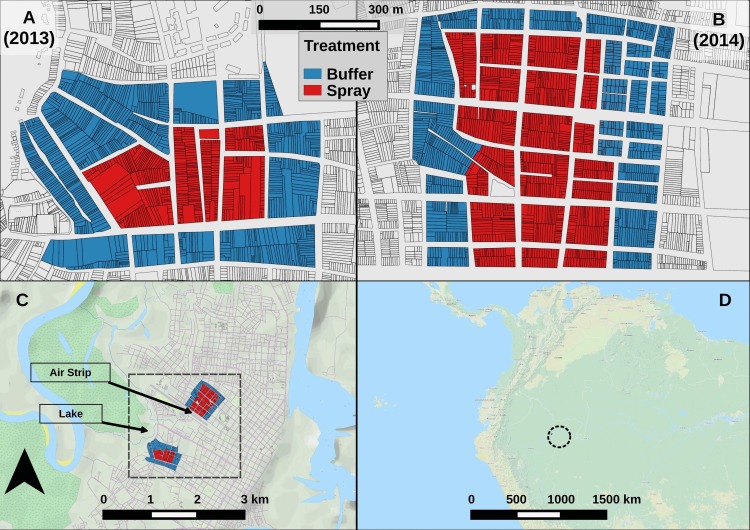
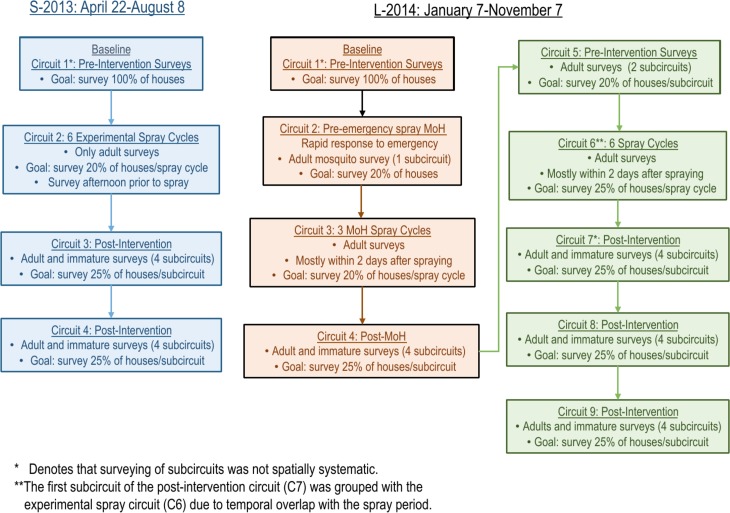
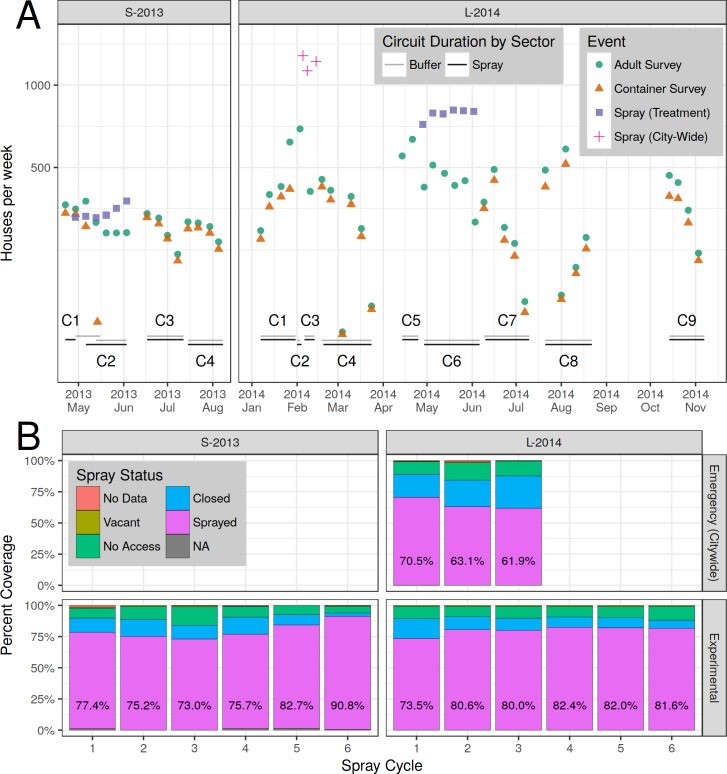
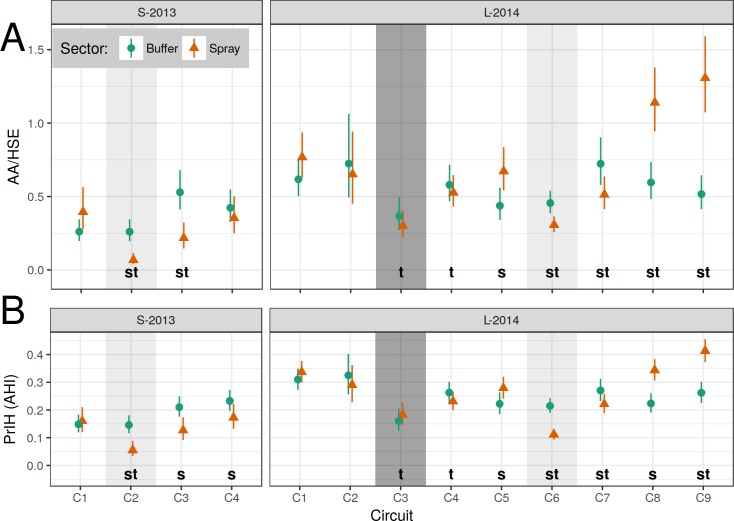
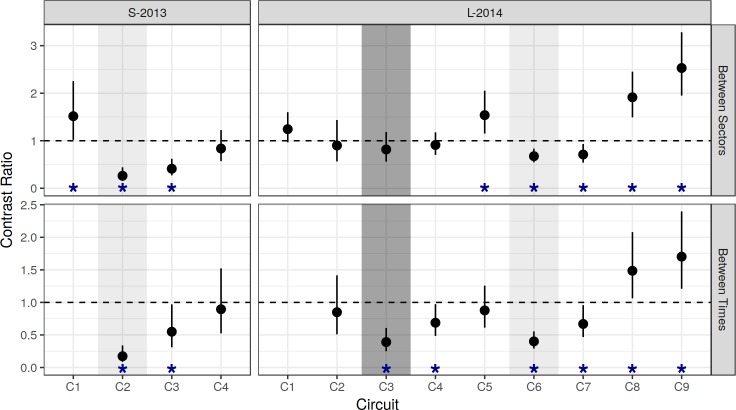
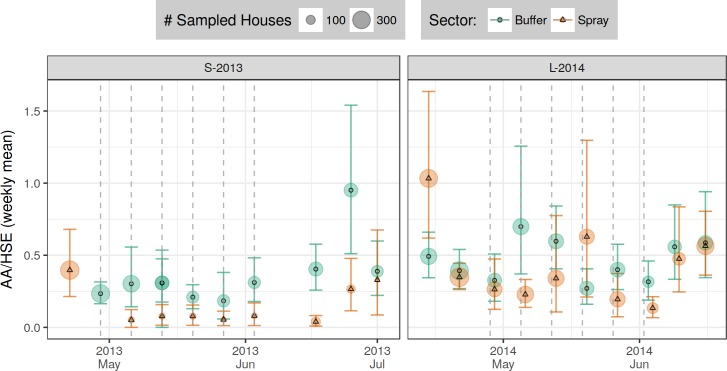
Methodology/principal findings: Two experimental evaluations of non-residual, indoor ULV pyrethroid spraying were conducted in Iquitos, Peru. In each, a central sprayed sector was surrounded by an unsprayed buffer sector. In 2013, spray and buffer sectors included 398 and 765 houses, respectively. Spraying reduced the mean number of adults captured per house by ~83 percent relative to the pre-spray baseline survey. In the 2014 experiment, sprayed and buffer sectors included 1,117 and 1,049 houses, respectively. Here, the sprayed sector's number of adults per house was reduced ~64 percent relative to baseline. Parity surveys in the sprayed sector during the 2014 spray period indicated an increase in the proportion of very young females. We also evaluated impacts of a 2014 citywide spray program by the local Ministry of Health, which reduced adult populations by ~60 percent. In all cases, adult densities returned to near-baseline levels within one month.
Conclusions/significance: Our results demonstrate that densities of adult Ae. aegypti can be reduced by experimental and municipal spraying programs. The finding that adult densities return to approximately pre-spray densities in less than a month is similar to results from previous, smaller scale experiments. Our results demonstrate that ULV spraying is best viewed as having a short-term entomological effect. The epidemiological impact of ULV spraying will need evaluation in future trials that measure capacity of insecticide spraying to reduce human infection or disease.
Conflict of interest statement
The authors have declared that no competing interest exist.
Figures
References
-
- Bhatt S, Gething PW, Brady OJ, Messina JP, Farlow AW, Moyes CL, et al. The global distribution and burden of dengue. Nature. 2013;496(7446):504–7. doi: 10.1038/nature12060 . - DOI - PMC - PubMed
-
- Brady OJ, Gething PW, Bhatt S, Messina JP, Brownstein JS, Hoen AG, et al. Refining the global spatial limits of dengue virus transmission by evidence-based consensus. PLoS Negl Trop Dis. 2012;6(8):e1760 doi: 10.1371/journal.pntd.0001760 . - DOI - PMC - PubMed
-
- Wilder-Smith A, Byass P. The elusive global burden of dengue. Lancet Infect Dis. 2016;16(6):629–31. doi: 10.1016/S1473-3099(16)00076-1 . - DOI - PubMed
-
- Esu E, Lenhart A, Smith L, Horstick O. Effectiveness of peridomestic space spraying with insecticide on dengue transmission; systematic review. Trop Med Int Health. 2010;15(5):619–31. doi: 10.1111/j.1365-3156.2010.02489.x . - DOI - PubMed
-
- Horstick O, Runge-Ranzinger S, Nathan MB, Kroeger A. Dengue vector-control services: how do they work? A systematic literature review and country case studies. Trans R Soc Trop Med Hyg. 2010;104(6):379–86. doi: 10.1016/j.trstmh.2009.07.027 . - DOI - PubMed
Publication types
MeSH terms
Substances
Associated data
Grants and funding
LinkOut - more resources
Full Text Sources
Other Literature Sources