. 2018 Apr 5;173(2):417-429.e10.
doi: 10.1016/j.cell.2018.03.030.

Influenza Infection in Humans Induces Broadly Cross-Reactive and Protective Neuraminidase-Reactive Antibodies

Affiliations

Influenza Infection in Humans Induces Broadly Cross-Reactive and Protective Neuraminidase-Reactive Antibodies

Yao-Qing Chen et al. Cell. .

Abstract

Antibodies to the hemagglutinin (HA) and neuraminidase (NA) glycoproteins are the major mediators of protection against influenza virus infection. Here, we report that current influenza vaccines poorly display key NA epitopes and rarely induce NA-reactive B cells. Conversely, influenza virus infection induces NA-reactive B cells at a frequency that approaches (H1N1) or exceeds (H3N2) that of HA-reactive B cells. NA-reactive antibodies display broad binding activity spanning the entire history of influenza A virus circulation in humans, including the original pandemic strains of both H1N1 and H3N2 subtypes. The antibodies robustly inhibit the enzymatic activity of NA, including oseltamivir-resistant variants, and provide robust prophylactic protection, including against avian H5N1 viruses, in vivo. When used therapeutically, NA-reactive antibodies protected mice from lethal influenza virus challenge even 48 hr post infection. These findings strongly suggest that influenza vaccines should be optimized to improve targeting of NA for durable and broad protection against divergent influenza strains.

Keywords: B cell; human immunology; humoral immune response; influenza; monoclonal antibody; neuraminidase; therapeutics; vaccine; virus infection.


Conflict of interest statement

DECLARATION OF INTERESTS

The authors declare no competing interests.

Figures
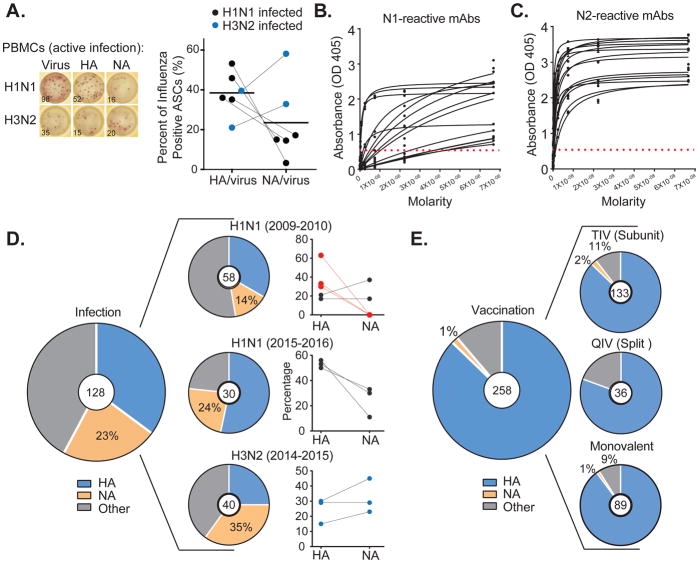
Figure 1
Figure 1. Influenza virus infection induces a greater prevalence of NA-reactive antibodies than vaccination
(A) The proportions of HA- and NA-reactive ASCs out of the total virus-reactive cells were determined by ELISPOT assay. Individuals infected with an H1N1 influenza virus (in black) were compared to individuals infected with an H3N2 influenza virus (in blue). Each dot represents a subject (n=6). (B–C) Binding of NA-reactive mAbs to rNA proteins by ELISA. Represented are ELISA binding curves. The assays were performed in duplicate at least 3 times for each antibody. (B) Binding to A/California/7/2009 (H1N1) rN1 protein or (C) A/Texas/50/2012 (H3N2) rN2 protein. Numbers of antibodies per subject are indicated in Table S1. (D–E) Proportion of influenza virus-reactive mAbs that bind to HA, NA or other antigens (D). Pie charts show the percentages of mAbs that bind a given antigen (HA, NA, or other) of the total, indicated in the center circle. Graphed on the right are the percentages of HA- and NA-reactive antibodies per individual. Each dot represents one individual (n=11). Red indicates patients with no NA B cells detected on first exposure to the pandemic H1N1 strain in 2009 (E) The frequency of NA-reactive mAbs induced by vaccination (the vaccinated cohorts are detailed in the methods). As in (D), pie charts show the percentages of mAbs that bind a given antigen (HA, NA, or other) in individuals vaccinated with influenza virus subunit vaccine (seasons 2006–2008 and 2010–2011), influenza virus split vaccine (2008–2010), or monovalent pandemic H1N1 vaccine (2009–2010). For the panels (A) and (D), the blue dots indicate patients infected with an H3N2 virus. See also Figure S1 and Table S1.
Figure 2
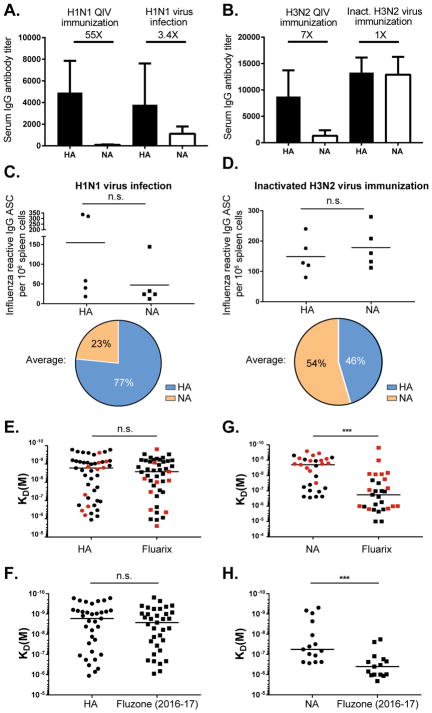
Figure 2. Epitopes on NA are not efficiently presented in current commercially available inactivated influenza virus vaccines
(A–D) Mice were infected with live H1N1 virus or immunized with inactivated H3N2 virus (as detailed in the methods). (A–B) Serum responses in immunized mice were determined by ELISA. (A) HA1 and N1 serum endpoint titers (n=5) were tested by A/California/07/2009 rHA and rNA, respectively. (B) HA3 and N2 serum endpoint titers (n=5) were tested by A/Switzerland/9715293/2013 rHA and A/Texas/50/2012 rNA, respectively. Data are represented as mean ± SD. (C–D) The proportion of HA and NA-reactive IgG secreting cells (ASCs) in mice after infection (H1N1) or immunization (H3N2). Pie charts show the average frequency of HA versus NA-reactive B cells. (E–H) HA and NA-reactive mAbs were tested for binding by ELISA to HA, NA and two influenza virus vaccine preparations. Binding avidities (KD) were estimated by Scatchard plot analyses of ELISA data for 35 anti-H1, 15 anti-N1, 10 anti-H3, and 14 anti-N2 mAbs. (E) H1-mAb binding was compared between A/California/7/2009 (H1N1) rHA and Fluarix vaccine (2015–2016), and for H3-mAbs to A/Texas/50/2012 (H3N2) rHA and Fluarix vaccine (2014–2015). (F) Binding of H1-mAbs to A/California/7/2009 (H1N1) rHA compared to the Fluzone vaccine (2016–2017). (G) Binding N1-mAbs to A/California/7/2009 (H1N1) rNA compared to Fluarix vaccine (2015–2016) and N2-mAbs binding to A/Texas/50/2012 (H3N2) rNA was compared to Fluarix vaccine (2014–2015). (H) Binding of N1-mAbs to A/California/7/2009 (H1N1) rNA was compared to Fluzone vaccine (2016–2017). The red points indicate H3- and N2-reactive mAbs. Data are representative of three independent experiments. Statistical significance was determined using the paired nonparametric Wilcoxon test. The line represents the median. n.s., not significant. *p<0.05; **p<0.001; ***p<0.0001. See also Figure S2.
Figure 3
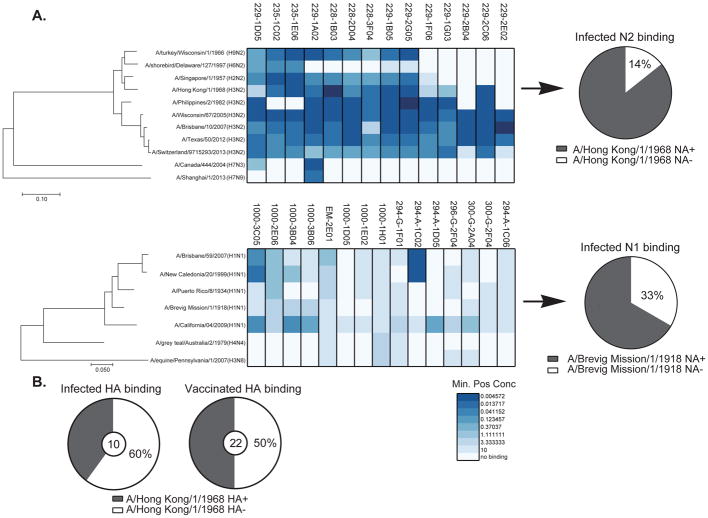
Figure 3. NA-reactive mAbs are broadly cross-reactive
(A) Binding of NA-reactive mAbs to rNA proteins was measured by ELISA. Representative minimum positive concentrations (μg/ml) from three independent experiments are plotted as a heatmap. The different NAs were clustered by amino acid sequence phylogeny. The top panel shows N2-reactive mAbs binding to a panel of NA proteins except for strain A/Switzerland/9715293/2013 (H3N2) which was whole virus. The bottom panel shows N1-reactive mAbs binding to a panel of NA proteins. Pie charts represent the frequency of NA-reactive mAbs binding to historic strains (A/Hong Kong/1/1968 rN2 and A/Brevig Mission/1/1918 rN1). (B) Binding of 32 HA reactive mAbs isolated from infected or vaccinated subjects to historical past H3N2 strain (A/Hong Kong/1/1968) rH3 were measured by ELISA. Pie charts represent the comparative frequency of HA-reactive mAbs against A/Hong Kong/1/1968 rH3 protein between the infected and vaccinated individuals.
Figure 4
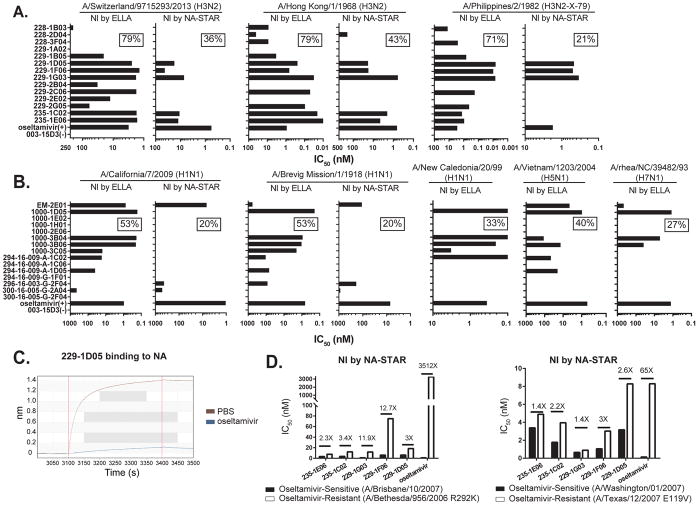
Figure 4. NA-reactive mAbs exhibit broadly cross-reactive NA–inhibition activity in vitro
(A) N2-reactive mAbs were tested for inhibiting NA enzymatic activity via ELLA assays and NA-STAR assays against A/Switzerland/9715293/2013 (H3N2), A/Hong Kong/1/1968 (H3N2) and A/Philippines/2/1982 (H3N2-X-79) viruses. Data are represented as half-maximum inhibitory concentration IC50 (nM). Oseltamivir was used as a positive control. (B) N1-reactive mAbs were tested for inhibiting NA enzymatic activity in ELLA assays and NA-STAR assays against A/California/7/2009 (H1N1) virus, A/Brevig Mission/1/1918 (H1N1) rNA protein, A/New Caledonia/20/99 (H1N1) virus, avian A/Vietnam/1203/2004 (H5N1) virus and A/rhea/NC/39482/93 (H7N1) virus. Data are represented as IC50 (nM). Oseltamivir was used as a positive control. (C) Binding competition between the N2-reactive mAb 229-1D05 and oseltamivir to A/Texas/50/2012 rNA was measured by bio-layer interferometry. (D) The N2-reactive mAbs were tested for inhibiting NA enzymatic activity by NA-STAR assay against oseltamivir-sensitive strains A/Brisbane/10/2007 (H1N1) and A/Washington/01/2007 (H3N2) and oseltamivir-resistant strains A/Bethesda/956/2006 R292K (H1N1) and A/Texas/12/2007 E119V (H3N2). Influenza-non-reactive human mAb 003-15D3 is specific for anthrax protective antigen and was used as a negative control in panels A and B and Figure 5. See also Figure S3 and S4
Figure 5
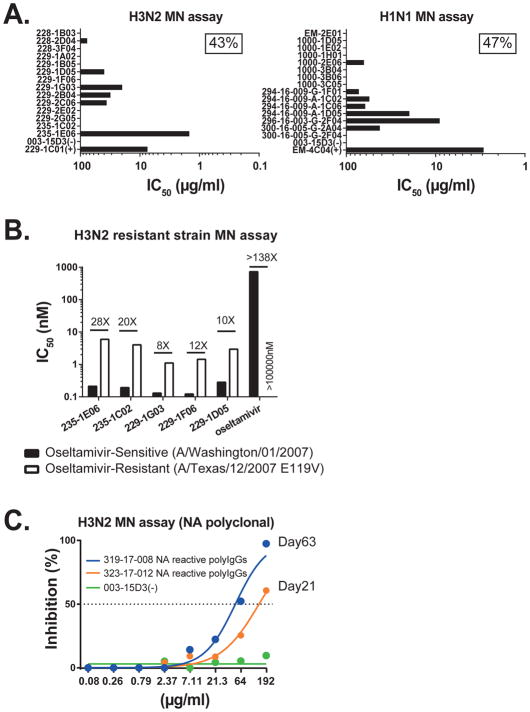
Figure 5. NA-reactive mAbs exhibit neutralization activity in vitro
(A) NA-reactive mAbs were tested for neutralization by microneutralization (MN) assay using A/Switzerland/9715293/2013 (H3N2) and A/California/7/2009 (H1N1) viruses. Data are represented as IC50 (μg/ml). Positive control mAbs 229-1C01 (anti-H3N2) and EM-4C04 (anti-H1N1) bind HA and neutralize these influenza virus strains. (B) The N2-reactive mAbs were tested for neutralization by MN assay using A/Washington/01/2007 (oseltamivir-sensitive strain) and A/Texas/12/2007 E119V (oseltamivir-resistant strain) H3N2 viruses. Data are represented as IC50 (nM). (C) Purified N2 polyclonal antibodies from infected subjects were tested by MN assay against A/Hong Kong/4801/2014 (H3N2) virus. Data are representative of three independent experiments.
Figure 6
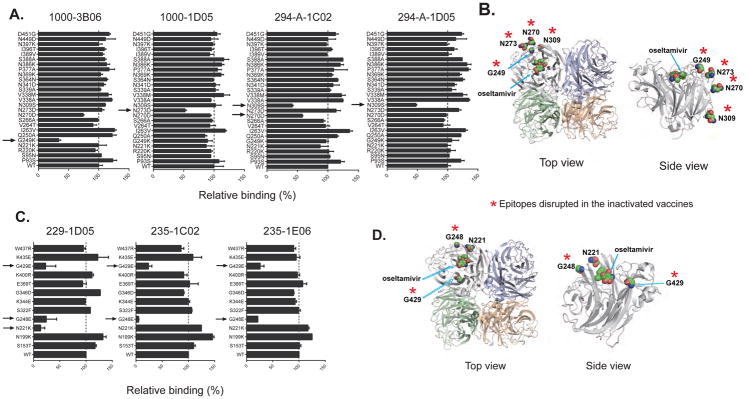
Figure 6. Identification of critical epitopes targeted by NA-reactive mAbs
(A) Binding of four N1-reactive mAbs (1000-3B06, 1000-1D05, 294-A-1C02 and 294-A-1D05) to A/California/7/2009 (H1N1) NA mutant proteins transiently expressed on the surface of 293T cells. Hyper-immune mouse serum against A/California/7/2009 (H1N1)-X179A virus was used to verify the expression of NA. Binding to A/California/7/2009 wild type NA is shown in the last bar labeled ‘WT’. Data are represented as mean ± SD. Data are representative of two independent experiments performed in duplicate. (B) Modeling of N1 was done using PyMOL to show the 4 critical amino acids involved in the binding of the N1-reactive mAbs (PDB: 3TI6) (Vavricka et al., 2011). (C) Binding of three N2-reactive mAbs (229-1D05, 235-1C02 and 235-1E06) to 12 A/Minnesota/11/2010 (H6N2-PR8 backbone) NA mutant viruses. Data are represented as mean ± SD. Data are representative of two independent experiments performed in duplicate. (D) Modeling of N2 protein was done using PyMOL to show the three critical amino acid involved in the binding of the N2-reactive mAbs (PDB:4K1J) (Wu et al., 2013). The mutated sites within epitopes that are also disrupted in the inactivated vaccines (Figure 1), disrupting mAb binding are indicated with red asterisks (mAbs 1000-1D05, 294-A-1C02, 294-A-1D05 did not bind to either Fluarix or Fluzone, and 1000-3B06, 235-1C02 bound poorly).
Figure 7
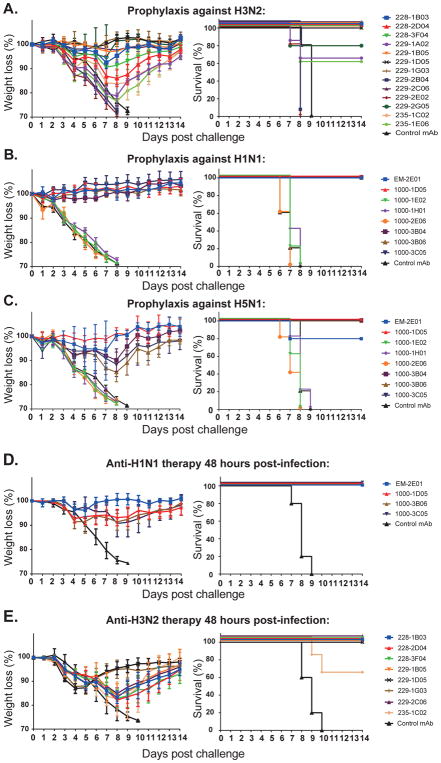
Figure 7. NA-reactive mAbs are protective in a prophylactic and therapeutic setting in vivo
Six week-old female BALB/c mice (5 per experimental condition) were injected intraperitoneally (i.p.) with 5 mg/kg of each NA-reactive mAb individually or with an irrelevant negative control human mAb either 2 h prior to challenge (A–C) or 48 hours after challenge (D–E) with a lethal dose (10 LD50) of virus. The percentage of initial body weight and survival were plotted for each antibody and compared to untreated mice. Data are represented as mean ± SD. Influenza-non-reactive human mAb 003-15D3 (anti-anthrax PA) was used as a negative control in all experiments. (A) N2-reactive mAb prophylactic protection against A/Philippines/2/1982 (H3N2 - X-79) virus. (B) N1-reactive mAb prophylactic protection against A/Netherlands/602/2009 virus (pandemic H1N1). (C) N1-reactive mAbs prophylactic protection against A/Vietnam/1203/2004 (H5N1 - PR8 reassortant) avian influenza virus. (D) N1-reactive mAbs therapeutic protection from A/Netherlands/602/2009 virus (pandemic H1N1). (E) N2-reactive mAbs therapeutic protection from A/Philippines/2/1982 (H3N2 - X-79) virus.

Comment in

References

    1. Abed Y, Hardy I, Li Y, Boivin G. Divergent evolution of hemagglutinin and neuraminidase genes in recent influenza A:H3N2 viruses isolated in Canada. J Med Virol. 2002;67:589–595. - PubMed
    1. Air GM. Influenza neuraminidase. Influenza Other Respir Viruses. 2012;6:245–256. - PMC - PubMed
    1. Anderson CS, Ortega S, Chaves FA, Clark AM, Yang H, Topham DJ, DeDiego ML. Natural and directed antigenic drift of the H1 influenza virus hemagglutinin stalk domain. Sci Rep. 2017;7:14614. - PMC - PubMed
    1. Andrews SF, Huang Y, Kaur K, Popova LI, Ho IY, Pauli NT, Henry Dunand CJ, Taylor WM, Lim S, Huang M, et al. Immune history profoundly affects broadly protective B cell responses to influenza. Sci Transl Med. 2015;7:316ra192. - PMC - PubMed
    1. Angeletti D, Yewdell JW. Is It Possible to Develop a “Universal” Influenza Virus Vaccine? Outflanking Antibody Immunodominance on the Road to Universal Influenza Vaccination. Cold Spring Harb Perspect Biol 2017 - PMC - PubMed

Publication types

MeSH terms