


Female Pelvic Vascular Malformations
- PMID: 29628618
- PMCID: PMC5886763
- DOI: 10.1055/s-0038-1636524
Female Pelvic Vascular Malformations
Abstract
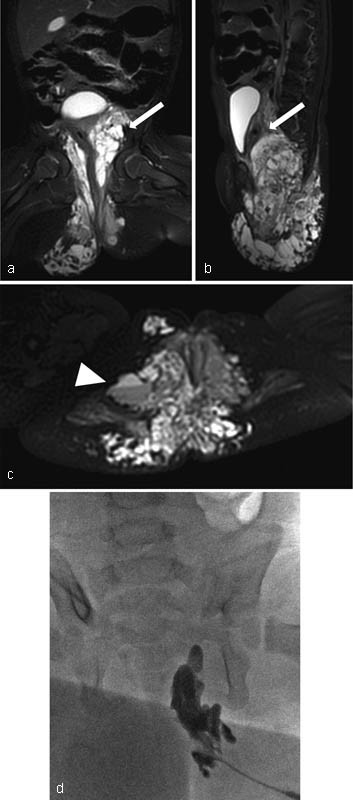
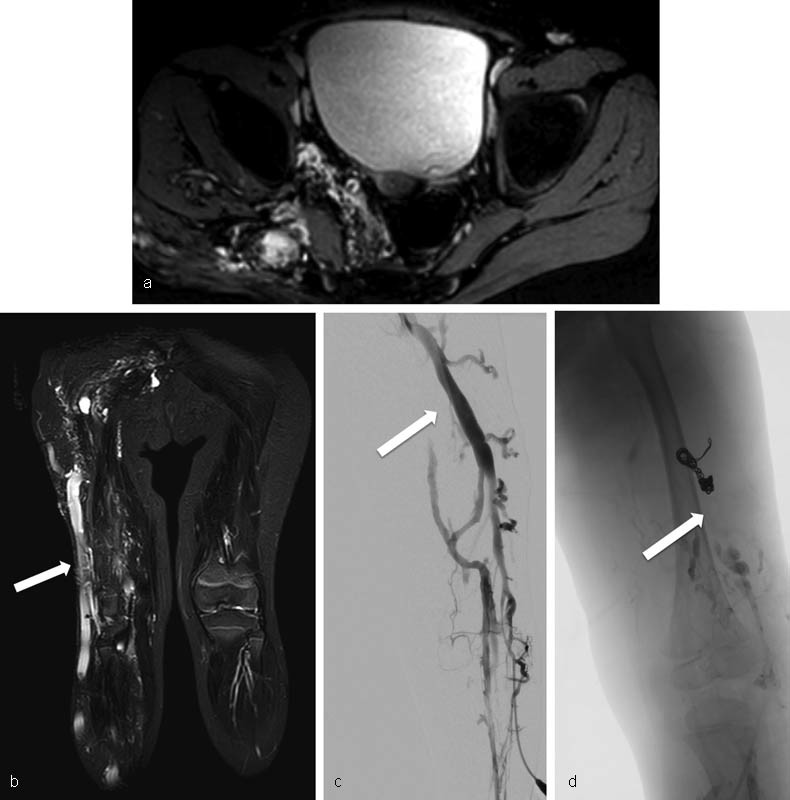
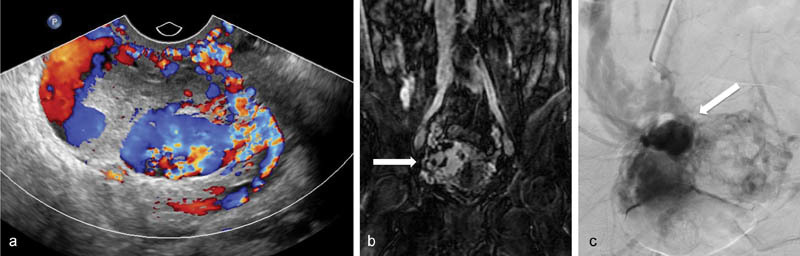
Vascular malformations are classified primarily according to their flow characteristics, slow flow (lymphatic and venous) or fast flow (arteriovenous). They can occur anywhere in the body but have a unique presentation when affecting the female pelvis. With a detailed clinical history and the proper imaging studies, the correct diagnosis can be made and the best treatment can be initiated. Lymphatic and venous malformations are often treated with sclerotherapy while arteriovenous malformations usually require embolization. At times, surgical intervention of vascular malformations or medical management of lymphatic malformations has been implemented in a multidisciplinary approach to patient care. This review presents an overview of vascular malformations of the female pelvis, their clinical course, diagnostic studies, and treatment options.
Keywords: arteriovenous malformation; interventional radiology; lymphatic malformation; sclerotherapy; vascular malformation; venous malformation.
Figures
References
-
- Mulliken J B, Glowacki J. Hemangiomas and vascular malformations in infants and children: a classification based on endothelial characteristics. Plast Reconstr Surg. 1982;69(03):412–422. - PubMed
-
- Wassef M, Blei F, Adams D et al. Vascular anomalies classification: recommendations from the International Society for the Study of Vascular Anomalies. Pediatrics. 2015;136(01):e203–e214. - PubMed
-
- Dasgupta R, Fishman S J. ISSVA classification. Semin Pediatr Surg. 2014;23(04):158–161. - PubMed
Publication types
LinkOut - more resources
Full Text Sources
Other Literature Sources
