


Cytokine Involvement in Biological Inflammation Related to Degenerative Disorders of the Intervertebral Disk: A Narrative Review
- PMID: 29628809
- PMCID: PMC5883634
- DOI: 10.1016/j.jcm.2017.09.003
Cytokine Involvement in Biological Inflammation Related to Degenerative Disorders of the Intervertebral Disk: A Narrative Review
Abstract
Objective: The purpose of this narrative literature review is to discuss the literature regarding the potential role that cytokines play in degenerative disk disease.
Methods: The inclusion criteria were studies that used inflammatory mediators in advancing disk disease processes. Research studies were limited to the last 3 decades that had free full-text available online in English. Exclusion criteria were review articles and articles pertaining to temporomandibular joints and other joints of the body other than the intervertebral disk. The following databases were searched: PubMed, EBSCOhost, and Google Scholar through March 13, 2017.
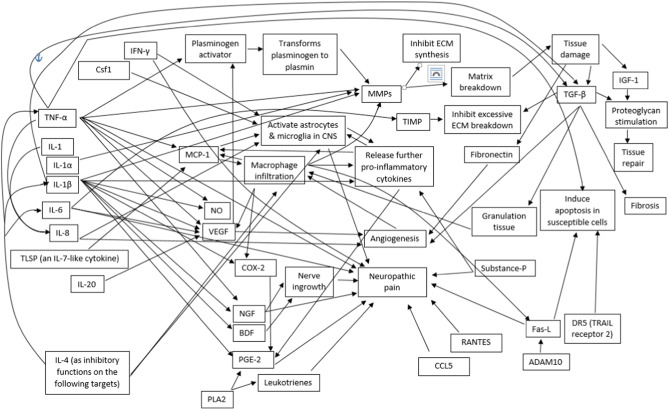
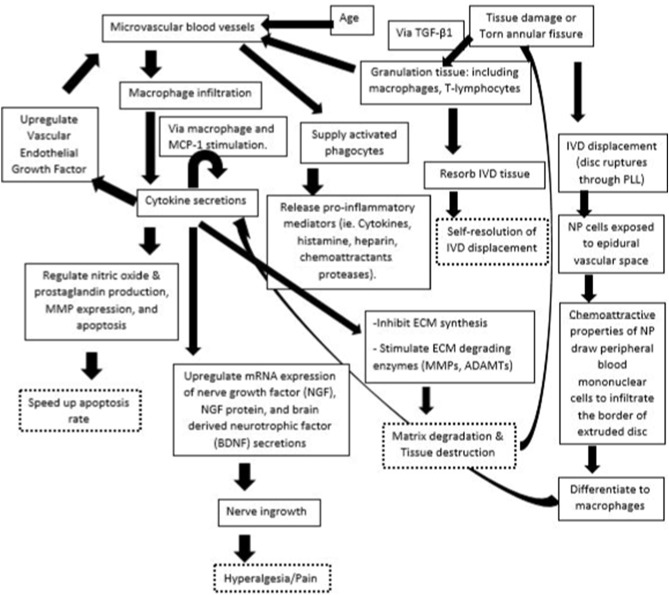
Results: A total of 82 studies were included in this review. The papers were reviewed for complex mechanisms behind the degenerative cascade, emphasizing the role of proinflammatory cytokines, which may be instrumental in processes of inflammation, neurologic pain, and disk degeneration. Interleukin-1β and tumor necrosis factor α were among the more notable cytokines involved in this cascade. Because monocyte chemoattractant protein-1 stimulates and activates macrophages in the event of infiltration, additional proinflammatory cytokines are released to act on molecules to promote blood and nerve ingrowth, resulting in pain signaling and tissue degradation. Excessive inflammation and/or tissue damage initiates a pathologic imbalance between anabolic and catabolic processes.
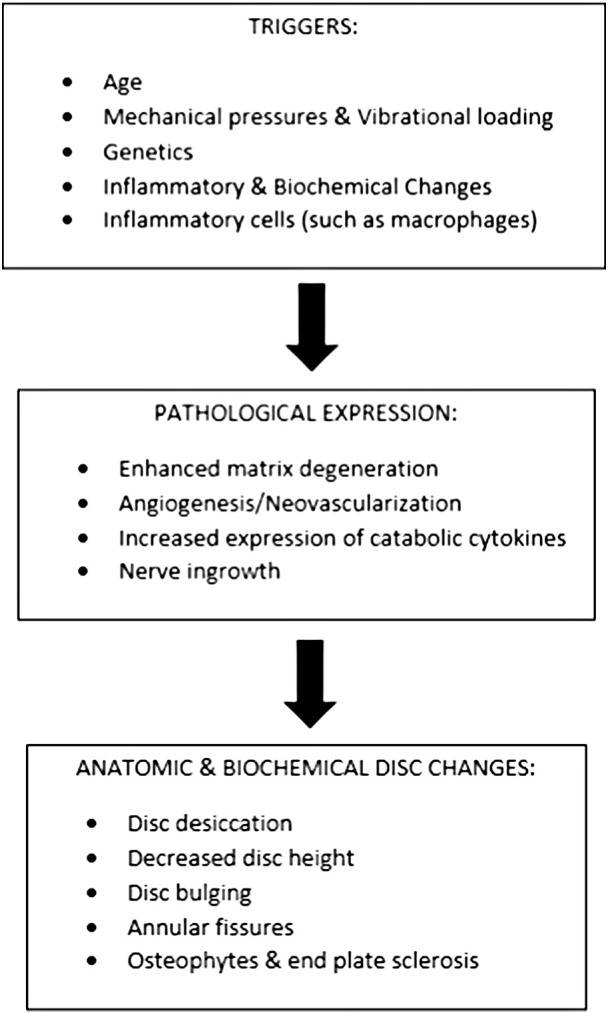
Conclusions: This literature review describes how inflammatory and biochemical changes may trigger disk degeneration. Proinflammatory cytokines stimulate microvascular blood and nerve ingrowth, resulting in pain signaling and tissue degradation. This may sensitize a person to chemical and/or mechanical stimuli, contributing to severe low back pain.
Keywords: Cytokines; Intervertebral Disk; Intervertebral Disk Degeneration.
Figures
References
-
- Elfervig MK, Minchew JT, Francke E, Tsuzaki M, Banes AJ. IL-1beta sensitizes intervertebral disc annulus cells to fluid-induced shear stress. J Cell Biochem. 2001;82(2):290–298. - PubMed
-
- Kokubo Y, Uchida K, Kobayashi S. Herniated and spondylotic intervertebral discs of the human cervical spine: histological and immunohistological findings in 500 en bloc surgical samples. Laboratory investigation. J Neurosurg Spine. 2008;9(3):285–295. - PubMed
-
- Doita M, Kanatani T, Ozaki T, Matsui N, Kurosaka M, Yoshiya S. Influence of macrophage infiltration of herniated disc tissue on the production of matrix metalloproteinases leading to disc resorption. Spine (Phila Pa 1976) 2001;26(14):1522–1527. - PubMed
Publication types
LinkOut - more resources
Full Text Sources
Other Literature Sources
Research Materials
