


State-of-the-Art Imaging in Human Chordoma of the Skull Base
- PMID: 29629241
- PMCID: PMC5882758
- DOI: 10.1007/s40134-018-0275-7
State-of-the-Art Imaging in Human Chordoma of the Skull Base
Abstract
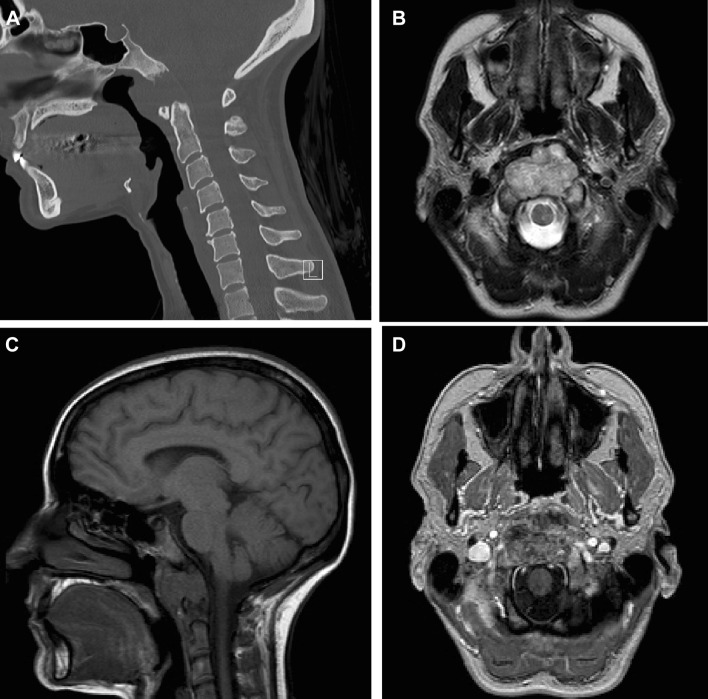
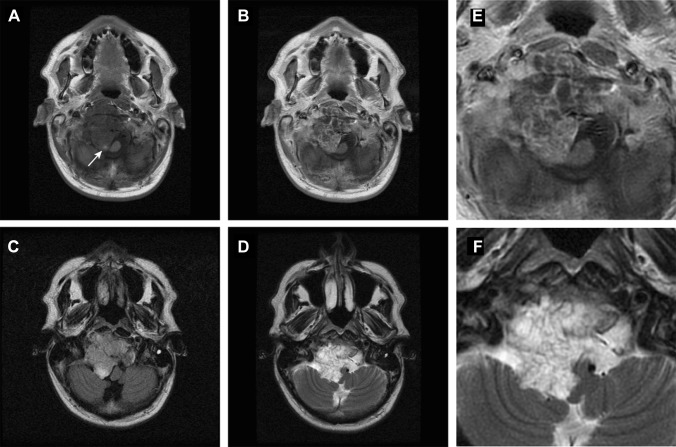
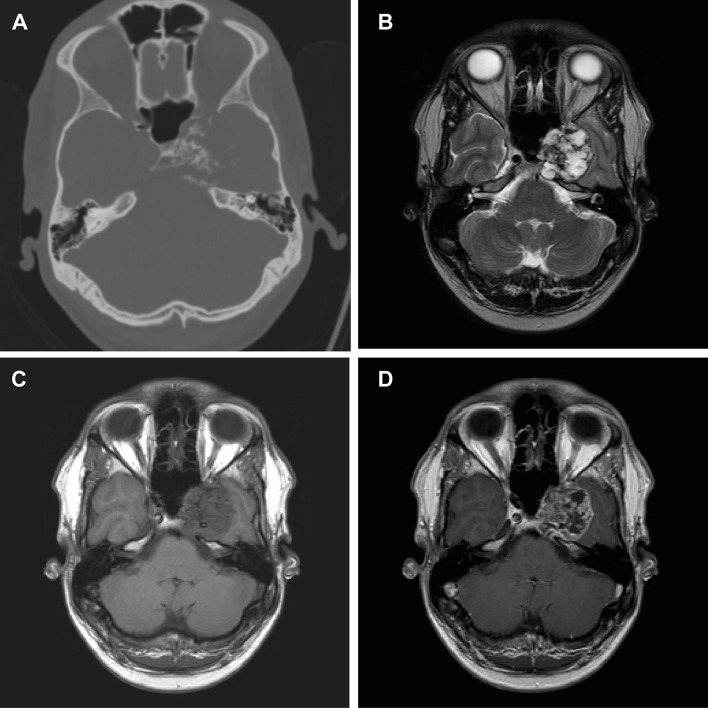
Purpose of review: Chordoma are rare tumours of the axial skeleton which occur most often at the base of the skull and in the sacrum. Although chordoma are generally slow-growing lesions, the recurrence rate is high and the location makes it often difficult to treat. Both computed tomography (CT) and magnetic resonance imaging (MRI) are crucial in the initial diagnosis, treatment planning and post-treatment follow-up.
Recent findings: Basic MRI and CT characteristics of chordoma were described in the late 1980s and early 1990s. Since then, imaging techniques have evolved with increased resolution and new molecular imaging tools are rapidly evolving. New imaging tools have been developed not only to study anatomy, but also physiologic changes and characterization of tissue and assessment of tumour biology. Recent studies show the uptake of multiple PET tracers in chordoma, which may become an important aspect in the diagnosis, follow-up and personalized therapy.
Summary: This review gives an overview of skull base chordoma histopathology, classic imaging characteristics, radiomics and state-of-the-art imaging techniques that are now emerging in diagnosis, treatment planning and disease monitoring of skull base chordoma.
Keywords: Benign notochordal cell tumour (BNCT); Chondrosarcoma; Chordoma; Computed tomography (CT); Diffusion-weighted imaging (DWI); Magnetic resonance imaging (MRI); Positron emission tomography (PET).
Conflict of interest statement
Compliance with Ethical GuidelinesRene G.C. Santegoeds, Yasin Temel, Jan C. Beckervordersandforth, Jacobus J. Van Overbeeke and Christianne M. Hoeberigs each declare no potential conflicts of interest.This article does not contain any studies with human or animal subjects performed by any of the authors.
Figures

References
-
- Kyriakos M. Benign notochordal lesions of the axial skeleton: a review and current appraisal. Skelet Radiol. 2011;40(9):1141–1152. - PubMed
-
- Yakkioui Y, van Overbeeke JJ, Santegoeds R, van Engeland M, Temel Y. Chordoma: the entity. Biochim Biophys Acta. 2014;1846(2):655–669. - PubMed
-
- McMaster ML, Goldstein AM, Bromley CM, Ishibe N, Parry DM. Chordoma: incidence and survival patterns in the United States, 1973–1995. Cancer Causes Control. 2001;12(1):1–11. - PubMed
-
- Lee IJ, Lee RJ, Fahim DK. Prognostic factors and survival outcome in patients with chordoma in the United States: a population-based analysis. World Neurosurg. 2017;104:346–355. - PubMed
-
- Whelan J, McTiernan A, Cooper N, Wong YK, Francis M, Vernon S, et al. Incidence and survival of malignant bone sarcomas in England 1979–2007. Int J Cancer. 2012;131(4):E508–E517. - PubMed
Publication types
LinkOut - more resources
Full Text Sources
Other Literature Sources
Research Materials