


Outlooks on Epstein-Barr virus associated gastric cancer
- PMID: 29631196
- PMCID: PMC5964025
- DOI: 10.1016/j.ctrv.2018.03.006
Outlooks on Epstein-Barr virus associated gastric cancer
Abstract
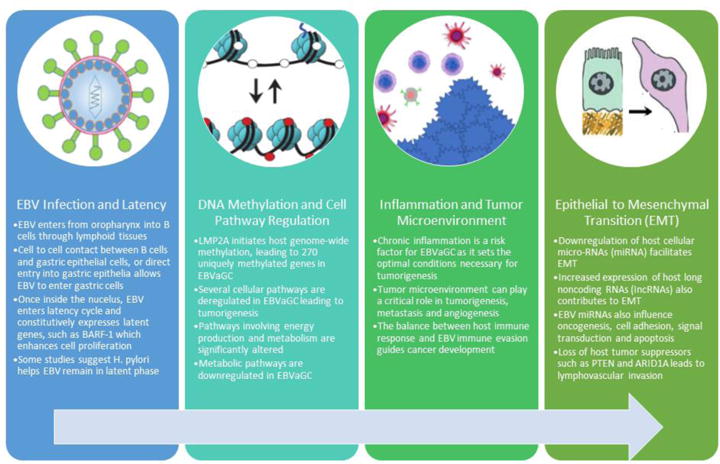
Epstein-Barr virus associated gastric cancer (EBVaGC) comprises approximately 10% of gastric carcinomas. Multiple factors contribute to tumorigenesis, including EBV driven hypermethylation of tumor suppressor genes, inflammatory changes in gastric mucosa, host immune evasion by EBV and changes in cell cycle pathways. The unique molecular characteristics of EBVaGC, such as programmed death ligand 1 (PD-L1) overexpression, highlight the potential for using EBV as a biomarker for response to immunotherapy. Few studies have reported benefit from immunotherapy in EBV positive cancers, and clinical trials investigating the impact of checkpoint inhibitors in EBVaGC are currently underway. This review provides the most recent updates on molecular pathophysiology, epidemiology, clinical features and treatment advances pertaining to EBVaGC.
Keywords: Biomarker; EBV; Gastric cancer; Immunotherapy; PD-L1; Viruses.
Copyright © 2018 Elsevier Ltd. All rights reserved.
Conflict of interest statement
CONFLICT OF INTEREST STATEMENT
The authors whose names are listed immediately below certify that they have
Madiha Naseem
Afsaneh Barzi
Christine Brezden-Masley
Alberto Puccini
Martin D Berger
Ryuma Tokunaga
Francesca Battaglin
Shivani Soni
Michelle McSkane
Wu Zhang
Heinz-Josef Lenz
Figures
References
-
- Chan BA, et al. Improving Outcomes in Resectable Gastric Cancer: A Review of Current and Future Strategies. Oncology (Williston Park) 2016;30(7):635–45. - PubMed
Publication types
MeSH terms
Grants and funding
LinkOut - more resources
Full Text Sources
Other Literature Sources
Medical
Research Materials
