


Stimulus dependent diversity and stereotypy in the output of an olfactory functional unit
- PMID: 29632302
- PMCID: PMC5890244
- DOI: 10.1038/s41467-018-03837-1
Stimulus dependent diversity and stereotypy in the output of an olfactory functional unit
Abstract
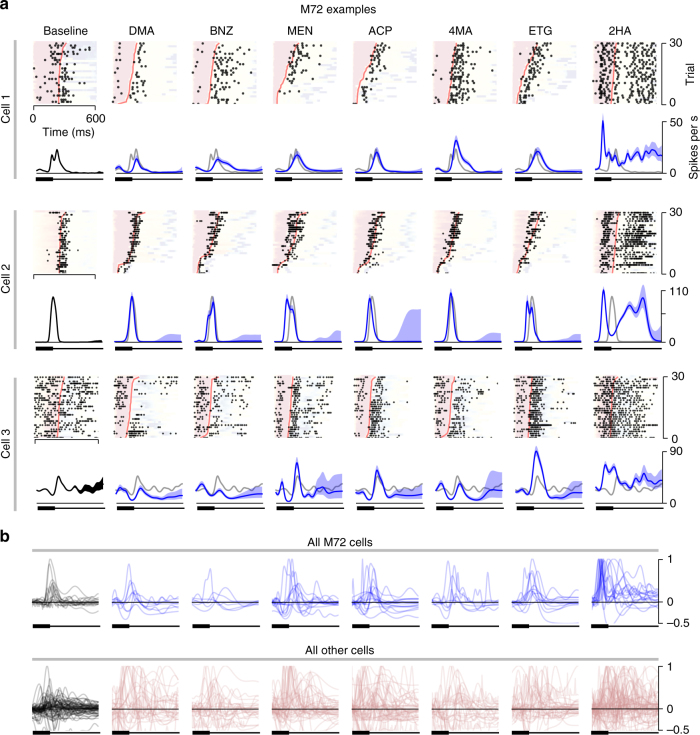
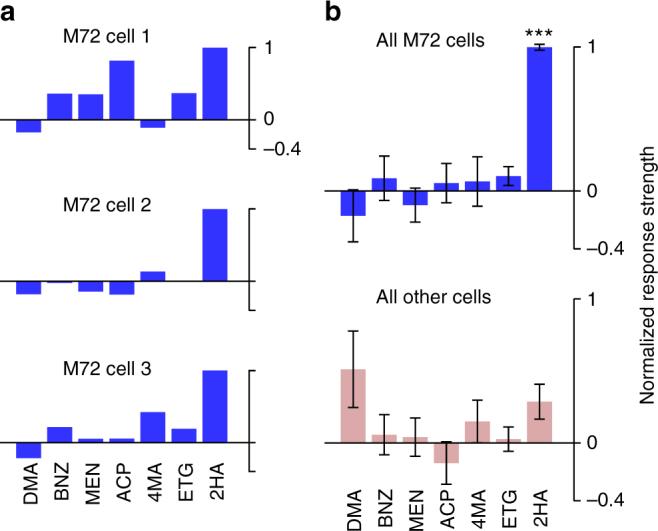
Olfactory inputs are organized in an array of functional units (glomeruli), each relaying information from sensory neurons expressing a given odorant receptor to a small population of output neurons, mitral/tufted (MT) cells. MT cells respond heterogeneously to odorants, and how the responses encode stimulus features is unknown. We recorded in awake mice responses from "sister" MT cells that receive input from a functionally characterized, genetically identified glomerulus, corresponding to a specific receptor (M72). Despite receiving similar inputs, sister MT cells exhibit temporally diverse, concentration-dependent, excitatory and inhibitory responses to most M72 ligands. In contrast, the strongest known ligand for M72 elicits temporally stereotyped, early excitatory responses in sister MT cells, consistent across a range of concentrations. Our data suggest that information about ligand affinity is encoded in the collective stereotypy or diversity of activity among sister MT cells within a glomerular functional unit in a concentration-tolerant manner.
Conflict of interest statement
The authors declare no competing interests.
Figures





References
-
- Shepherd, G. M. The Synaptic Organization of the Brain (Oxford Univ. Press, USA, 2004).
Publication types
MeSH terms
Grants and funding
LinkOut - more resources
Full Text Sources
Other Literature Sources
Molecular Biology Databases
