. 2018 Apr 6;5(2):ENEURO.0080-18.2018.
doi: 10.1523/ENEURO.0080-18.2018. eCollection 2018 Mar-Apr.

Excitatory Neuronal Responses of Ca2+ Transients in Interstitial Cells of Cajal in the Small Intestine

Affiliations

Excitatory Neuronal Responses of Ca2+ Transients in Interstitial Cells of Cajal in the Small Intestine

Salah A Baker et al. eNeuro. .

Abstract

Interstitial cells of Cajal (ICC) regulate smooth muscle excitability and motility in the gastrointestinal (GI) tract. ICC in the deep muscular plexus (ICC-DMP) of the small intestine are aligned closely with varicosities of enteric motor neurons and thought to transduce neural responses. ICC-DMP generate Ca2+ transients that activate Ca2+ activated Cl- channels and generate electrophysiological responses. We tested the hypothesis that excitatory neurotransmitters regulate Ca2+ transients in ICC-DMP as a means of regulating intestinal muscles. High-resolution confocal microscopy was used to image Ca2+ transients in ICC-DMP within murine small intestinal muscles with cell-specific expression of GCaMP3. Intrinsic nerves were stimulated by electrical field stimulation (EFS). ICC-DMP exhibited ongoing Ca2+ transients before stimuli were applied. EFS caused initial suppression of Ca2+ transients, followed by escape during sustained stimulation, and large increases in Ca2+ transients after cessation of stimulation. Basal Ca2+ activity and the excitatory phases of Ca2+ responses to EFS were inhibited by atropine and neurokinin 1 receptor (NK1) antagonists, but not by NK2 receptor antagonists. Exogenous ACh and substance P (SP) increased Ca2+ transients, atropine and NK1 antagonists decreased Ca2+ transients. Neurokinins appear to be released spontaneously (tonic excitation) in small intestinal muscles and are the dominant excitatory neurotransmitters. Subcellular regulation of Ca2+ release events in ICC-DMP may be a means by which excitatory neurotransmission organizes intestinal motility patterns.

Keywords: c-Kit; enteric neurotransmission; gastrointestinal motility.


Figures
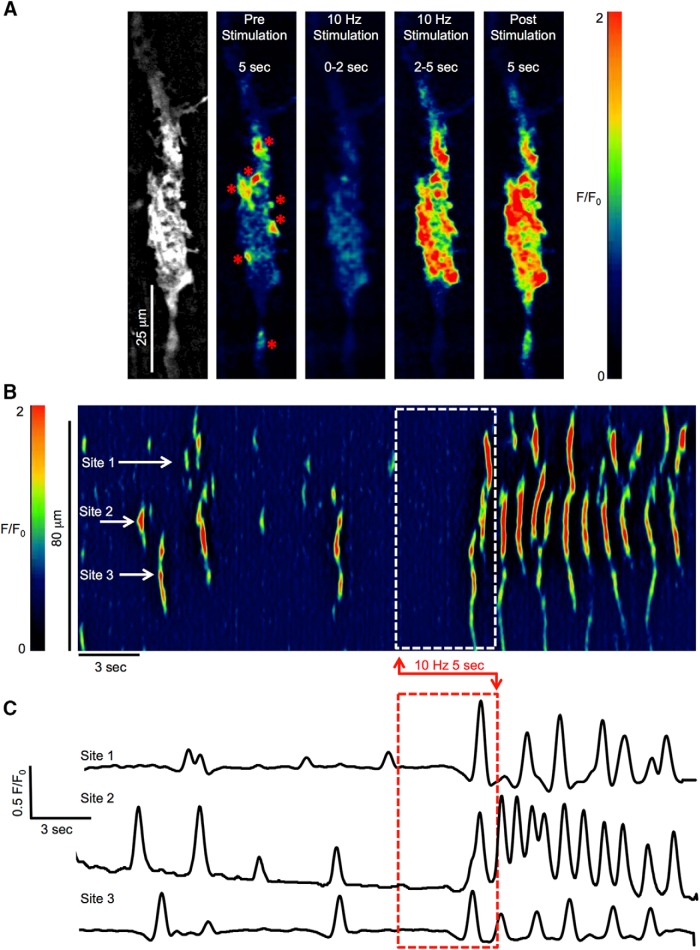
Figure 1.
Figure 1.
ICC-DMP Ca2+ transient responses to nerve stimulation. A, Time-lapse montage showing postjunctional Ca2+ responses to EFS (10 Hz; 0.5-ms duration; 5 s) on an ICC-DMP in situ. An image of the GCaMP3 signal in the cell is shown in the leftmost panel. Scale bar for all panels: 25 μm. A color-coded overlay and calibration scale was imported to depict fluorescence intensity (F/F0) and enhance visualization of Ca2+ sites. Low fluorescence areas are indicated in dark blue or black. High-intensity fluorescence areas are indicated in red and orange. The “pre stimulation” panel shows a summed image of Ca2+ activity within the cell for 5 s before the onset of EFS, Ca2+ firing sites are marked with red asterisks. Panels showing the summed Ca2+ activity for the initial 2 s of EFS, the final 3 s of EFS and 5-s post-EFS are also shown. B, Representative ST map of Ca2+ transients in ICC-DMP shown in A. EFS duration is indicated by the dashed white box. The firing activities of three sites highlighted on the ST map are plotted in C, and the timing of EFS is indicated by the dashed red box.
Figure 2.
Figure 2.
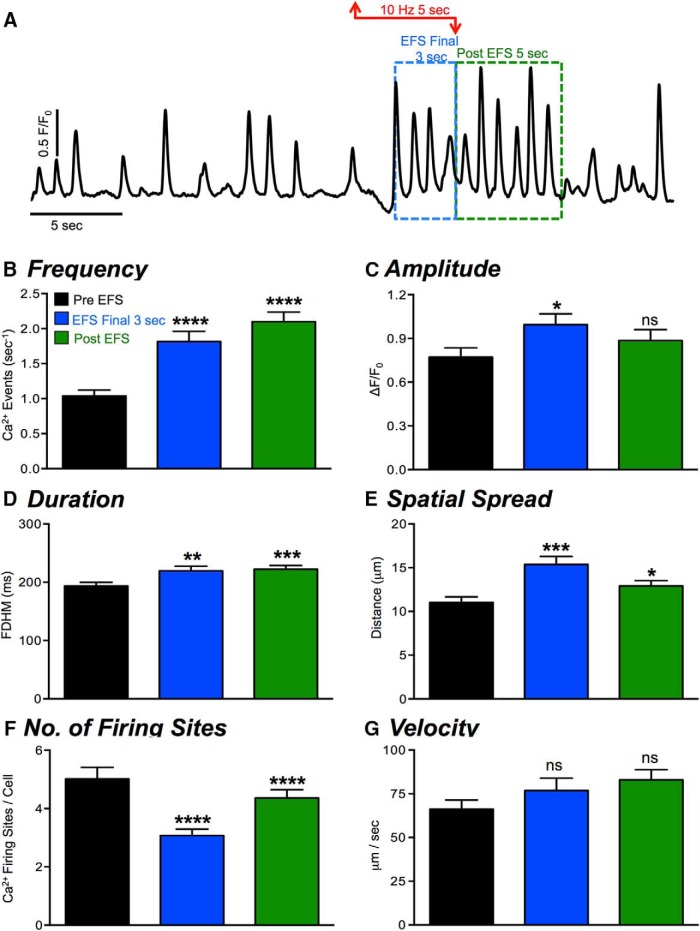
Effects of nerve stimulation (EFS) on Ca2+ transients in ICC-DMP. A, Representative trace representing Ca2+ transients in ICC-DMP in response to EFS (10 Hz; 5 s). The period of EFS is indicated by the red arrowed line. Excitatory responses during the final 3 s of EFS, indicated by the dashed blue box, and during the post-EFS period (5 s), highlighted by the green box. B–G, Summary data quantifying the effects of EFS on ICC-DMP: Ca2+ transient frequency (E), amplitude (F), duration (G), spatial spread (H), number of Ca2+ firing sites (I), and Ca2+ transient velocity (J) were analyzed and shown; n = 23, c = 56. All statistical analyses shown are compared to control values; ns = p > 0.05, *p < 0.05, **p < 0.01, ***p < 0.001, ***p < 0.0001.
Figure 3.
Figure 3.
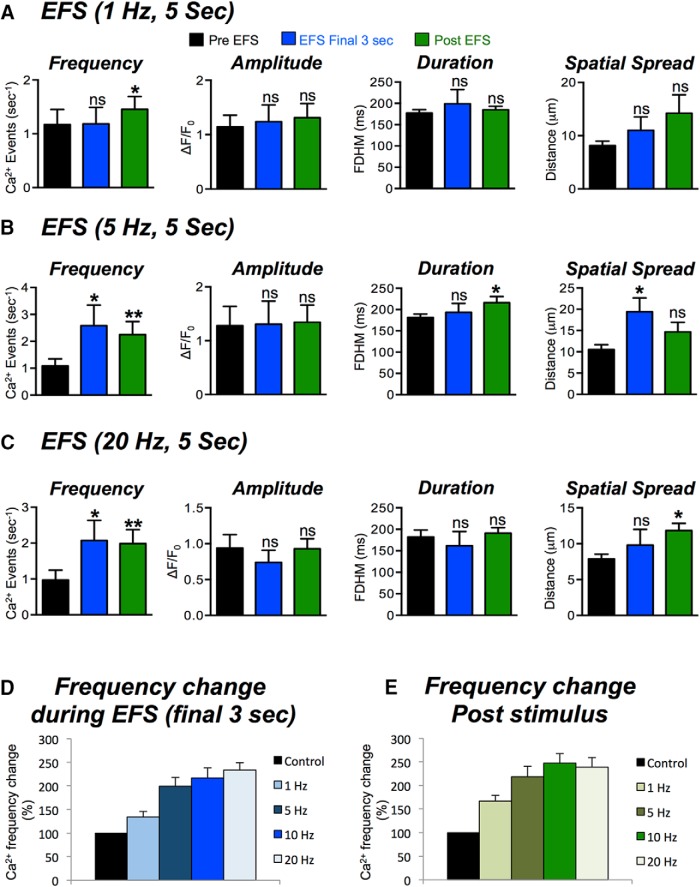
Frequency dependence of Ca2+ transient responses to EFS. A, Summary data showing the excitatory effects of EFS (1 Hz for 5 s) on Ca2+ transients in ICC-DMP during the final 3 s of EFS and during the poststimulus period (5 s following termination of EFS). Ca2+ transient parameters shown include: frequency (s−1), amplitude (ΔF/F0), duration (FDHM), and spatial spread (μm) of Ca2+ transients. B, Summary data showing the effects of EFS (5 Hz; 5 s) on Ca2+ transient parameters. C, Summary data showing the effects of EFS (20 Hz; 5 s) on Ca2+ transient parameters. D, Percentage (%) change of Ca2+ transient firing frequency at all frequencies of EFS tested (1–20 Hz; net percentage change normalized to control) during the final 3 s of EFS and during the poststimulus period. E, Note the frequency-dependent effects of EFS on Ca2+ transient responses. Summary data in all panels shows the include 5 s before EFS, the final 3 s during EFS and 5-s post-EFS; ns = p > 0.05, *p < 0.05, **p < 0.01.
Figure 4.
Figure 4.
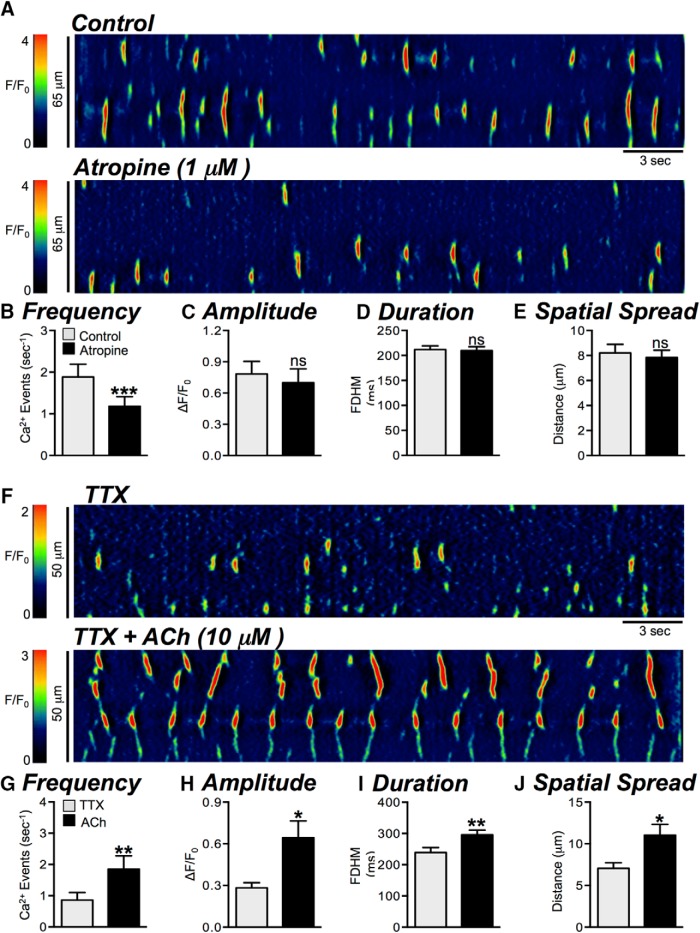
Modulation of basal Ca2+ transients by cholinergic input. A, Representative ST maps showing the effects of atropine (1 μM) on basal Ca2+ transient activity in ICC-DMP. B–E, Summary graphs showing the effect of atropine on the frequency (B), amplitude (C), duration (D), and spatial spread (E) of basal Ca2+ transients in ICC-DMP (n = 5, c = 13). F, Representative ST maps showing the effects of ACh (10 μM; in the presence of TTX) on Ca2+ transients in ICC-DMP. G–J, Summary graphs showing the effect of ACh (in the presence of TTX) on the frequency (G), amplitude (H), duration (I), and spatial spread (J) of Ca2+ transients in ICC-DMP (n = 5, c = 9); ns = p > 0.05, *p < 0.05, **p < 0.01, ***p < 0.001.
Figure 5.
Figure 5.
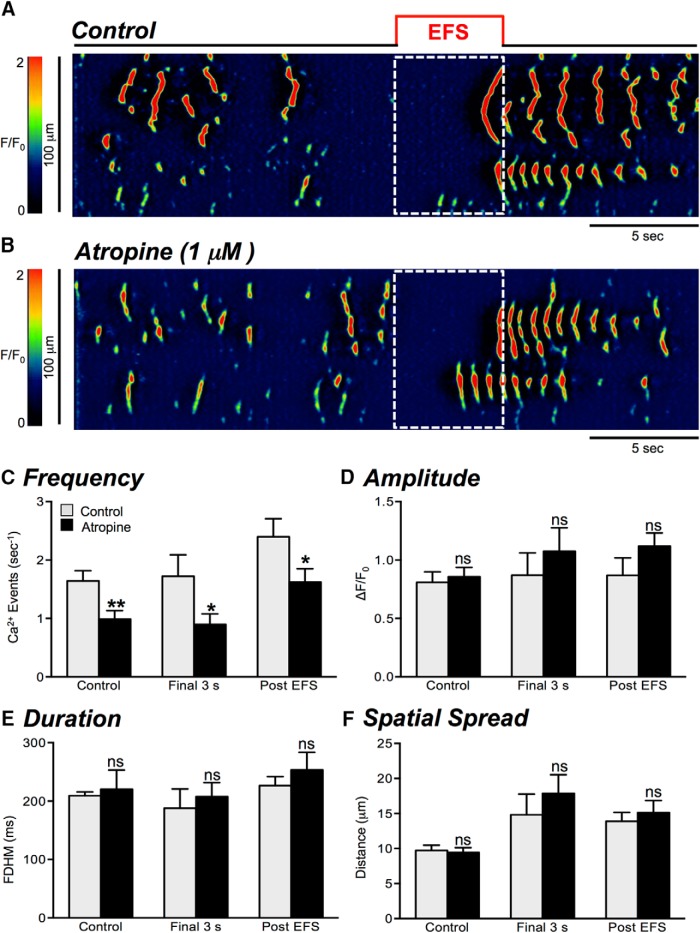
Effects of atropine on Ca2+ transient responses to EFS. A, B, Representative ST maps showing the effects of atropine (1 μM) on Ca2+ transients in ICC-DMP in response to nerve stimulation (EFS; 10 Hz; 5 s; indicated by the red line and dotted white box in ST maps). C–F, Summary data showing the effects of atropine (1 μM) on Ca2+ transients during EFS: frequency (C), amplitude (D), duration (E), and spatial spread (F) in ICC-DMP during control conditions, during the excitatory period of EFS (final 3 s), and during the post-EFS period (5 s), n = 5, c = 21; ns = p > 0.05, *p < 0.05, **p < 0.01.
Figure 6.
Figure 6.
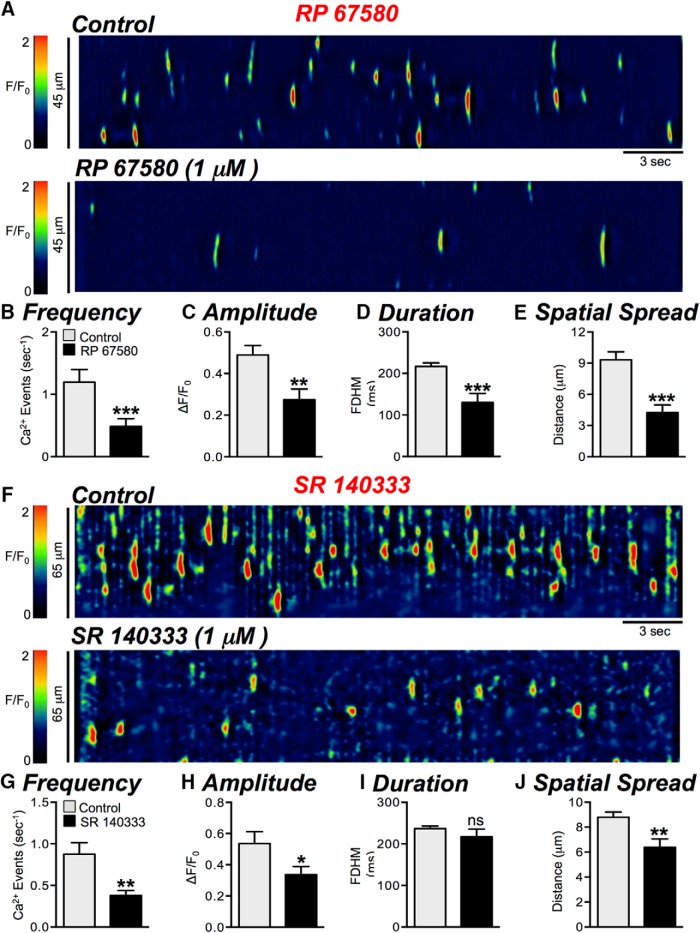
Effects of neurokinin receptor (NK1) antagonists on basal Ca2+ transients. A, Representative ST maps showing the inhibitory effects of the NK1 receptor antagonist, RP 67580 (1 μM), on Ca2+ transients in ICC-DMP. B–E, Summary graphs showing the effects of RP 67580 on the frequency (B), amplitude (C), duration (D), and spatial spread (E) of Ca2+ transients in ICC-DMP (n = 11, c = 27). F, Representative ST maps showing the inhibitory effects of the NK1 receptor antagonist, SR 140333 (1 μM), on Ca2+ transients in ICC-DMP. G–J, Summary graphs showing the effects of 1 μM SR 140333 on the frequency (G), amplitude (H), duration (I), and spatial spread (J) of Ca2+ transients in ICC-DMP (n = 4, c = 14); ns = p > 0.05, *p < 0.05, **p < 0.01, ***p < 0.001.
Figure 7.
Figure 7.
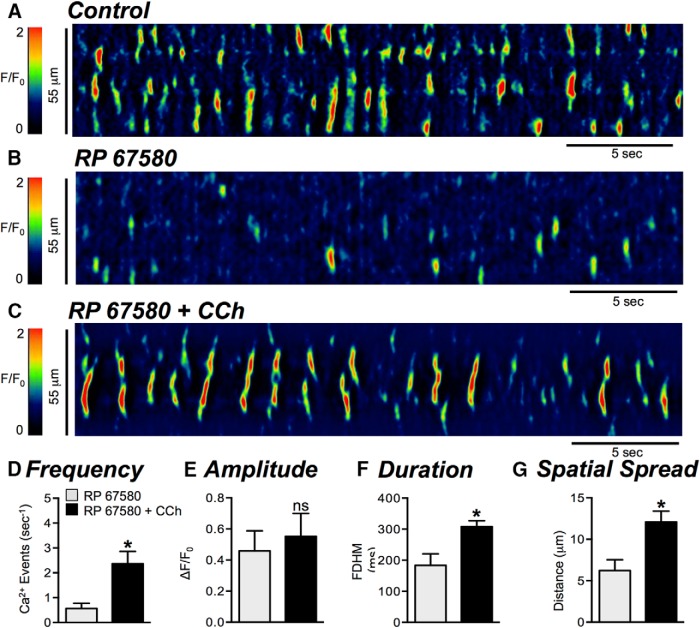
NK1 antagonist does not interfere with Ca2+ release mechanisms. A, B, Representative ST maps showing the effect of the NK1 antagonist RP 67580 (1 μM) on Ca2+ transients in ICC-DMP. C, ST map showing that in the presence of RP 67580, CCh (10 μM) strongly activates Ca2+ transients. D–G, Summary graphs showing the effects of CCh on Ca2+ transient parameters: frequency (D), amplitude (E), duration (F), and spatial spread (G) in ICC-DMP in the presence of RP 67580 (n = 3, c = 6); *p < 0.05.
Figure 8.
Figure 8.
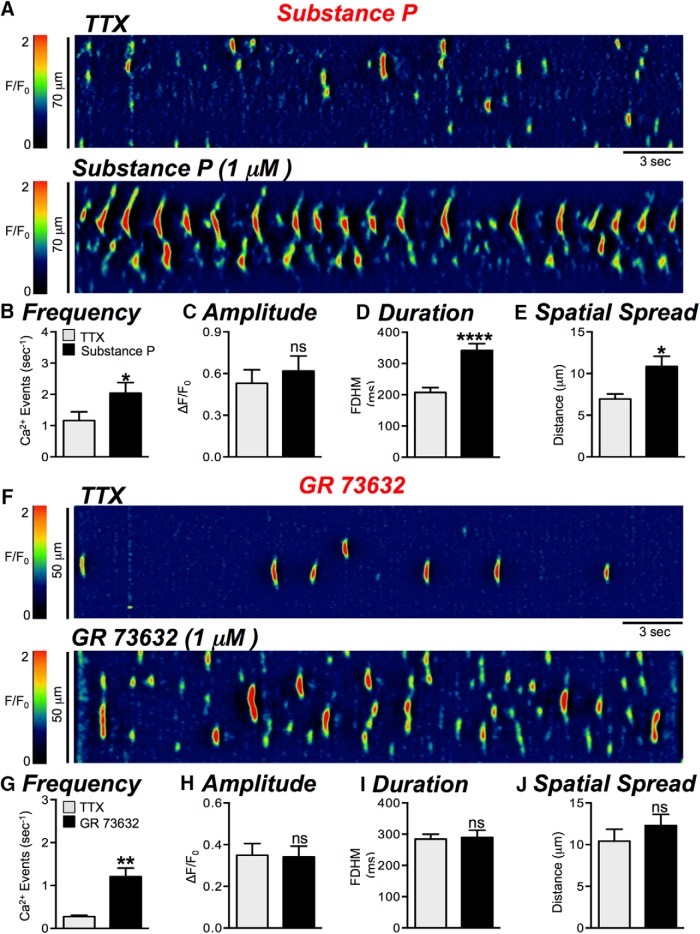
Neurokinin receptor (NK1) agonists activate Ca2+ transients. A, Representative ST maps showing the excitatory effects of SP (1 μM; in the presence of TTX) on Ca2+ transients in ICC-DMP. B–E, Summary graphs showing the effects of SP (in the presence of TTX) on the frequency (B), amplitude (C), duration (D), and spatial spread (E) of Ca2+ transients in ICC-DMP. F, Representative ST maps showing the excitatory effects of the NK1 receptor agonist GR 73632 (1 μM; in the presence of TTX) on Ca2+ transients in ICC-DMP (n = 4, c = 10). G–J, Summary graphs quantifying the effect of GR 73632 on the frequency (G), amplitude (H), duration (I), and spatial spread (J) of basal Ca2+ transient activity in ICC-DMP (n = 4, c = 9); ns = p > 0.05, *p < 0.05, **p < 0.01, ****p < 0.0001.
Figure 9.
Figure 9.
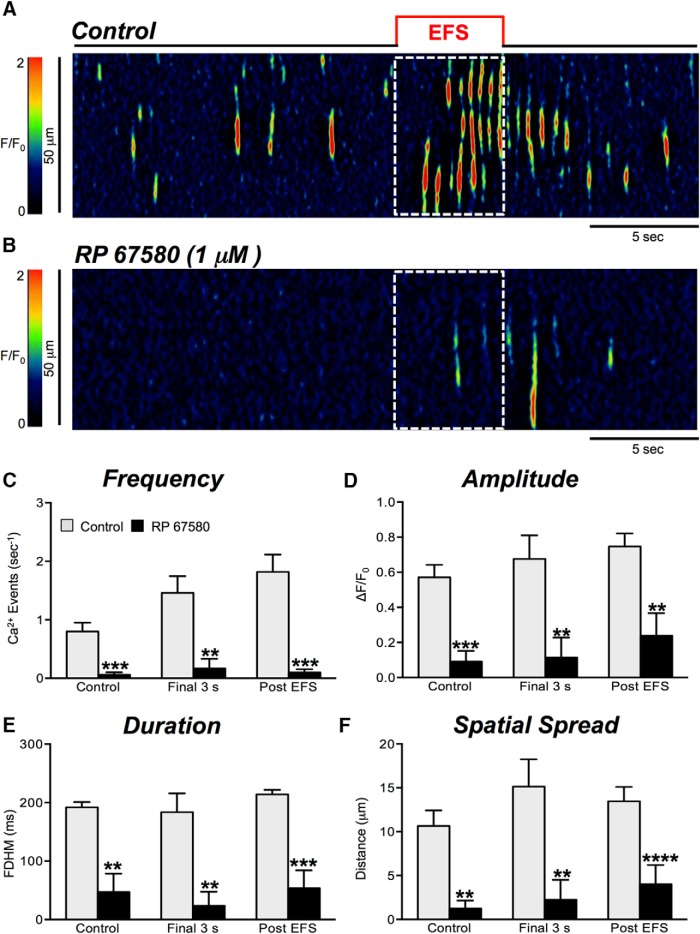
Effects of NK1 receptor antagonist on Ca2+ transient responses to EFS. A, B, Representative ST maps showing the inhibitory effects of NK1 antagonist, RP 67580 (1 μM), on Ca2+ transients in response to nerve stimulation (EFS at 10 Hz for 5 s; indicated by the red line and dotted white box in ST maps). C–F, Summary data showing the inhibitory effects of RP 67580 (1 μM) on Ca2+ transient frequency (C), amplitude (D), duration (E), and spatial spread (F) in ICC-DMP during the control period, during the final 3 s of EFS, and during the post-EFS period (5 s), n = 4, c = 11. Note: RP 67580 reduced all Ca2+ transient parameters significantly; ns = p > 0.05, *p < 0.05, **p < 0.01.
Figure 10.
Figure 10.
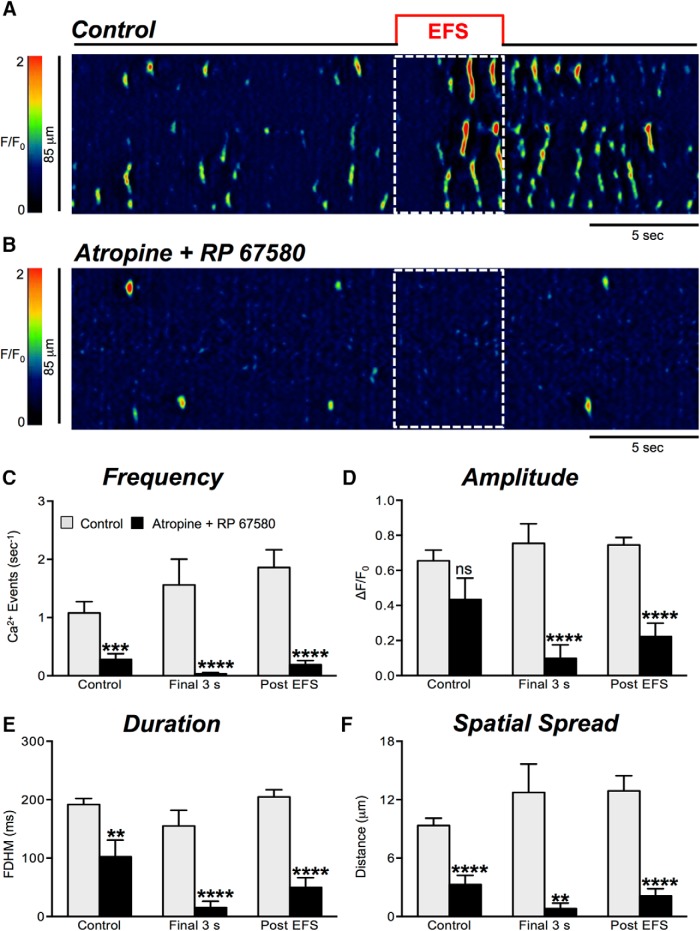
Cholinergic and NK1 receptor antagonists inhibit Ca2+ transients elicited by EFS in ICC-DMP. A, B, Representative ST maps showing the inhibitory effects of combining cholinergic and neurokinin antagonists (atropine and RP 67580; both 1 μM) on Ca2+ transients in ICC-DMP during EFS (10 Hz; 5 s). C–F, Summary data of Ca2+ transient parameters showing the inhibitory effects of atropine and RP 67580 on Ca2+ transient frequency (C), amplitude (D), duration (E), and spatial spread (F) in ICC-DMP during the control period, during the final 3 s of EFS, and during the post-EFS period (5 s), n = 4, c = 20. Note: combination of atropine and RP 67580 abolished all Ca2+ transient parameters significantly; ns = p > 0.05, **p < 0.01, ***p < 0.001, ****p < 0.0001.
Figure 11.
Figure 11.
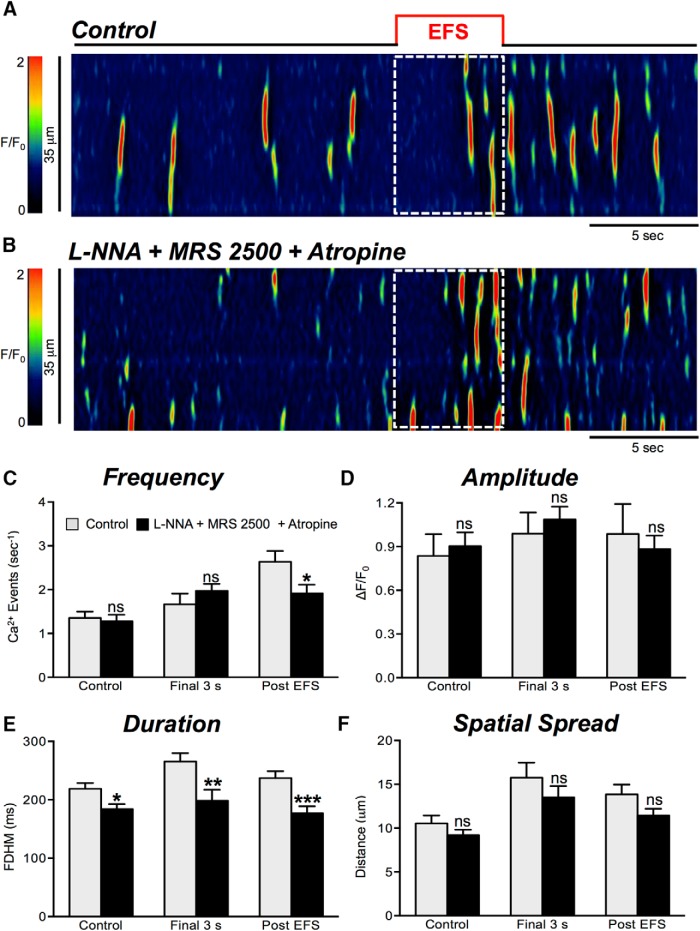
Excitatory responses are modestly reduced by atropine. A, B, Representative ST maps showing the inhibitory effects of atropine (1 μM) on responses to EFS (10 Hz; 5 s; indicated by the red line and dotted white box in ST maps). In this experiment L-NNA (100 μM) and the P2Y1 receptor antagonist, MRS 2500 (1 μM), were present. C–F, Summary data showing the effects of a combination of L-NNA (100 μM), MRS 2500 (1 μM), and atropine (1 μM) on Ca2+ transient frequency (C), amplitude (D), duration (E), and spatial spread (F) in ICC-DMP during the control period, during the final 3 s of EFS, and during the post-EFS period (5 s), n = 7, c = 26; ns = p > 0.05, **p < 0.01, ***p < 0.001.
Figure 12.
Figure 12.
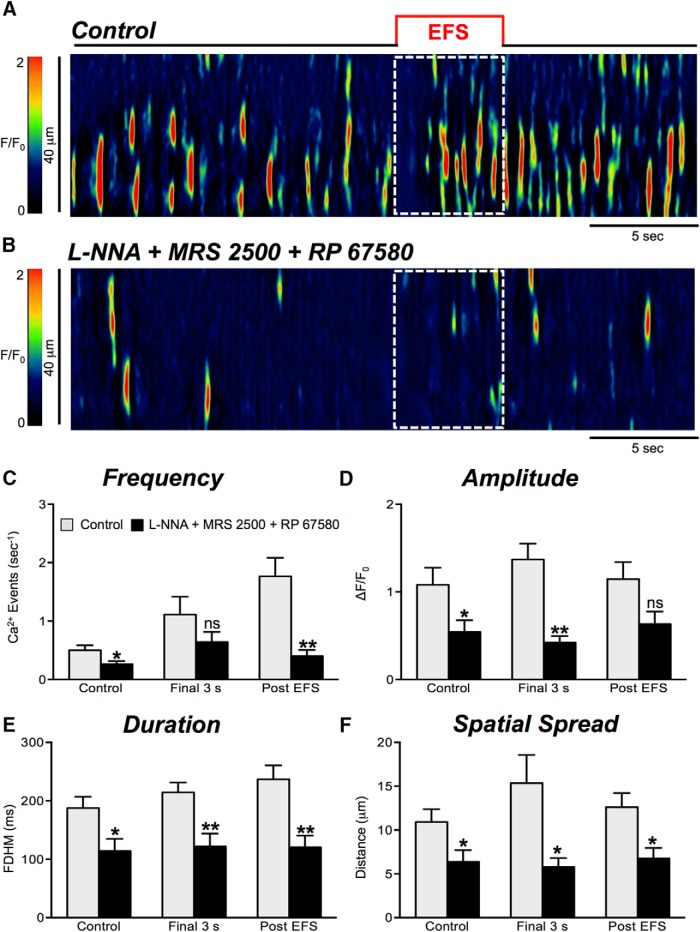
Excitatory responses are strongly attenuated by NK1 antagonist. A, B, Representative ST maps showing the inhibitory effects of RP 67580 (1 μM), in the presence of nitric oxide synthase inhibitor L-NNA (100 μM) and purinergic P2Y1 receptor antagonist (MRS 2500; 1 μM) on Ca2+ transients in response to nerve stimulation (EFS at 10 Hz 5 s; indicated by the red line and dotted white box in ST maps). C–F, Summary data showing the effects of a combination of L-NNA, MRS 2500, and RP 67580 on Ca2+ transient frequency (C), amplitude (D), duration (E), and spatial spread (F) in ICC-DMP during the control period, during the final 3 s of EFS, and during the post-EFS period (5 s), n = 4, c = 13; ns = p > 0.05, **p < 0.01.
Figure 13.
Figure 13.
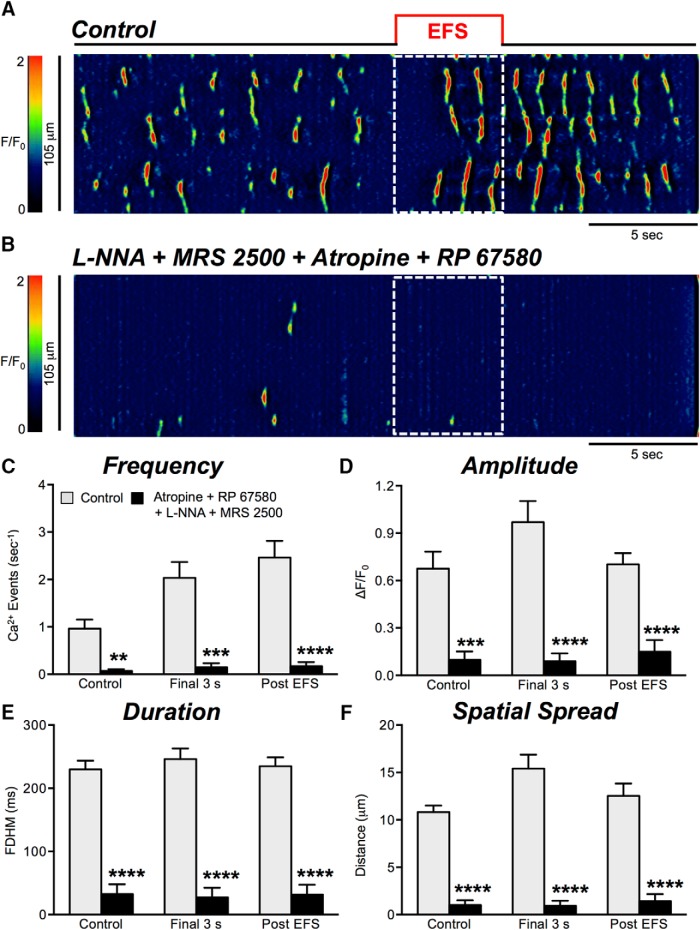
Excitatory responses to EFS are abolished by atropine and NK1 receptor antagonist. A, B, Representative ST maps showing inhibition of Ca2+ transients by atropine (1 μM) and RP 67580 (1 μM). These experiments were conducted in the presence of L-NNA (100 μM) in the presence of MRS 2500 (1 μM) during and post nerve stimulation periods (EFS at 10 Hz 5 s; indicated by the red line and dotted white box in ST maps). C–F, Summary data showing the effects of a combination of L-NNA, MRS 2500, and atropine and RP 67580 on Ca2+ transient frequency (C), amplitude (D), duration (E), and spatial spread (F) in ICC-DMP during control conditions, excitatory periods during EFS (final 3 s), and in the post-EFS period, n = 5, c = 32; ns = p > 0.05, **p < 0.01, ***p < 0.001.

References

    1. Baker SA, Hennig GW, Salter AK, Kurahashi M, Ward SM, Sanders KM (2013) Distribution and Ca(2+) signalling of fibroblast-like (PDGFR(+)) cells in the murine gastric fundus. J Physiol 591:6193–6208. 10.1113/jphysiol.2013.264747 - DOI - PMC - PubMed
    1. Baker SA, Drumm BT, Saur D, Hennig GW, Ward SM, Sanders KM (2016) Spontaneous Ca(2+) transients in interstitial cells of Cajal located within the deep muscular plexus of the murine small intestine. J Physiol 594:3317–3338. 10.1113/JP271699 - DOI - PMC - PubMed
    1. Blair PJ, Bayguinov Y, Sanders KM, Ward SM (2012) Interstitial cells in the primate gastrointestinal tract. Cell Tissue Res 350:199–213. 10.1007/s00441-012-1468-7 - DOI - PMC - PubMed
    1. Burns AJ, Lomax AE, Torihashi S, Sanders KM, Ward SM (1996) Interstitial cells of Cajal mediate inhibitory neurotransmission in the stomach. Proc Natl Acad Sci USA 93:12008–12013. - PMC - PubMed
    1. Chen H, Ordög T, Chen J, Young DL, Bardsley MR, Redelman D, Ward SM, Sanders KM (2007) Differential gene expression in functional classes of interstitial cells of Cajal in murine small intestine. Physiol Genomics 31:492–509. 10.1152/physiolgenomics.00113.2007 - DOI - PubMed

Publication types

MeSH terms

LinkOut - more resources