


Eosinophil and airway nerve interactions in asthma
- PMID: 29633324
- PMCID: PMC6541210
- DOI: 10.1002/JLB.3MR1117-426R
Eosinophil and airway nerve interactions in asthma
Abstract
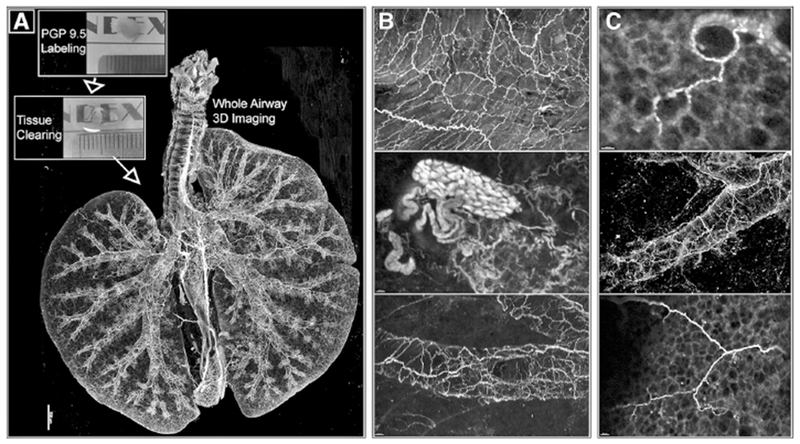
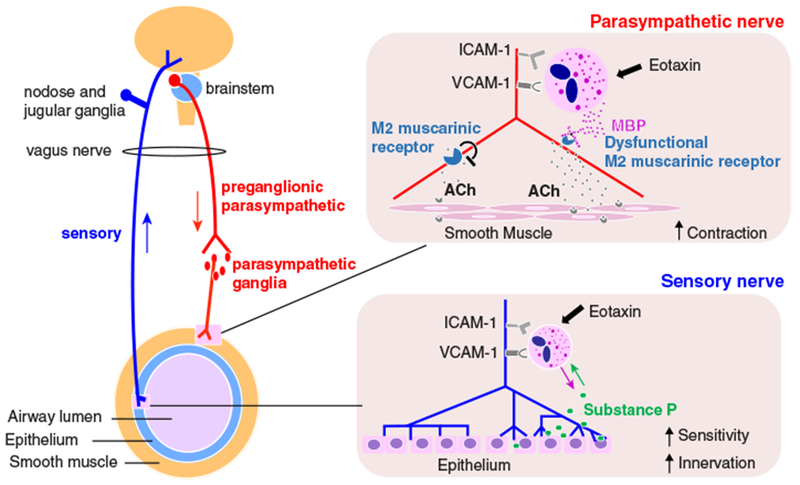
Airway eosinophils are increased in asthma and are especially abundant around airway nerves. Nerves control bronchoconstiction and in asthma, airway hyperreactivity (where airways contract excessively to inhaled stimuli) develops when eosinophils alter both parasympathetic and sensory nerve function. Eosinophils release major basic protein, which is an antagonist of inhibitory M2 muscarinic receptors on parasympathetic nerves. Loss of M2 receptor inhibition potentiates parasympathetic nerve-mediated bronchoconstriction. Eosinophils also increase sensory nerve responsiveness by lowering neurons' activation threshold, stimulating nerve growth, and altering neuropeptide expression. Since sensory nerves activate parasympathetic nerves via a central neuronal reflex, eosinophils' effects on both sensory and parasympathetic nerves potentiate bronchoconstriction. This review explores recent insights into mechanisms and effects of eosinophil and airway nerve interactions in asthma.
Keywords: asthma; eosinophil; major basic protein; parasympathetic nerve; sensory nerve.
©2018 Society for Leukocyte Biology.
Conflict of interest statement
DISCLOSURES
The authors declare no conflicts of interest.
Figures
References
-
- Undem BJ, Carr MJ, Kollarik M. Physiology and plasticity of putative cough fibres in the guinea pig. Pulm Pharmacol Ther. 2002;15: 193–198. - PubMed
-
- Fryer AD, Wills-Karp M. Dysfunction of M2-muscarinic receptors in pulmonary parasympathetic nerves after antigen challenge. J Appl Physiol (1985). 1991;71:2255–2261. - PubMed
-
- Nadel JA, Barnes PJ. Autonomic regulation of the airways. Annu Rev Med. 1984;35:451–467. - PubMed
Publication types
MeSH terms
Grants and funding
LinkOut - more resources
Full Text Sources
Other Literature Sources
Medical
