. 2018 Mar 29:12:657-671.
doi: 10.2147/DDDT.S155115. eCollection 2018.

The apoptotic effects of Brucea javanica fruit extract against HT29 cells associated with p53 upregulation and inhibition of NF-κB translocation

Affiliations

The apoptotic effects of Brucea javanica fruit extract against HT29 cells associated with p53 upregulation and inhibition of NF-κB translocation

Elham Bagheri et al. Drug Des Devel Ther. .

Abstract

Background: Brucea javanica (L.) Merr. is a plant from the genus Brucea, which is used in local traditional medicine to treat various diseases. Recent studies revealed an impressive anticancer efficiency of B. javanica extract in different types of cancer cells.

Purpose: In this study, we have investigated the cytotoxic effects of the B. javanica hexane, ethanolic extracts against colon cancer cells. HT29 colon cells were selected as an in vitro cancer model to evaluate the anticancer activity of B. javanica ethanolic extract (BJEE) and the possible mechanisms of action that induced apoptosis.

Methods: 3-(4,5-dimethylthiazol-2-yl)-2, 5,-diphenyltetrazolium bromide (MTT), lactate dehydrogenase, acridine orange/propidium iodide, and annexin-V-fluorescein isothiocyanate assays were performed to determine the antiproliferative and apoptosis validation of BJEE on cancer cells. Measurement of reactive oxygen species (ROS) production, caspase activities, nucleus factor-κB activity, and gene expression experiments was done to investigate the potential mechanisms of action in the apoptotic process.

Results: The results obtained from this study illustrated the significant antiproliferative effect of BJEE on colorectal cancer cells, with a concentration value that inhibits 50% of the cell growth of 25±3.1 µg/mL after 72 h of treatment. MTT assay demonstrated that the BJEE is selectively toxic to cancer cells, and BJEE induced cell apoptosis via activation of caspase-8 along with modulation of apoptosis-related proteins such as Fas, CD40, tumor necrosis factor-related apoptosis-inducing ligands, and tumor necrosis factor receptors, which confirmed the contribution of extrinsic pathway. Meanwhile, increased ROS production in treated cells subsequently activated caspase-9 production, which triggered the intrinsic pathways. In addition, overexpression of cytochrome-c, Bax, and Bad proteins along with suppression of Bcl-2 illustrated that mitochondrial-dependent pathway also contributed to BJEE-induced cell death. Consistent with the findings from this study, BJEE-induced cancer cell death proceeds via extrinsic and intrinsic mitochondrial-dependent and -independent events.

Conclusion: From the evidence obtained from this study, it is concluded that the BJEE is a promising natural extract to combat colorectal cancer cells (HT29 cells) via induction of apoptosis through activation of extrinsic and intrinsic pathways.

Keywords: Brucea javanica; HT29; apoptosis; apoptosis protein array; cancer; mitochondrial pathway.


Conflict of interest statement

Disclosure The authors report no conflicts of interest in this work.

Figures
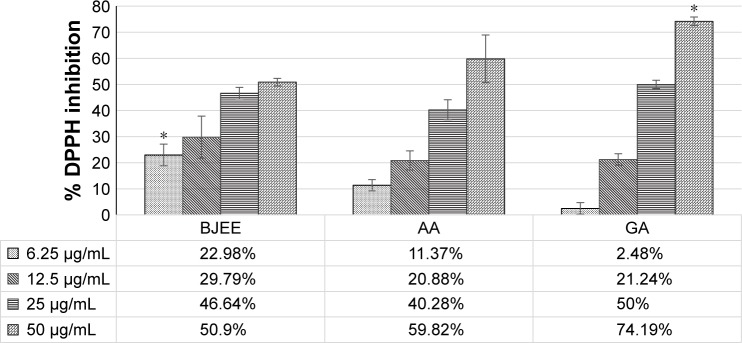
Figure 1
Figure 1
DPPH radical-scavenging activity (%) versus concentration (µg/mL). Notes: *p<0.05; Indicated the significant differences of DPPH inhibition compared to other groups for the same dosage. Abbreviations: AA, ascorbic acid; BJEE, Brucea javanica ethanolic extract; DPPH, 2,2 diphenyl-1-picrylhydrazyl; GA, gallic acid.
Figure 2
Figure 2
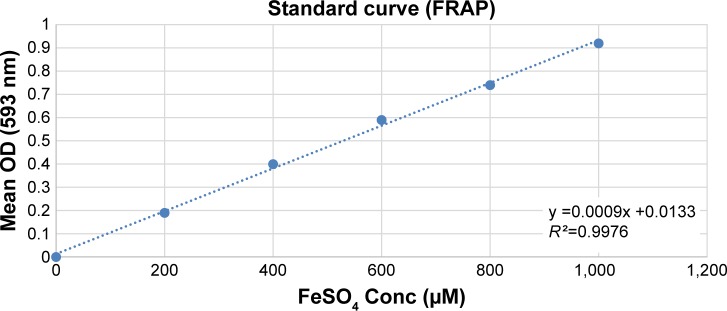
FeSO4 standard curve plotted against concentration versus mean OD of the samples; standard equation: y =0.0009x +0.0133; R2=0.9976. Abbreviations: Conc, concentration; FRAP, ferric reducing antioxidant power; OD, optical density.
Figure 3
Figure 3
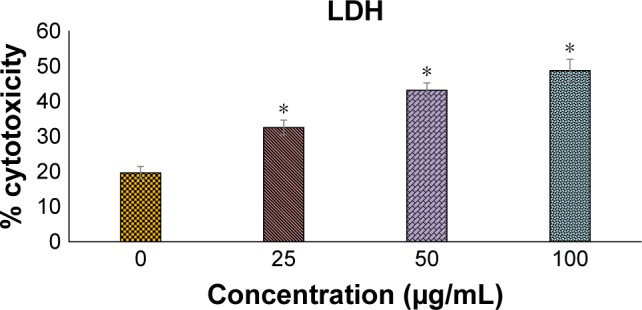
LDH assay confirmed the cytotoxicity of BJEE against HT29 cells in a dose-dependent manner. The data represent the means ± SD of three independent experiments. *p<0.05 compared with the untreated group. Abbreviations: BJEE, Brucea javanica ethanolic extract; LDH, lactate dehydrogenase.
Figure 4
Figure 4
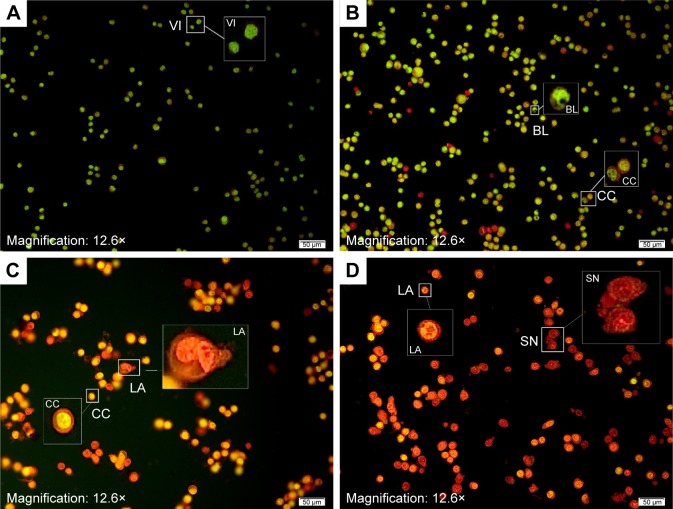
Microscopic detection of apoptosis using AO/PI double staining in untreated and treated HT29 cells with BJEE. Notes: HT29 cells treated with BJEE at different concentrations (25, 50, and 100 µg/mL) during 24 h. Untreated cells are shown normal structure of cell without significant apoptosis or necrosis (A). After treatment with 25 µg/mL of BJEE, EA features including blebbing and chromatin condensation were observed (B). In 50 µg/mL treatment, LA significantly increased with orange color cells (C). After cell treatment with high dose of BJEE, 100 µg/mL, SN cells were noticed by red color (D), magnification: 20×. Abbreviations: AO, acridine orange; BJEE, Brucea javanica ethanolic extract; BL, blebbing cell; CC, chromatin condensation; EA, early apoptosis; LA, late apoptosis; PI, propidium iodide; SN, secondary necrosis; VI, viable cell.
Figure 5
Figure 5
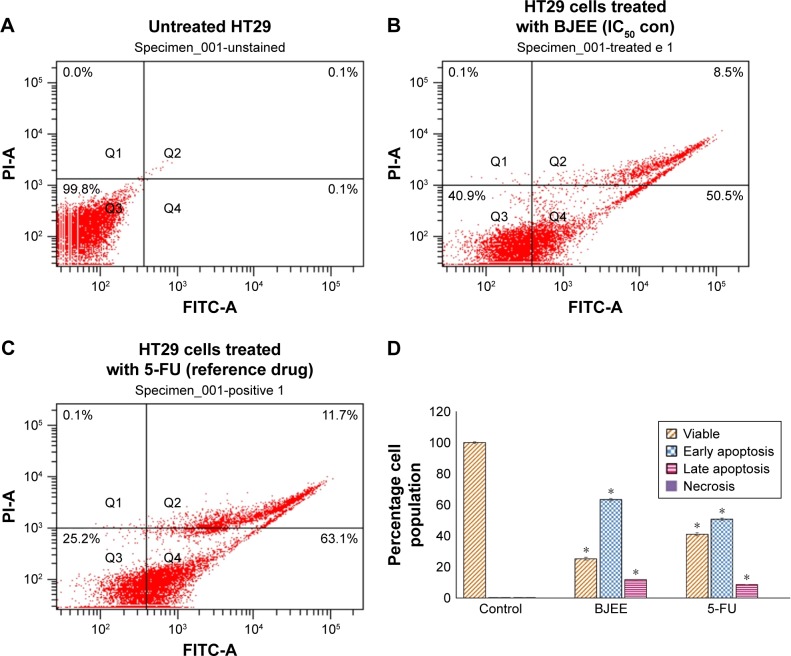
Flow cytometric analysis of early and late apoptosis in treated HT29 cells with BJEE. Notes: HT29 cells were treated with BJEE and reference drug (5-FU) at IC50 concentrations, and then maintained for 24 h at 37°C in a CO2 incubator. The cells were analyzed after staining with FITC-conjugated AV and PI by flow cytometer. The dot plot represents the untreated HT29 cells as a control group (A), treated HT29 cells with IC50 concentration of BJEE (B), and treated HT29 cells with reference drug (5-FU) (C). The early apoptosis events (AV+/PI) shown in lower right quadrant (Q4). The late stage of apoptosis/dead cells (AV+/PI+) is shown in quadrant Q2. Bar chart represents the percentage of viable, early apoptosis, late apoptosis, and necrotic cells in treatment with BJEE on HT29 cells (D). The results are shown as mean ± SD of three independent experiments with *p<0.05. Abbreviations: 5-FU, 5-fluorouracil; AV, annexin-V; BJEE, Brucea javanica ethanolic extract; FITC, fluorescein isothiocyanate; IC50, concentration that inhibits 50% of the cell growth; PI, propidium iodide.
Figure 6
Figure 6
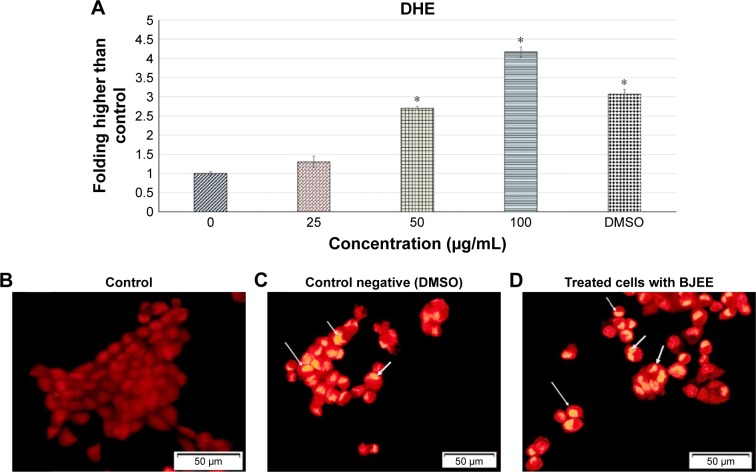
ROS production in the presence of BJEE in HT29 cells. Notes: Bar chart represents quantification of DHE fluorescence intensity at different treatment concentrations (0, 25, 50, and 100 µg/mL) (A). DHE fluorescence folding increased at higher concentrations of BJEE treatment. Untreated HT29 cells stained with DHE (B). The yellow staining of nuclei reflects the intracellular generation of ROS. A large number of HT29 cells showed intense staining for ROS (arrows) after dimethyl sulfoxide treatment (control negative) (C), and this reaction was developed in HT29 cells treated with BJEE for 12 h (D). A significant formation of ROS observed in treated HT29 cells with BJEE. Data are expressed as the mean ± SD of triplicate measurements. *p<0.05 compared with the no-treatment group, magnification: 200×. Abbreviations: BJEE, Brucea javanica ethanolic extract; DHE, dihydroethidium; ROS, reactive oxygen species.
Figure 7
Figure 7
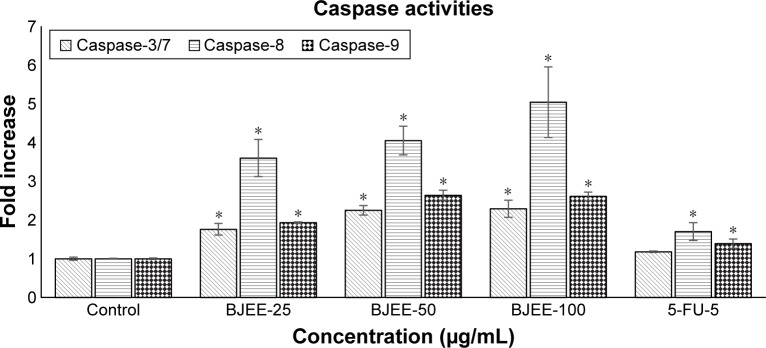
Effect of different concentrations of BJEE (25, 50, and 100 µg/mL) and reference drug (5-FU) on caspase-3/7, -8, and -9 activations in HT29 cells after 24 h of treatment. Notes: The results showed significant activation of caspase-3/7, -8, and -9 compared to nontreated control group. Data are expressed as the means ± SD of triplicate individual experiments. *p<0.05. Abbreviations: BJEE, Brucea javanica ethanolic extract; 5-FU, 5-fluorouracil.
Figure 8
Figure 8
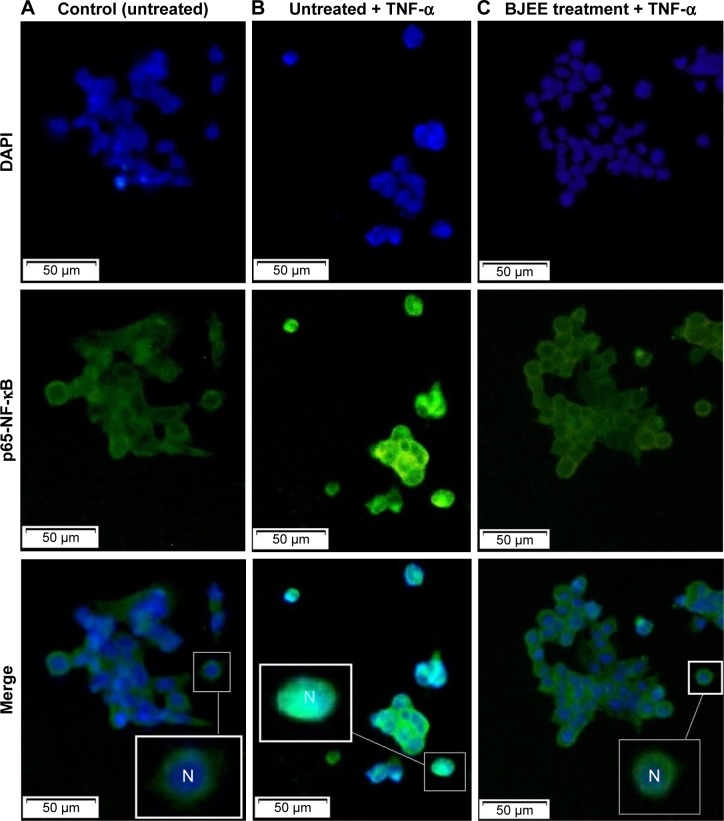
Inhibition effects of BJEE on translocation of TNF-α-induced NF-κB in HT29 cells. Notes: Microscopic tracking of NF-κB translocation by staining of DAPI (nucleus) and NF-κB in HT29 cells. Cells were pretreated with 50 µg/mL of BJEE for 3 h, followed by TNF-α (5 ng/mL) stimulation for 30 min. Nonstimulated cells with no treatments are represented in group (A), the untreated cells stimulated for 30 min with TNF-α (NF-κB activation) is represented in group (B), and treated cells with BJEE reduced the fluorescent intensity of nuclear NF-κB (C), which confirmed that BJEE inhibited TNF-α-induced translocation of NF-κB from the cytoplasm to the nucleus (magnification: 200×). Abbreviations: BJEE, Brucea javanica ethanolic extract; N, nucleus; NF-κB, nuclear factor-κB; TNF-α, tumor necrosis factor alpha.
Figure 9
Figure 9
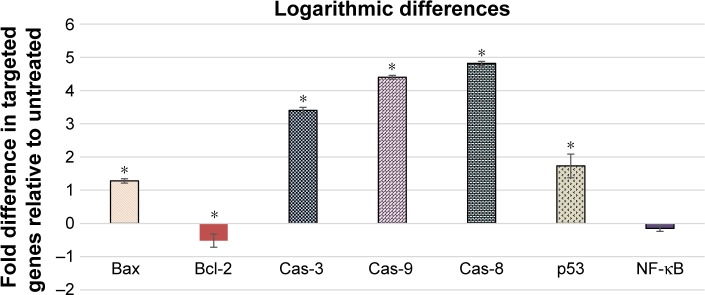
Gene expression analysis using RT-PCR in HT29 cells after 24 h of treatment with BJEE. Notes: Quantitative analysis of gene expression results illustrated significant elevation in the expression of Bcl-2, Bax, p53, Cas-3, -8, and -9 genes, compared to the untreated control group. Meanwhile, gene expression of NF-κB was slightly inhibited but it has not revealed statistical significant changes. The gene expressions were shown in 2 log fold changes of mean ± SD. *p<0.05 versus control group. Abbreviations: BJEE, Brucea javanica ethanolic extract; RT-PCR, real-time quantitative polymerase chain reaction.
Figure 10
Figure 10
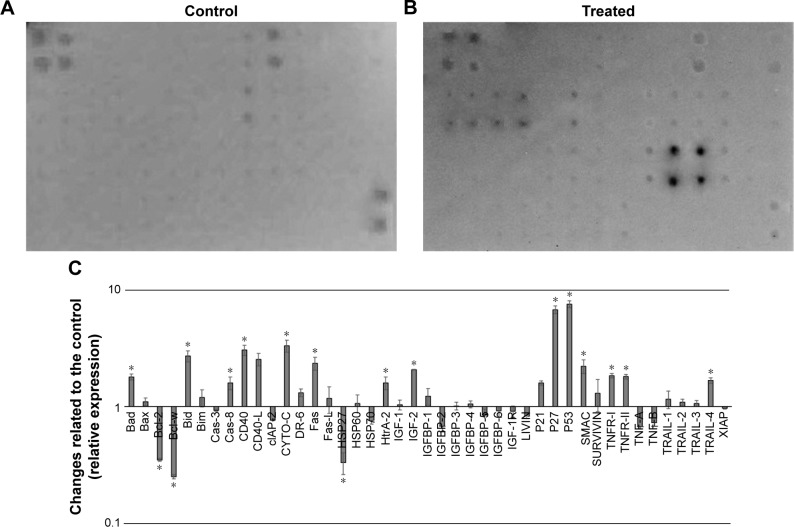
Quantitative analysis of the human apoptosis proteome profiler array in treated and untreated HT29 cells. Notes: Cells were treated with IC50 concentration of BJEE for 24 h, then cells were lysed and protein arrays were performed. Equal amounts (300 µg) of protein from each control and treated sample were used for the assay. Representative images of the apoptotic protein array are shown for the control (A) and treatment (B), and a bar graph shows the difference in the apoptotic markers between treated cells as well as untreated control cells (C). The data are expressed as the mean ± SD for three independent experiments. *Indicates a significant difference from control (*p<0.05). Abbreviations: BJEE, Brucea javanica ethanolic extract; IC50, concentration that inhibits 50% of the cell growth.

References

    1. David AR, Zimmerman MR. Cancer: an old disease, a new disease or something in between? Nat Rev Cancer. 2010;10(10):728–733. - PubMed
    1. Parkin DM, Pisani P, Ferlay J. Global cancer statistics. CA Cancer J Clin. 1999;49(1):33–64. - PubMed
    1. Schrag D, Cramer LD, Bach PB, Begg CB. Age and adjuvant chemotherapy use after surgery for stage III colon cancer. J Natl Cancer Inst. 2001;93(11):850–857. - PubMed
    1. Mishra J, Drummond J, Quazi SH, et al. Prospective of colon cancer treatments and scope for combinatorial approach to enhanced cancer cell apoptosis. Crit Rev Oncol Hematol. 2013;86(3):232–250. - PMC - PubMed
    1. Dias DA, Urban S, Roessner U. A historical overview of natural products in drug discovery. Metabolites. 2012;2(2):303–336. - PMC - PubMed

MeSH terms