. 2018 Feb 13:2018:5106469.
doi: 10.1155/2018/5106469. eCollection 2018.

Rutin Isolated from Chrozophora tinctoria Enhances Bone Cell Proliferation and Ossification Markers

Affiliations

Rutin Isolated from Chrozophora tinctoria Enhances Bone Cell Proliferation and Ossification Markers

Ashraf B Abdel-Naim et al. Oxid Med Cell Longev. .

Abstract

Osteoporosis is a chronic disease in which the skeleton loses a weighty proportion of its mineralized mass and mechanical pliability. Currently available antiosteoporotic agents suffer adverse effects that include elevated risk of thrombosis and cancer. Phytochemicals may constitute a safer and effective option. In the current work, six flavonoids were obtained from Chrozophora tinctoria and identified as amentoflavone (1), apigenin-7-O-β-d-glucopyranoside (2), apigenin-7-O-6''-E-p-coumaroyl-β-d-glucopyranoside (3), acacetin-7-O-β-d-[α-l-rhamnosyl(1→6)]3''-E-p-coumaroyl glucopyranoside (4), apigenin-7-O-(6''-Z-p-coumaroyl)-β-d-glucopyranoside (5), and rutin (6). An extensive review of the literature as well as NMR and mass spectral techniques was employed in order to elucidate the compound structures. Proliferation was enhanced in MCF7, MG-63, and SAOS-2 cells after exposure to subcytotoxic levels of the tested flavonoids. Rutin was chosen for subsequent studies in SAOS-2 cells. Rutin was not found to cause any alteration in the index of proliferation of these cells, when examining the cell cycle distribution by DNA flowcytometric analysis. Rutin was, however, found to increase osteocyte and osteoblast-related gene expression and lower the expression of RUNX suppressor and osteoclast genes. When examining the influence of rutin on vitamin D levels and the activity of alkaline phosphatase enzyme, it was found to enhance both, while decreasing acid phosphatase which is a marker of osteoporosis. Thus, rutin enhances proliferation and ossification markers in bone cells.


Figures
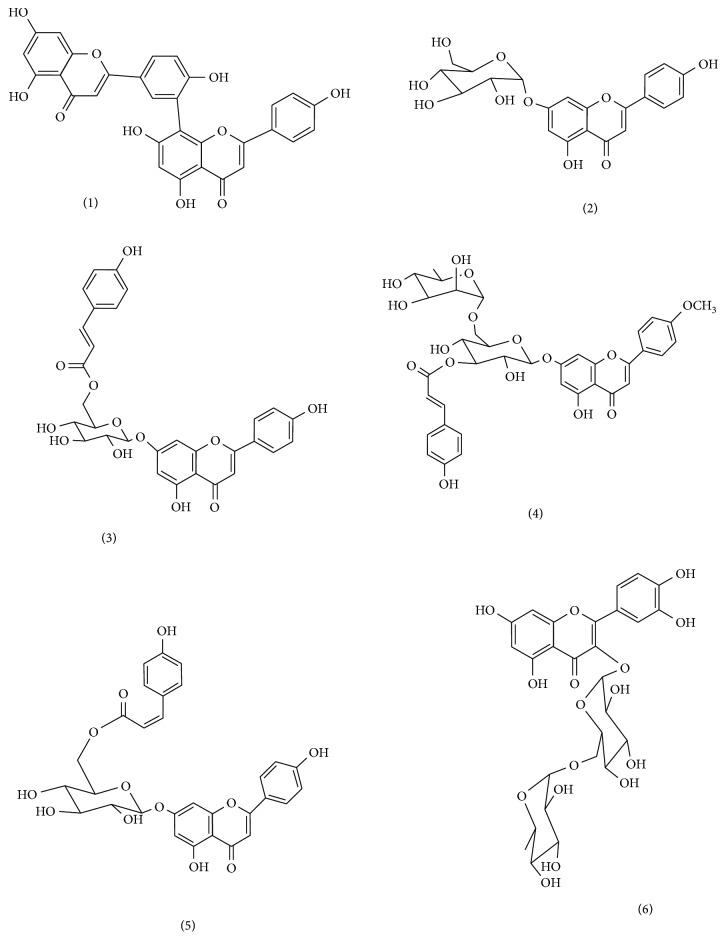
Figure 1
Figure 1
Isolated compounds from Chrozophora tincturia.
Figure 2
Figure 2
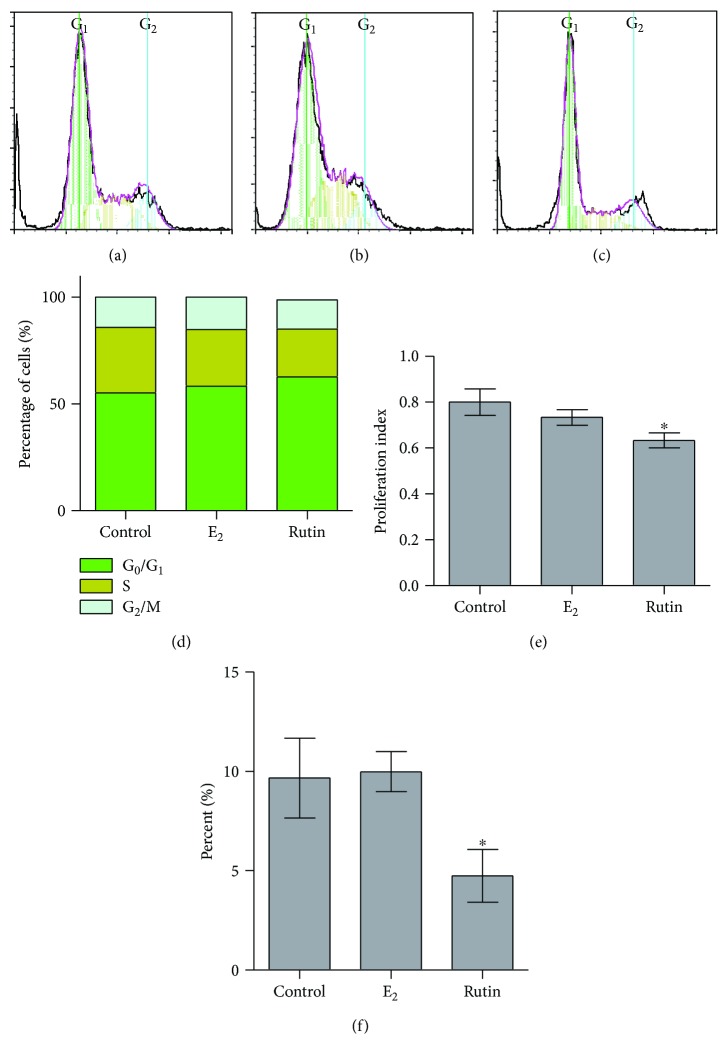
Effect of rutin on the cell cycle distribution of SAOS-2 cells. Cells were exposed to rutin (1 μM) for 48 h (b) and compared to control untreated cells (a) and E2- (0.1 μM) treated cells (c). Cell cycle distribution was determined using DNA cytometry analysis and different cell phases were plotted (d) as percentage of total events. Proliferation index was calculated and plotted (e). Supra-G2/M cell population was plotted as percent of total events (f). Data are presented as mean ± SD; n = 3. Significantly different from the control untreated cells; p < 0.05.
Figure 3
Figure 3
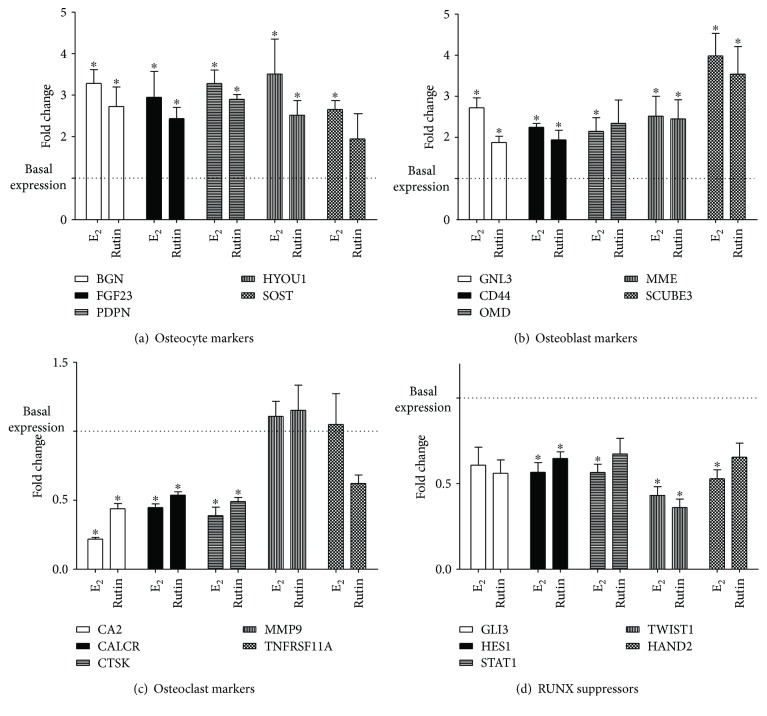
Effect of rutin on mRNA expression of some ossification related genes in SAOS-2 cell line. Cells were incubated with rutin (1 μM) or E2 (0.1 μM) for 48 h. Total RNA was extracted and subjected to RT-PCR. Data were normalized to β-actin; fold changes were calculated and expressed as mean ± SD; n = 3. Significantly different from the control untreated cells; p < 0.05.
Figure 4
Figure 4
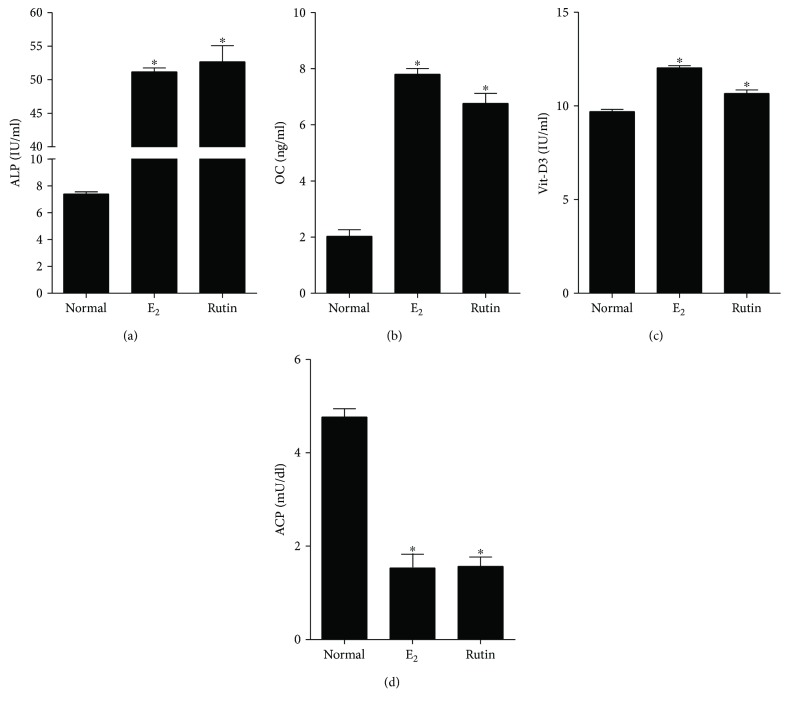
Biochemical assessment for antiosteoporosis effect of rutin in vitro. SAOS-2 cells were treated with rutin (1 μM) and E2 (0.1 μM) for 48 h and compared to the control untreated cells. Biochemical assessment of osteoporosis was evaluated by measuring alkaline phosphatase (a), osteocalcin (b), vitamin D3 (c), and acid phosphatase (d). Data are presented as mean ± SD; n = 3. Significantly different from the control untreated cells; p < 0.05.

References

    1. Martin R. M., Correa P. H. S. Bone quality and osteoporosis therapy. Arquivos Brasileiros de Endocrinologia & Metabologia. 2010;54(2):186–199. doi: 10.1590/S0004-27302010000200015. - DOI - PubMed
    1. Akesson K. New approaches to pharmacological treatment of osteoporosis. Bulletin of the World Health Organization. 2003;81(9):657–664. - PMC - PubMed
    1. Ensrud K. E., Crandall C. J. Osteoporosis. Annals of Internal Medicine. 2017;167(3):ITC17–ITC32. doi: 10.7326/AITC201708010. - DOI - PubMed
    1. van Staa T. P., Dennison E. M., Leufkens H. G., Cooper C. Epidemiology of fractures in England and Wales. Bone. 2001;29(6):517–522. doi: 10.1016/S8756-3282(01)00614-7. - DOI - PubMed
    1. Leslie W. D., Metge C. J., Azimaee M., et al. Direct costs of fractures in Canada and trends 1996–2006: a population-based cost-of-illness analysis. Journal of Bone and Mineral Research. 2011;26(10):2419–2429. doi: 10.1002/jbmr.457. - DOI - PubMed

LinkOut - more resources