


Discordance of Self-report and Laboratory Measures of HIV Viral Load Among Young Men Who Have Sex with Men and Transgender Women in Chicago: Implications for Epidemiology, Care, and Prevention
- PMID: 29637386
- PMCID: PMC6721895
- DOI: 10.1007/s10461-018-2112-7
Discordance of Self-report and Laboratory Measures of HIV Viral Load Among Young Men Who Have Sex with Men and Transgender Women in Chicago: Implications for Epidemiology, Care, and Prevention
Abstract
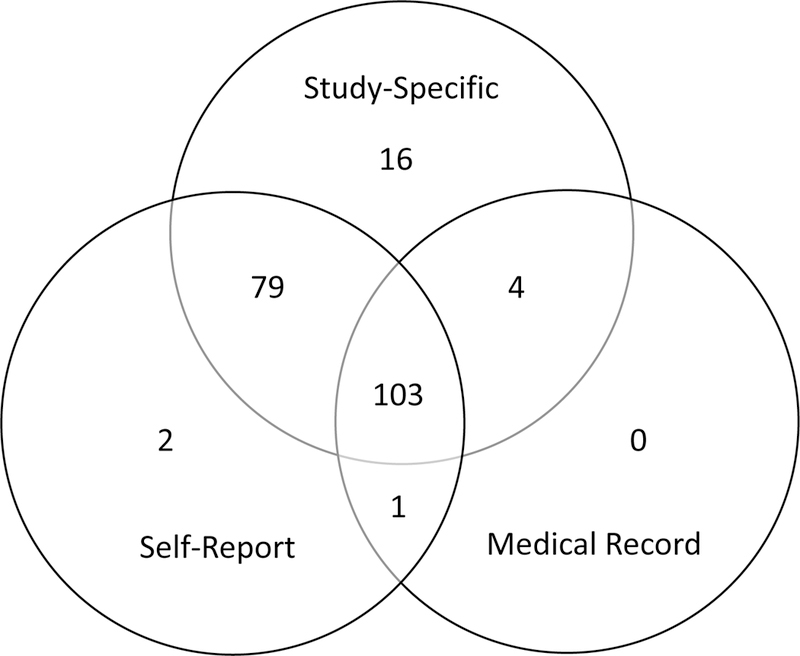
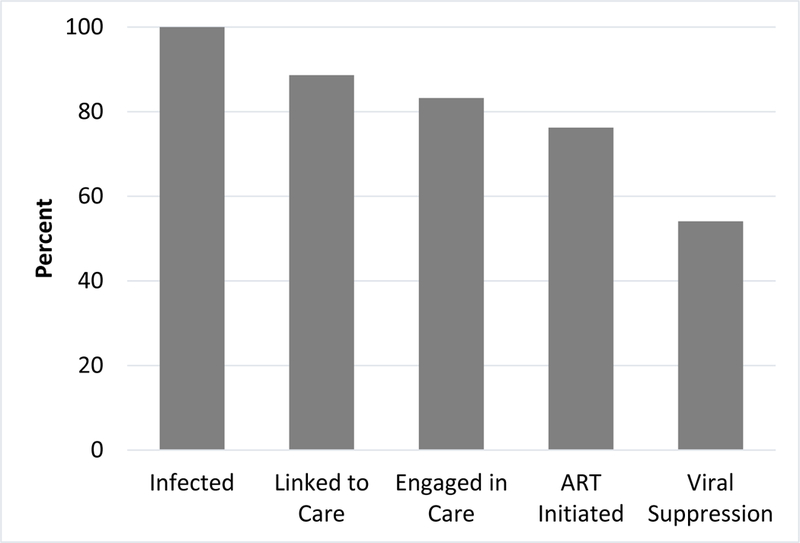
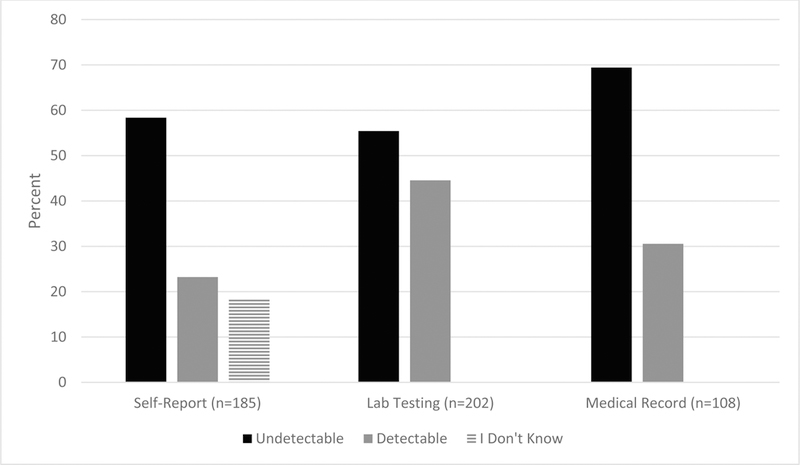
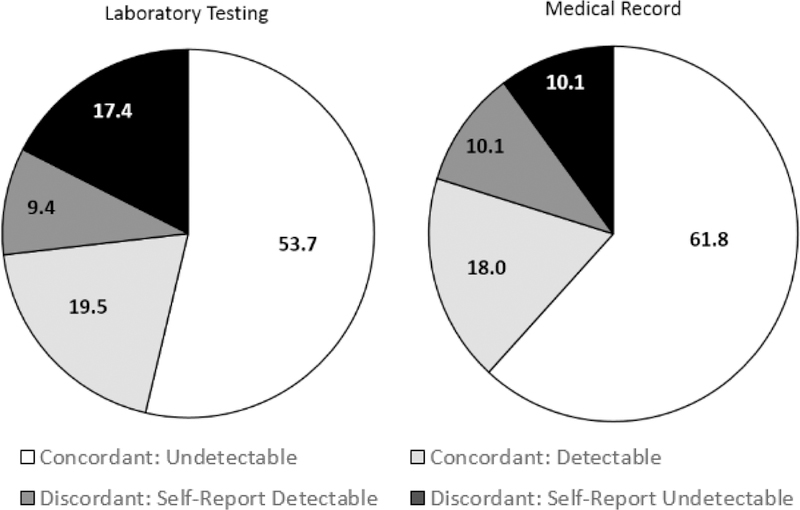
Suppressing HIV viral load through daily antiretroviral therapy (ART) substantially reduces the risk of HIV transmission, however, the potential population impact of treatment as prevention (TasP) is mitigated due to challenges with sustained care engagement and ART adherence. For an undetectable viral load (VL) to inform decision making about transmission risk, individuals must be able to accurately classify their VL as detectable or undetectable. Participants were 205 HIV-infected young men who have sex with men (YMSM) and transgender women (TGW) from a large cohort study in the Chicago area. Analyses examined correspondence among self-reported undetectable VL, study-specific VL, and most recent medical record VL. Among HIV-positive YMSM/TGW, 54% had an undetectable VL (< 200 copies/mL) via study-specific laboratory testing. Concordance between self-report and medical record VL values was 80% and between self-report and study-specific laboratory testing was 73%; 34% of participants with a detectable study-specific VL self-reported an undetectable VL at last medical visit, and another 28% reported not knowing their VL status. Periods of lapsed viral suppression between medical visits may represent a particular risk for the TasP strategy among YMSM/TGW. Strategies for frequent viral load monitoring, that are not burdensome to patients, may be necessary to optimize TasP.
Keywords: Medical records; Treatment as prevention; Undetectable; Viral load; Young MSM.
Conflict of interest statement
Conflict of Interest: Authors declare no conflicts of interest.
Figures
References
-
- Rodger AJ, et al., Sexual activity without condoms and risk of hiv transmission in serodifferent couples when the hiv-positive partner is using suppressive antiretroviral therapy. JAMA, 2016. 316(2): p. 171–181. - PubMed
-
- Bavinton B, et al., HIV treatment prevents HIV transmission in male serodiscordant couples in Australia, Thailand and Brazil, in International AIDS Society. 2017: Paris.
MeSH terms
Substances
Grants and funding
LinkOut - more resources
Full Text Sources
Other Literature Sources
Medical
Miscellaneous
