


Accurate Diabetes Risk Stratification Using Machine Learning: Role of Missing Value and Outliers
- PMID: 29637403
- PMCID: PMC5893681
- DOI: 10.1007/s10916-018-0940-7
Accurate Diabetes Risk Stratification Using Machine Learning: Role of Missing Value and Outliers
Abstract
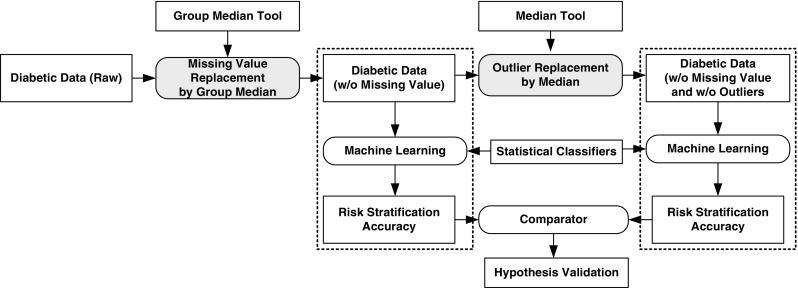
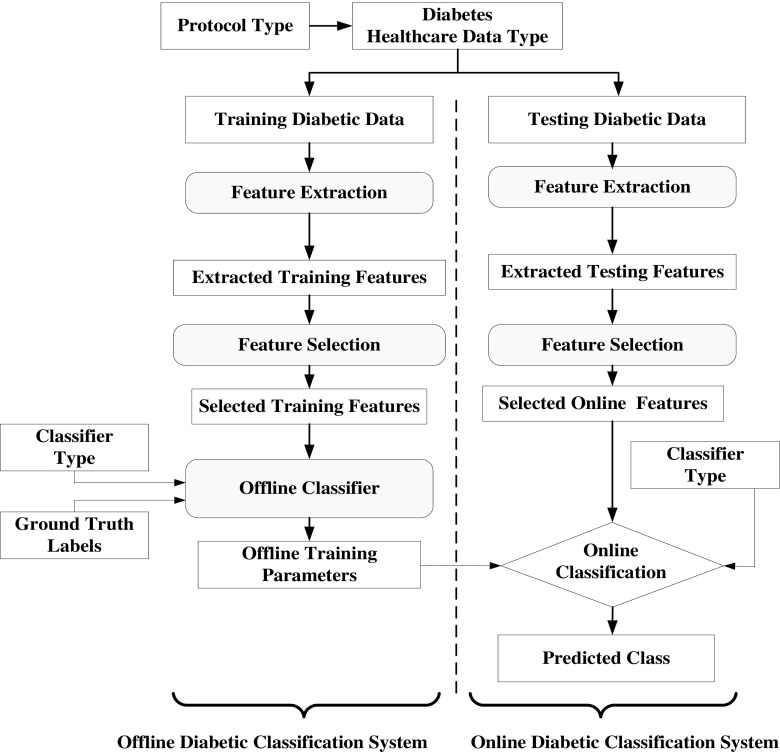
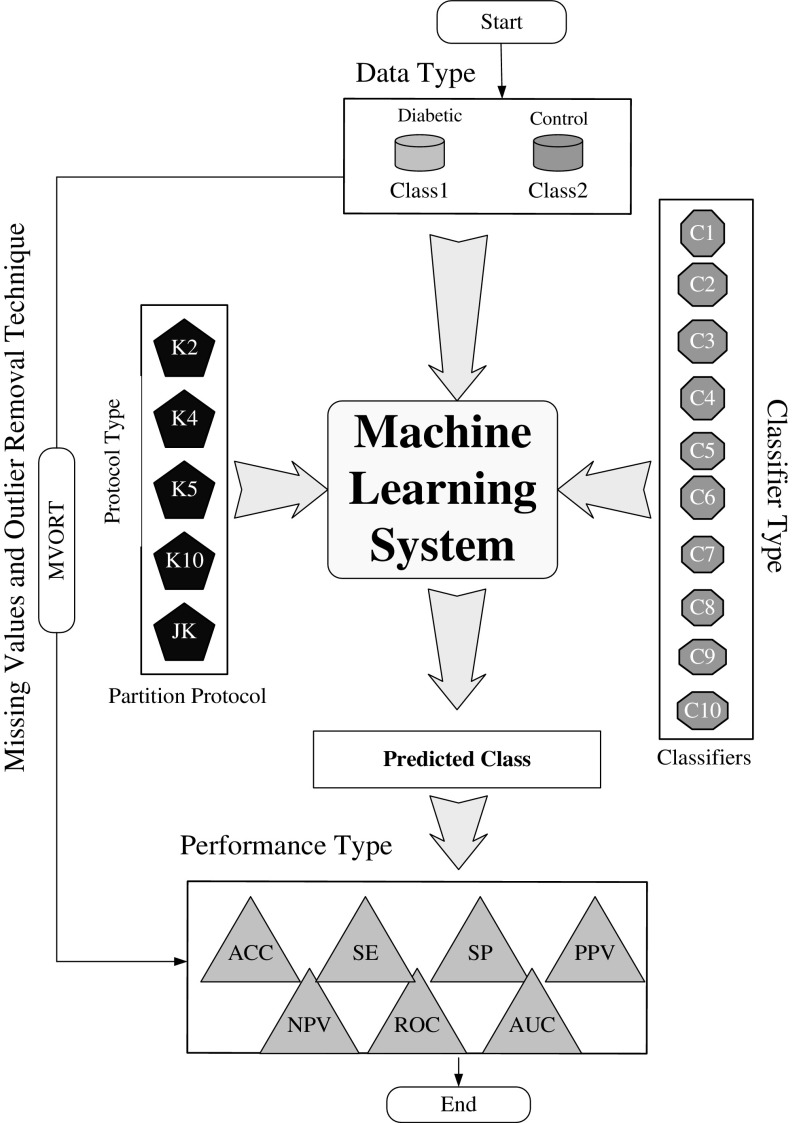
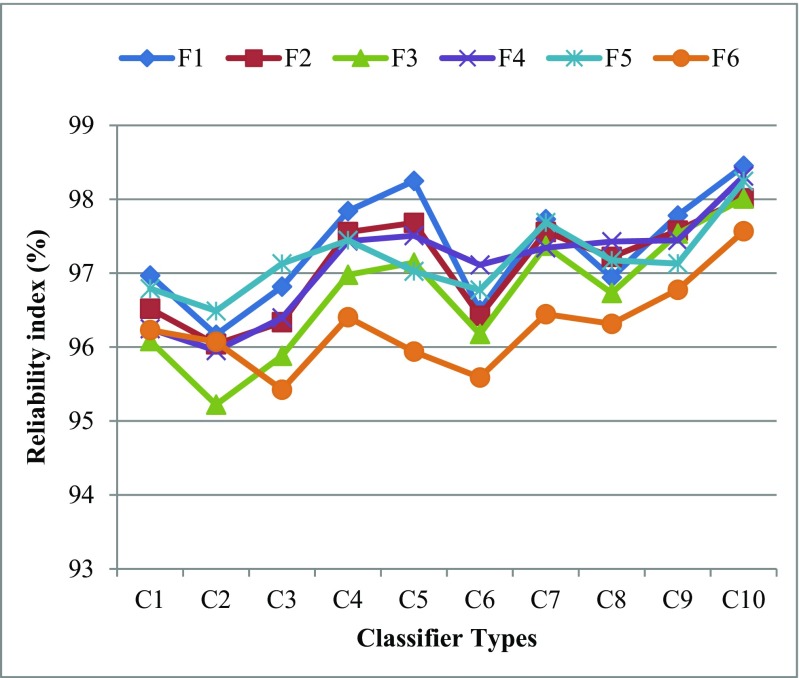
Diabetes mellitus is a group of metabolic diseases in which blood sugar levels are too high. About 8.8% of the world was diabetic in 2017. It is projected that this will reach nearly 10% by 2045. The major challenge is that when machine learning-based classifiers are applied to such data sets for risk stratification, leads to lower performance. Thus, our objective is to develop an optimized and robust machine learning (ML) system under the assumption that missing values or outliers if replaced by a median configuration will yield higher risk stratification accuracy. This ML-based risk stratification is designed, optimized and evaluated, where: (i) the features are extracted and optimized from the six feature selection techniques (random forest, logistic regression, mutual information, principal component analysis, analysis of variance, and Fisher discriminant ratio) and combined with ten different types of classifiers (linear discriminant analysis, quadratic discriminant analysis, naïve Bayes, Gaussian process classification, support vector machine, artificial neural network, Adaboost, logistic regression, decision tree, and random forest) under the hypothesis that both missing values and outliers when replaced by computed medians will improve the risk stratification accuracy. Pima Indian diabetic dataset (768 patients: 268 diabetic and 500 controls) was used. Our results demonstrate that on replacing the missing values and outliers by group median and median values, respectively and further using the combination of random forest feature selection and random forest classification technique yields an accuracy, sensitivity, specificity, positive predictive value, negative predictive value and area under the curve as: 92.26%, 95.96%, 79.72%, 91.14%, 91.20%, and 0.93, respectively. This is an improvement of 10% over previously developed techniques published in literature. The system was validated for its stability and reliability. RF-based model showed the best performance when outliers are replaced by median values.
Keywords: Diabetes; Feature selection; Machine learning; Missing values; Outliers; Risk stratification.
Conflict of interest statement
Conflict of interest
None declared.
Ethics approval
We used secondary dataset taken from the UCI website (
Figures

References
-
- Bharath C, Saravanan N, Venkatalakshmi S. Assessment of knowledge related to diabetes mellitus among patients attending a dental college in Salem city-A cross sectional study. Braz. Dent. Sci. 2017;20(3):93–100.
-
- Fitzmaurice C, Allen C, Barber RM, Barregard L, Bhutta ZA, Brenner H, Fleming T. Global, regional, and national cancer incidence, mortality, years of life lost, years lived with disability, and disability-adjusted life-years for 32 cancer groups, 1990 to 2015: a systematic analysis for the global burden of disease study. JAMA Oncol. 2017;3(4):524–548. doi: 10.1001/jamaoncol.2016.5688. - DOI - PMC - PubMed
-
- Danaei G, Finucane MM, Lu Y, Singh GM, Cowan MJ, Paciorek CJ, Rao M. National, regional, and global trends in fasting plasma glucose and diabetes prevalence since 1980: systematic analysis of health examination surveys and epidemiological studies with 370 country-years and 2.7 million participants. Lancet. 2011;378(9785):31–40. doi: 10.1016/S0140-6736(11)60679-X. - DOI - PubMed
MeSH terms
Substances
LinkOut - more resources
Full Text Sources
Other Literature Sources
Medical
Molecular Biology Databases
