TGFβ signaling related genes are involved in hormonal mediation during termite soldier differentiation
- PMID: 29641521
- PMCID: PMC5912798
- DOI: 10.1371/journal.pgen.1007338
TGFβ signaling related genes are involved in hormonal mediation during termite soldier differentiation
Abstract
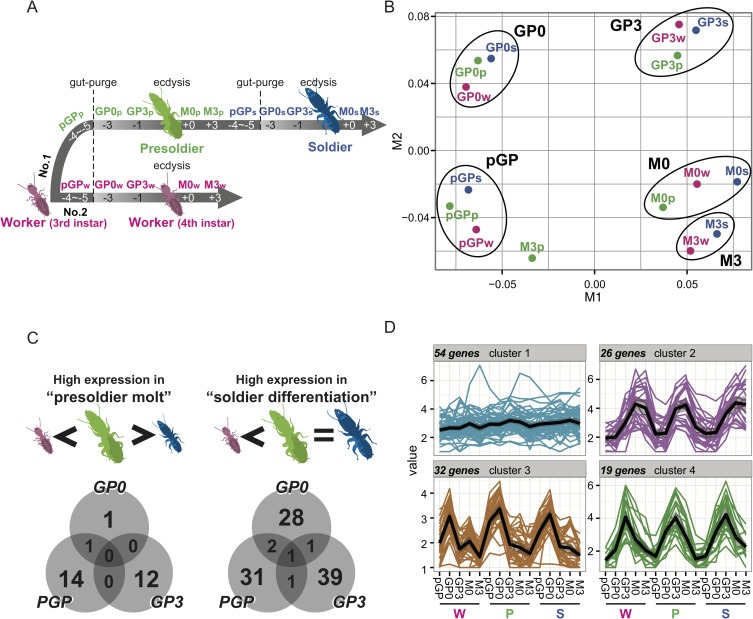
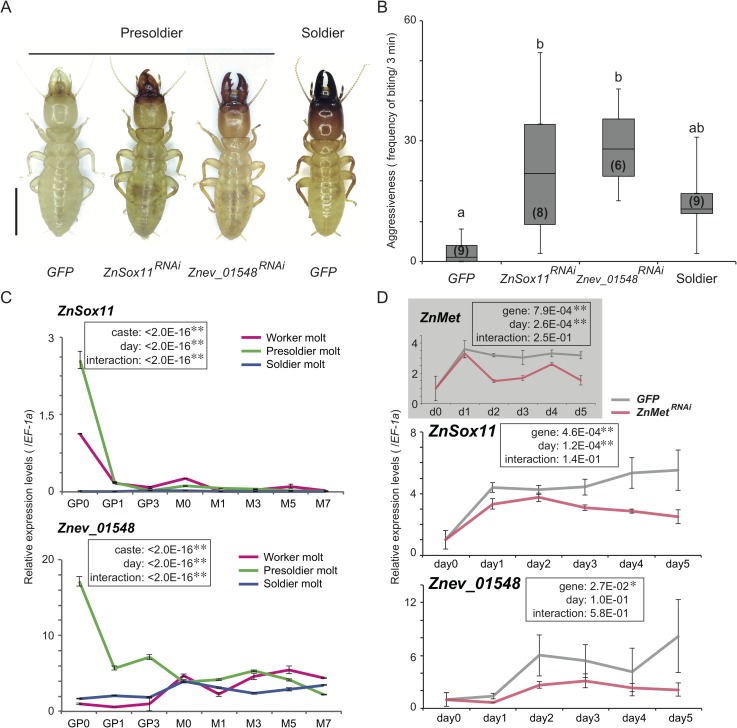
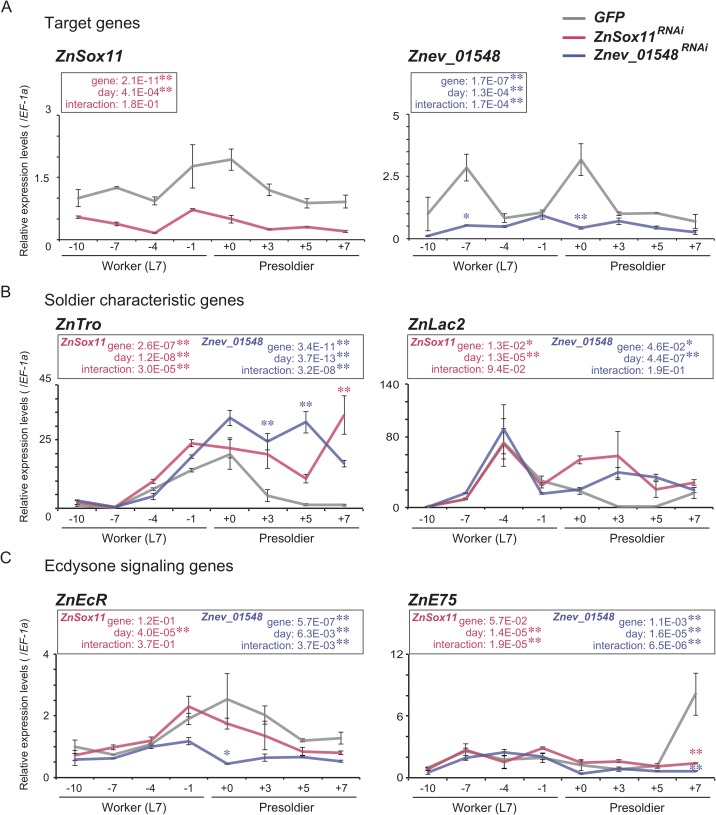
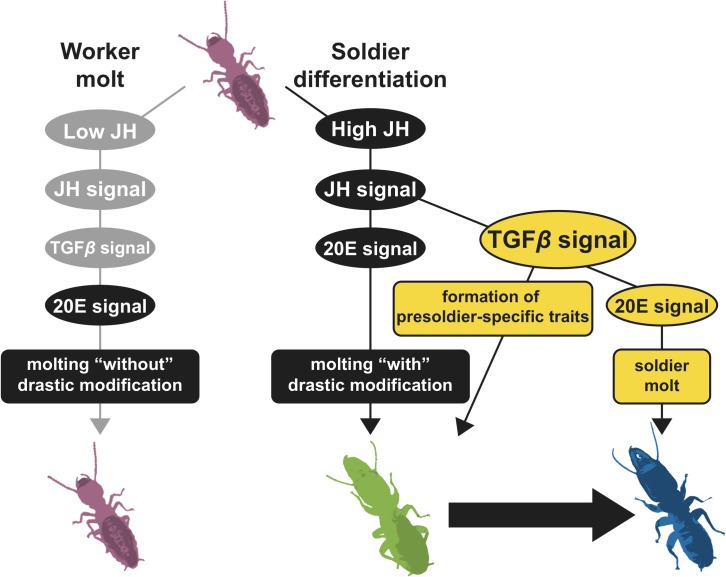
A working knowledge of the proximate factors intrinsic to sterile caste differentiation is necessary to understand the evolution of eusocial insects. Genomic and transcriptomic analyses in social hymenopteran insects have resulted in the hypothesis that sterile castes are generated by the novel function of co-opted or recruited universal gene networks found in solitary ancestors. However, transcriptome analysis during caste differentiation has not been tested in termites, and evolutionary processes associated with acquiring the caste are still unknown. Termites possess the soldier caste, which is regarded as the first acquired permanently sterile caste in the taxon. In this study, we performed a comparative transcriptome analysis in termite heads during 3 molting processes, i.e., worker, presoldier and soldier molts, under natural conditions in an incipient colony of the damp-wood termite Zootermopsis nevadensis. Although similar expression patterns were observed during each molting process, more than 50 genes were shown to be highly expressed before the presoldier (intermediate stage of soldier) molt. We then performed RNA interference (RNAi) of the candidate 13 genes, including transcription factors and uncharacterized protein genes, during presoldier differentiation induced by juvenile hormone (JH) analog treatment. Presoldiers induced after RNAi of two genes related to TGFβ (Transforming growth factor beta) signaling were extremely unusual and possessed soldier-like phenotypes. These individuals also displayed aggressive behaviors similar to natural soldiers when confronted with Formica ants as hypothetical enemies. These presoldiers never molted into the next instar, presumably due to the decreased expression levels of the molting hormone (20-hydroxyecdysone; 20E) signaling genes. These results suggest that TGFβ signaling was acquired for the novel function of regulating between JH and 20E signaling during soldier differentiation in termites.
Conflict of interest statement
The authors have declared that no competing interests exist.
Figures
References
-
- Friedman DA, Gordon DM. Ant Genetics: Reproductive Physiology, Worker Morphology, and Behavior. Ann Rev Neurosci. 2016;39: 41–56. doi: 10.1146/annurev-neuro-070815-013927 - DOI - PubMed
-
- Johnson BR, Jasper WC. Complex patterns of differential expression in candidate master regulatory genes for social behavior in honey bees. Behavioral Ecol Sociobiol. 2016;70: 1033–1043.
-
- Hunt JH, Amdam GV. Bivoltinism as an antecedent to eusociality in the paper wasp genus Polistes. Science. 2005;308: 264–267. doi: 10.1126/science.1109724 - DOI - PMC - PubMed
-
- Hunt JH, Kensinger BJ, Kossuth JA, Henshaw MT, Norberg K, Wolschin F, et al. A diapause pathway underlies the gyne phenotype in Polistes wasps, revealing an evolutionary route to caste-containing insect societies. Proc Natl Acad Sci USA. 2007;104: 14020–14025. doi: 10.1073/pnas.0705660104 - DOI - PMC - PubMed
-
- Jedlička P, Ernst UR, Votavová A, Hanus R, Valterová I. Gene Expression Dynamics in Major Endocrine Regulatory Pathways along the Transition from Solitary to Social Life in a Bumblebee, Bombus terrestris. Front Physiol. 2016;7: 574 doi: 10.3389/fphys.2016.00574 - DOI - PMC - PubMed
Publication types
MeSH terms
Substances
LinkOut - more resources
Full Text Sources
Other Literature Sources