


Ethical learning on international medical electives: a case-based analysis of medical student learning experiences
- PMID: 29642906
- PMCID: PMC5896122
- DOI: 10.1186/s12909-018-1181-7
Ethical learning on international medical electives: a case-based analysis of medical student learning experiences
Abstract
Background: Students on international medical electives face complex ethical issues when undertaking clinical work. The variety of elective destinations and the culturally specific nature of clinical ethical issues suggest that pre-elective preparation could be supplemented by in-elective support.
Methods: An online, asynchronous, case-based discussion was piloted to support ethical learning on medical student electives. We developed six scenarios from elective diaries to stimulate peer-facilitated discussions during electives. We evaluated the transcripts to assess whether transformative, experiential learning took place, assessing specifically for indications that 1) critical reflection, 2) reflective action and 3) reflective learning were taking place. We also completed a qualitative thematic content analysis of the discussions.
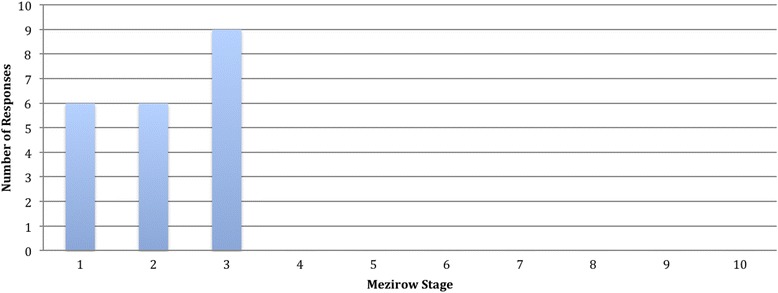
Results: Of forty-one extended comments, nine responses showed evidence of transformative learning (Mezirow stage three). The thematic analysis identified five themes: adopting a position on ethical issues without overt analysis; presenting issues in terms of their effects on students' ability to complete tasks; describing local contexts and colleagues as "other"; difficulty navigating between individual and structural issues, and overestimation of the impact of individual action on structures and processes.
Conclusion: Results suggest a need to: frame ethical learning on elective so that it builds on earlier ethical programmes in the curriculum, and encourages students to adopt structured approaches to complex ethical issues including cross-cultural negotiation and to enhance global health training within the curriculum.
Keywords: Mezirow; ethical learning; lobal health education; medical elective; transformative learning.
Conflict of interest statement
Ethics approval and consent to participate
Ethical approval was received from the King’s College London Research Ethics Board. Verbal consent to participate was gained from all participants.
Consent for publication
Not applicable.
Competing interests
The author declare that they have no competing interests.
Publisher’s Note
Springer Nature remains neutral with regard to jurisdictional claims in published maps and institutional affiliations.
Figures
References
-
- General Medical Council . Tomorrow’s Doctors. 2009.
-
- Chapman R. Medical Electives Overseas – Your Chance to Witness Global Health, Scottish Universities Medical Journal, SUMJ Advertorial. 2012.
MeSH terms
LinkOut - more resources
Full Text Sources
Other Literature Sources
Medical
