


Rate of adherence to urate-lowering therapy among patients with gout: a systematic review and meta-analysis
- PMID: 29643150
- PMCID: PMC5898304
- DOI: 10.1136/bmjopen-2017-017542
Rate of adherence to urate-lowering therapy among patients with gout: a systematic review and meta-analysis
Abstract
Introduction: Reported adherence to urate-lowering therapy (ULT) in gout varies widely (17%-83.5%). Variability may partly be due to different adherence measurement methods. This review aimed to quantify ULT adherence in adult patients with gout.
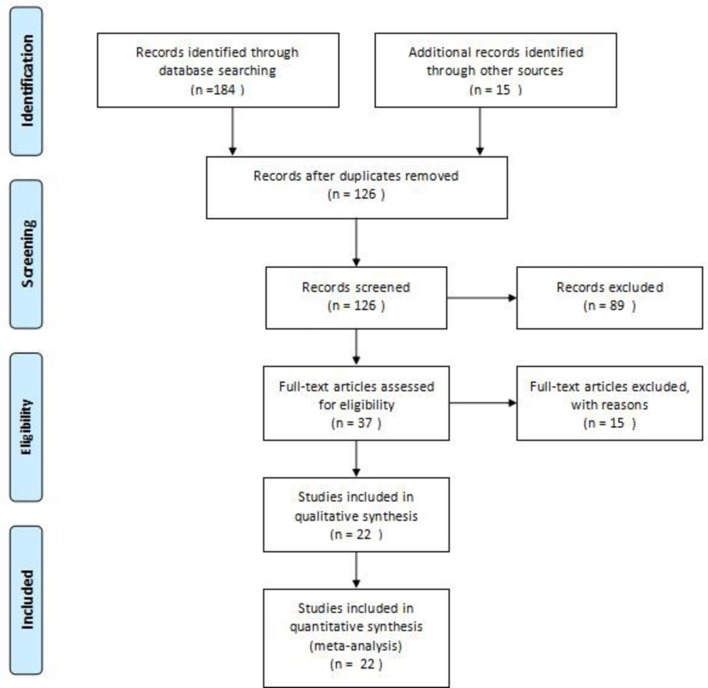
Methods: This analysis examined studies in PubMed, Web of Science, CNKI Scholar and WanFang databases from inception to January 2017. Papers were selected by inclusion and exclusion criteria in the context. Random-effect meta-analysis estimated adherence.
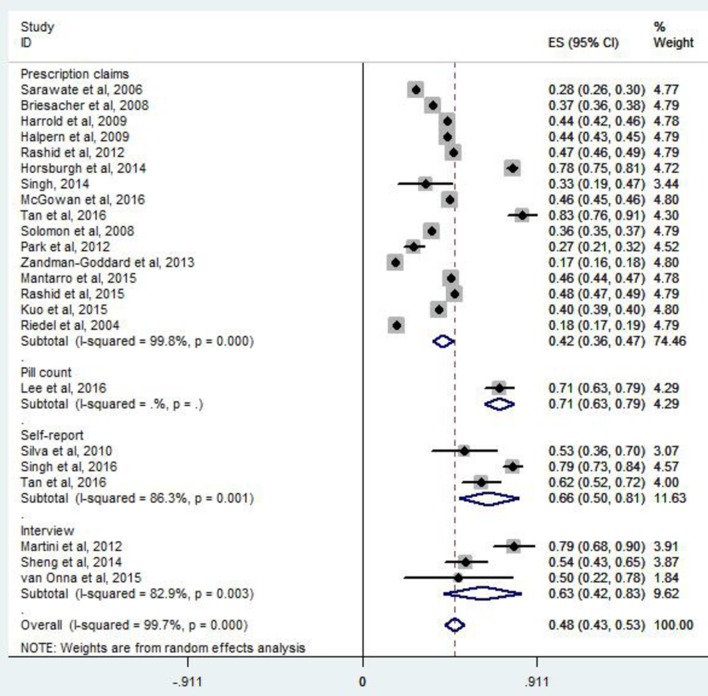
Results: 22 studies were found by the inclusion criteria, which involved 1 37 699 patients with gout. Four ways to define adherence were reported. Meta-analysis revealed that the overall adherence rate was 47% (95% CI 42% to 52%, I2=99.7%). Adherence rate to ULT was 42% (95% CI 37% to 47%, I2=99.8%) for prescription claims, 71% (95% CI 63% to 79%) for pill count, 66% (95% CI 50% to 81%, I2=86.3%) for self-report and 63% (95% CI 42% to 83%, I2=82.9%) for interview, respectively. The influential factor on adherence rate was country of origin.
Conclusions: Among adult patients with gout, overall adherence rate to ULT was as low as 47%, which suggested that clinicians should pay more attention to medication adherence in patients with gout to effectively improve adherence to ULT.
Keywords: adherence; gout; meta-analysis; urate-lowering therapy.
© Article author(s) (or their employer(s) unless otherwise stated in the text of the article) 2018. All rights reserved. No commercial use is permitted unless otherwise expressly granted.
Conflict of interest statement
Competing interests: None declared.
Figures
References
-
- Zhang W, Doherty M, Bardin T, et al. EULAR evidence based recommendations for gout. Part II: management. Report of a task force of the EULAR Standing Committee for International Clinical Studies Including Therapeutics (ESCISIT). Ann Rheum Dis 2006;65:1312–24. 10.1136/ard.2006.055269 - DOI - PMC - PubMed
Publication types
MeSH terms
Substances
LinkOut - more resources
Full Text Sources
Other Literature Sources
Medical
