


Refugee maternal and perinatal health in Ontario, Canada: a retrospective population-based study
- PMID: 29643152
- PMCID: PMC5898303
- DOI: 10.1136/bmjopen-2017-018979
Refugee maternal and perinatal health in Ontario, Canada: a retrospective population-based study
Abstract
Objectives: Immigrants are thought to be healthier than their native-born counterparts, but less is known about the health of refugees or forced migrants. Previous studies often equate refugee status with immigration status or country of birth (COB) and none have compared refugee to non-refugee immigrants from the same COB. Herein, we examined whether: (1) a refugee mother experiences greater odds of adverse maternal and perinatal health outcomes compared with a similar non-refugee mother from the same COB and (2) refugee and non-refugee immigrants differ from Canadian-born mothers for maternal and perinatal outcomes.
Design: This is a retrospective population-based database study. We implemented two cohort designs: (1) 1:1 matching of refugees to non-refugee immigrants on COB, year and age at arrival (±5 years) and (2) an unmatched design using all data.
Setting and participants: Refugee immigrant mothers (n=34 233), non-refugee immigrant mothers (n=243 439) and Canadian-born mothers (n=615 394) eligible for universal healthcare insurance who had a hospital birth in Ontario, Canada, between 2002 and 2014.
Primary outcomes: Numerous adverse maternal and perinatal health outcomes.
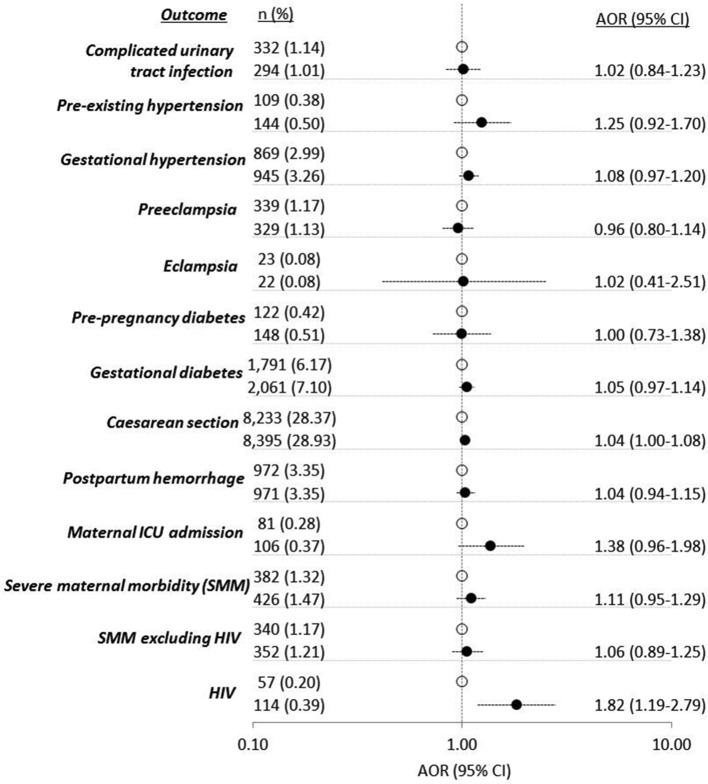
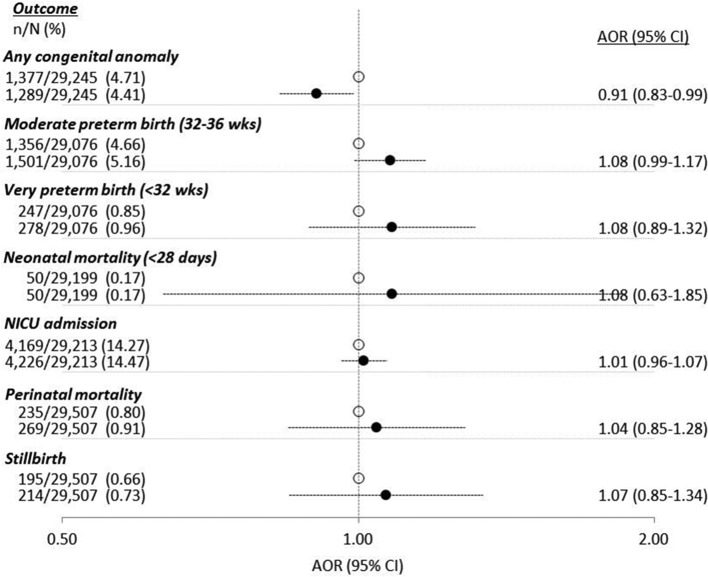
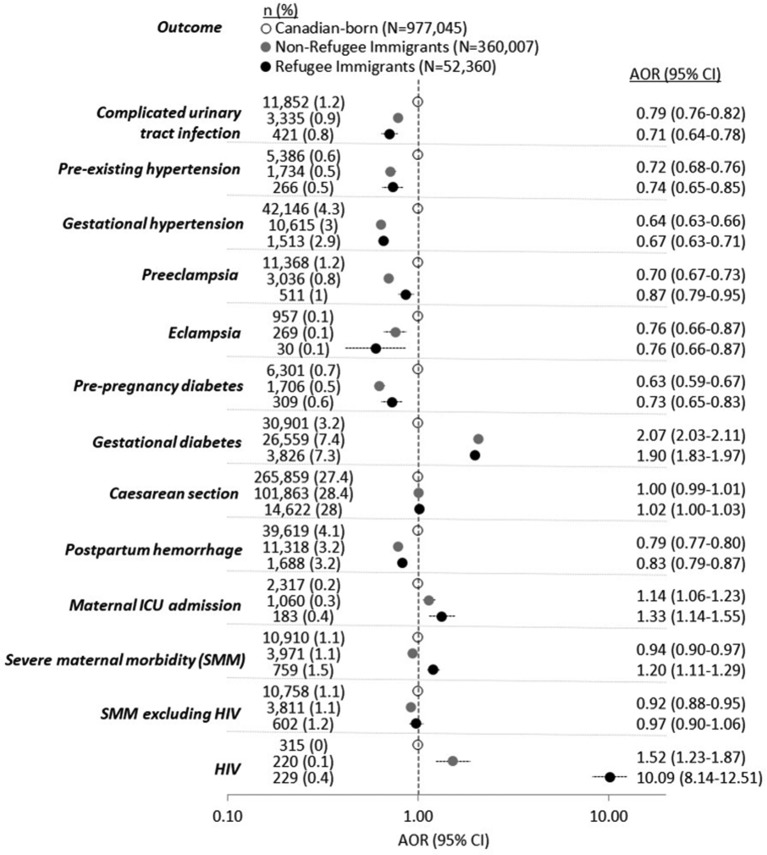
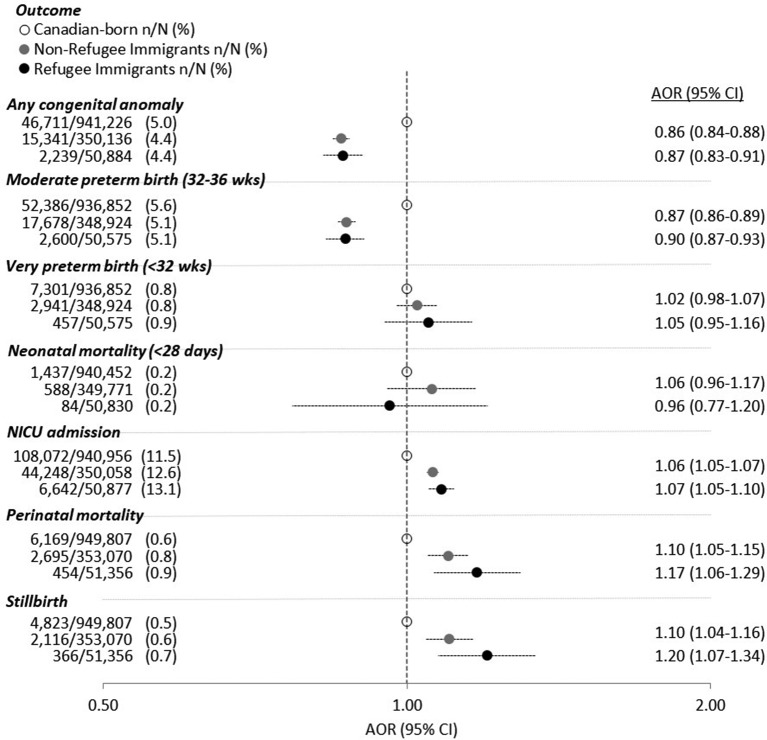
Results: Refugees differed from non-refugee immigrants most notably for HIV, with respective rates of 0.39% and 0.20% and an adjusted OR (AOR) of 1.82 (95% CI 1.19 to 2.79). Other elevated outcomes included caesarean section (AOR 1.04, 95% CI 1.00 to 1.08) and moderate preterm birth (AOR 1.08, 95% CI 0.99 to 1.17). For the majority of outcomes, refugee and non-refugee immigrants experienced similar AORs when compared with Canadian-born mothers.
Conclusions: Refugee status was associated with a few adverse maternal and perinatal health outcomes, but the associations were not strong except for HIV. The definition of refugee status used herein may not sensitively identify refugees at highest risk. Future research would benefit from further refining refugee status based on migration experiences.
Keywords: epidemiology; maternal medicine; perinatology; public health; social medicine.
© Article author(s) (or their employer(s) unless otherwise stated in the text of the article) 2018. All rights reserved. No commercial use is permitted unless otherwise expressly granted.
Conflict of interest statement
Competing interests: None declared.
Figures
References
-
- Gagnon AJ, Merry L, Robinson C. A systematic review of refugee women’s reproductive health: Refuge, 2002.
-
- Citizenship and Immigration Canada. Guide 6000 - convention refugees abroad and humanitarian-protected persons abroad. 2017. http://www.cic.gc.ca/English/information/applications/guides/E16000TOC.asp (accessed 1 May 2017).
-
- Immigration, Refugees & Citizenship Canada. Facts & figures 2015: immigration overview - permanent residents – annual IRCC updates. Canada - permanent residents by province or territory and category. 2015. http://www.cic.gc.ca/opendata-donneesouvertes/data/IRCC_FFPR_17_F.xls (accessed 11 May 2017).
-
- Settlement.org. How does Canada’s refugee system work? 2017. http://settlement.org/ontario/immigration-citizenship/refugees/basic-inf... (accessed 1 May 2017).
Publication types
MeSH terms
Grants and funding
LinkOut - more resources
Full Text Sources
Other Literature Sources
